
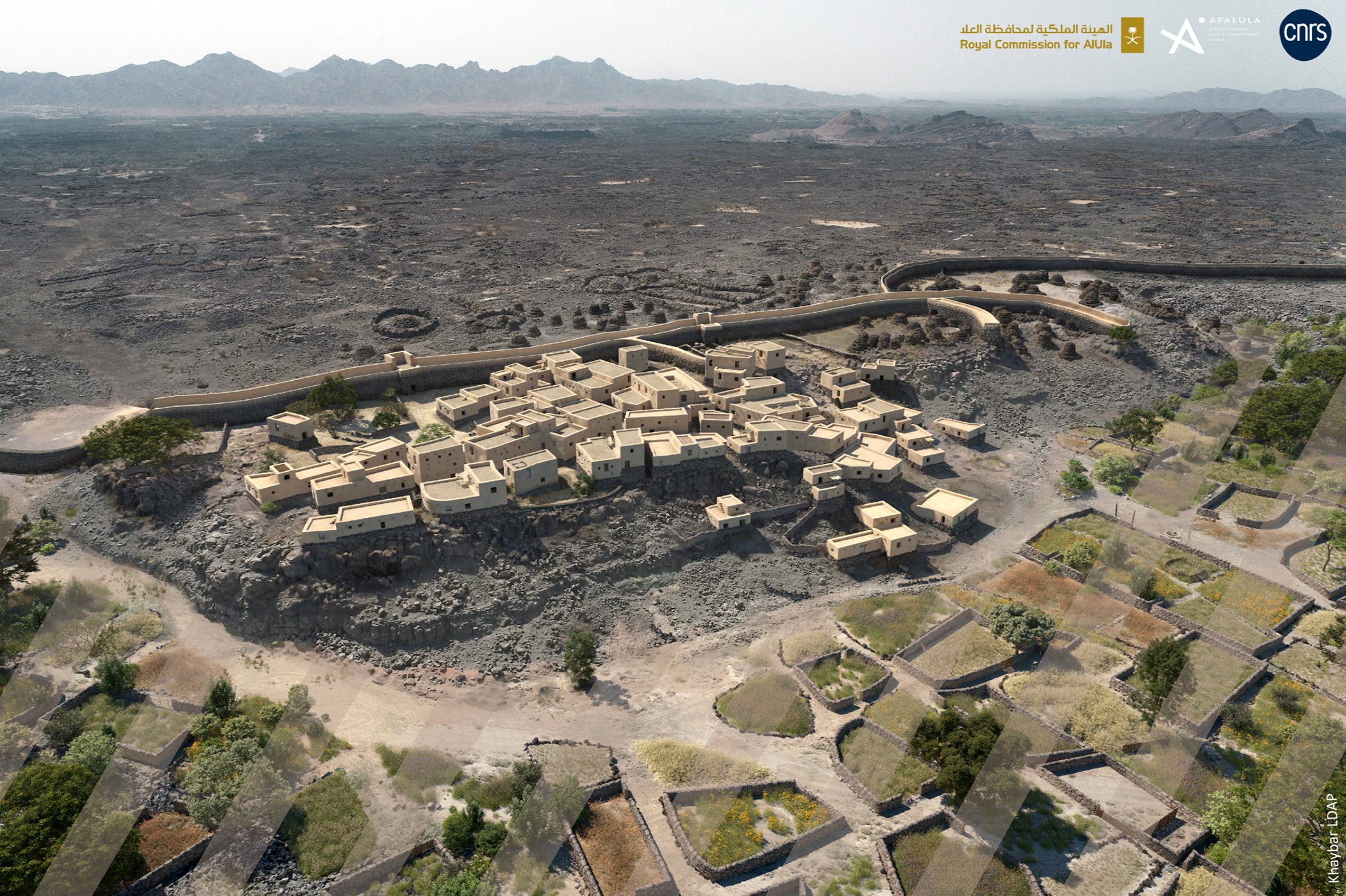
The ancient town of al-Natah, inhabited between 2400 and 1500 BCE, represents an early transitional phase from pastoral lifestyles to more complex urban settlements.
A recent study published in the open-access journal PLOS ONE by Guillaume Charloux from the French National Center for Scientific Research in Paris and colleagues reveals that settlements in northern Arabia were undergoing a transitional phase toward urbanization between the third and second millennium BCE.
The development of large urban settlements was a major step in the evolution of human civilization. This process of urbanization has proven difficult to study in northern Arabia, due in part to a lack of well-preserved archaeological sites in the region compared with better understood areas such as the Levant and Mesopotamia. In recent decades, however, excavations have uncovered exceptional sites in northern Arabia that provide insights into the early stages of urbanization.
Al-Natah: A Glimpse into Bronze Age Life
In this study, Charloux and colleagues provide a detailed description of the Bronze Age town of al-Natah in Medinah province, occupied from around 2400-1500BCE. The town covered approximately 1.5 hectares, including a central district and nearby residential district surrounded by protective ramparts.
A cluster of graves represents a necropolis, with burial practices indicating some degree of social stratification. The authors estimate the town was home to around 500 residents. The size and organization of al-Natah is similar to other sites of similar age in northern Arabia, but these sites are smaller and less socio-politically complex than contemporary sites in the Levant and Mesopotamia.
The researchers suggest that al-Natah represents a state of ‘low urbanization,’ a transitional stage between mobile pastoralism and complex urban settlements. Archaeological evidence so far indicates that northern Arabia was dotted with small fortified towns during the Early-Middle Bronze Age, at a time when other regions exhibited later stages of urbanization. Further excavations across Arabia will provide more details about the timing of this transition and the accompanying changes in societal structure and architecture.
The authors add: “For the first time in north-western Arabia, a small Bronze Age town (c. 2400-1300 BCE) connected to a vast network of ramparts has been discovered by archaeologists, raising questions about the early development of local urbanism.”
Reference: “A Bronze Age town in the Khaybar walled oasis: Debating early urbanization in Northwestern Arabia” by Guillaume Charloux, Shadi Shabo, Bruno Depreux, Sylvain Colin, Kévin Guadagnini, François Guermont, Sabine Dupuy, Mylène Bussy, Noisette Bec Drelon, Modwene Poulmarc’h, Diaa Albukaai, Saifi Alshilali, Rémy Crassard and Munirah AlMushawh, 30 October 2024, PLOS ONE.
DOI: 10.1371/journal.pone.0309963
This work was funded by the French Agency for AlUla Development (AFALULA).
Never miss a breakthrough: Join the SciTechDaily newsletter.
Follow us on Google and Google News.