
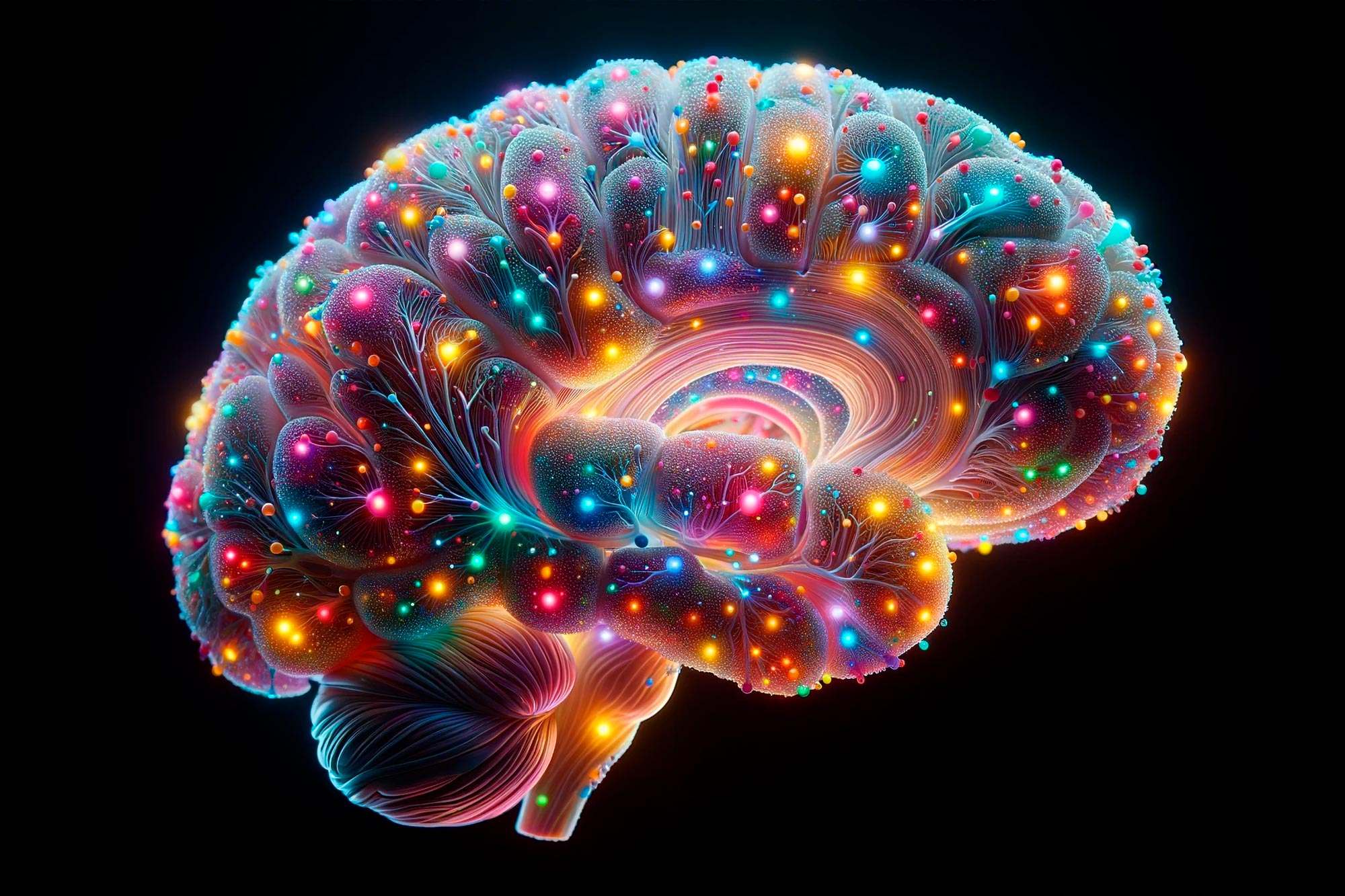
A groundbreaking cell atlas mapping the entire mouse brain, detailing over 32 million cells, paves the way for a deeper understanding of the human brain and the development of precision therapies for brain disorders.
For the first time ever, an international team of researchers has created a complete cell atlas of a whole mammalian brain. This atlas serves as a map for the mouse brain, describing the type, location, and molecular information of more than 32 million cells and providing information on connectivity between these cells. The mouse is the most commonly used vertebrate experimental model in neuroscience research, and this cellular map paves the way for a greater understanding of the human brain—arguably the most powerful computer in the world. The cell atlas also lays the foundation for the development of a new generation of precision therapeutics for people with mental and neurological disorders of the brain.
The findings were funded by the National Institutes of Health’s Brain Research Through Advancing Innovative Neurotechnologies® Initiative, or The BRAIN Initiative®, and appear in a collection of 10 papers published in Nature.
“The mouse atlas has brought the intricate network of mammalian brain cells into unprecedented focus, giving researchers the details needed to understand human brain function and diseases,” said Joshua A. Gordon, M.D., Ph.D., Director of the National Institute of Mental Health, part of the National Institutes of Health.
Detailed Mapping of the Mouse Brain
The cell atlas describes the types of cells in each region of the mouse brain and their organization within those regions. In addition to this structural information, the cell atlas provides an incredibly detailed catalog of the cell’s transcriptome—the complete set of gene readouts in a cell, which contains instructions for making proteins and other cellular products. The transcriptomic information included in the atlas is hierarchically organized, detailing cell classes, subclasses, and thousands of individual cell clusters within the brain.
The atlas also characterizes the cell epigenome—chemical modifications to a cell’s DNA and chromosomes that alter the way the cell’s genetic information is expressed—detailing thousands of epigenomic cell types and millions of candidate genetic regulation elements for different brain cell types.
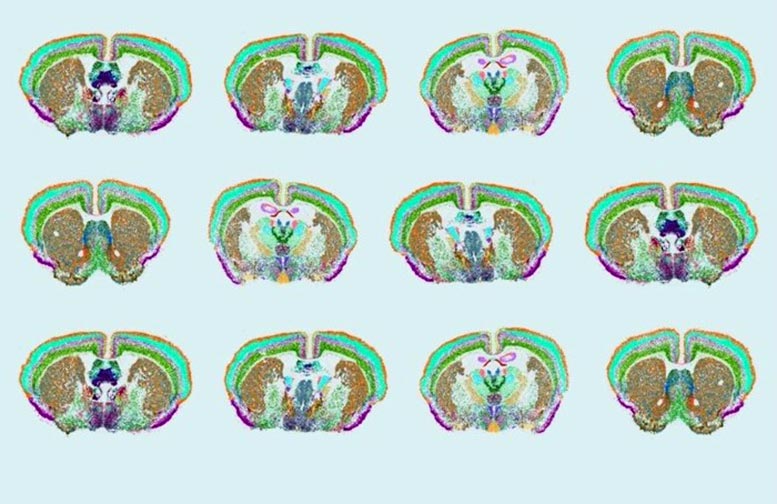
Together, the structural, transcriptomic, and epigenetic information included in this atlas provide an unprecedented map of cellular organization and diversity across the mouse brain. The atlas also provides an accounting of the neurotransmitters and neuropeptides used by different cells and the relationship among cell types within the brain. This information can be used as a detailed blueprint for how chemical signals are initiated and transmitted in different parts of the brain. Those electrical signals are the basis for how brain circuits operate and how the brain functions overall.
Pioneering Collaborative Effort and Future Directions
“This product is a testament to the power of this unprecedented, cross-cutting collaboration and paves our path for more precision brain treatments,” said John Ngai, Ph.D., Director of the NIH BRAIN Initiative.”
Of the 10 studies included in this collection, seven are funded through the NIH BRAIN Initiative Cell Census Network (BICCN), and two are funded through the larger NIH BRAIN Initiative. The core aim of the BICCN, a groundbreaking, cross-collaborative effort to understand the brain’s cellular makeup, is to develop a comprehensive inventory of the cells in the brain—where they are, how they develop, how they work together, and how they regulate their activity—to better understand how brain disorders develop, progress, and are best treated.
“By leveraging the unique nature of its multi-disciplinary and international collaboration, the BICCN was able to accomplish what no other team of scientists has been able to before,” said Dr. Ngai. “Now we are ready to take the next big step—completing the cell maps of the human brain and the nonhuman primate brain.”
The BRAIN Initiative Cell Atlas Network (BICAN) is the next stage in the NIH BRAIN Initiative’s effort to understand the cell and cellular functions of the mammalian brain. BICAN is a transformative project that, together with two other large-scale projects—the BRAIN Initiative Connectivity Across Scales and the Armamentarium for Precision Brain Cell Access—aim to revolutionize neuroscience research by illuminating foundational principles governing the circuit basis of behavior and informing new approaches to treating human brain disorders.
Reference: “A high-resolution transcriptomic and spatial atlas of cell types in the whole mouse brain” by Zizhen Yao, Cindy T. J. van Velthoven, Michael Kunst, Meng Zhang, Delissa McMillen, Changkyu Lee, Won Jung, Jeff Goldy, Aliya Abdelhak, Matthew Aitken, Katherine Baker, Pamela Baker, Eliza Barkan, Darren Bertagnolli, Ashwin Bhandiwad, Cameron Bielstein, Prajal Bishwakarma, Jazmin Campos, Daniel Carey, Tamara Casper, Anish Bhaswanth Chakka, Rushil Chakrabarty, Sakshi Chavan, Min Chen, Michael Clark, Jennie Close, Kirsten Crichton, Scott Daniel, Peter DiValentin, Tim Dolbeare, Lauren Ellingwood, Elysha Fiabane, Timothy Fliss, James Gee, James Gerstenberger, Alexandra Glandon, Jessica Gloe, Joshua Gould, James Gray, Nathan Guilford, Junitta Guzman, Daniel Hirschstein, Windy Ho, Marcus Hooper, Mike Huang, Madie Hupp, Kelly Jin, Matthew Kroll, Kanan Lathia, Arielle Leon, Su Li, Brian Long, Zach Madigan, Jessica Malloy, Jocelin Malone, Zoe Maltzer, Naomi Martin, Rachel McCue, Ryan McGinty, Nicholas Mei, Jose Melchor, Emma Meyerdierks, Tyler Mollenkopf, Skyler Moonsman, Thuc Nghi Nguyen, Sven Otto, Trangthanh Pham, Christine Rimorin, Augustin Ruiz, Raymond Sanchez, Lane Sawyer, Nadiya Shapovalova, Noah Shepard, Cliff Slaughterbeck, Josef Sulc, Michael Tieu, Amy Torkelson, Herman Tung, Nasmil Valera Cuevas, Shane Vance, Katherine Wadhwani, Katelyn Ward, Boaz Levi, Colin Farrell, Rob Young, Brian Staats, Ming-Qiang Michael Wang, Carol L. Thompson, Shoaib Mufti, Chelsea M. Pagan, Lauren Kruse, Nick Dee, Susan M. Sunkin, Luke Esposito, Michael J. Hawrylycz, Jack Waters, Lydia Ng, Kimberly Smith, Bosiljka Tasic, Xiaowei Zhuang and Hongkui Zeng, 13 December 2023, Nature.
DOI: 10.1038/s41586-023-06812-z
Never miss a breakthrough: Join the SciTechDaily newsletter.
Follow us on Google and Google News.