
Close Menu
    Facebook X (Twitter) Instagram
    SciTechDaily
    • Biology
    • Chemistry
    • Earth
    • Health
    • Physics
    • Science
    • Space
    • Technology
    Facebook X (Twitter) Pinterest YouTube RSS
    SciTechDaily
    Home»Biology»A New Class of Molecular Compounds Capable of Killing the Influenza Virus
    Biology

    A New Class of Molecular Compounds Capable of Killing the Influenza Virus

    By Simon Fraser UniversityFebruary 22, 2013No Comments3 Mins Read
    Facebook Twitter Pinterest Telegram LinkedIn WhatsApp Email Reddit
    Share
    Facebook Twitter LinkedIn Pinterest Telegram Email Reddit
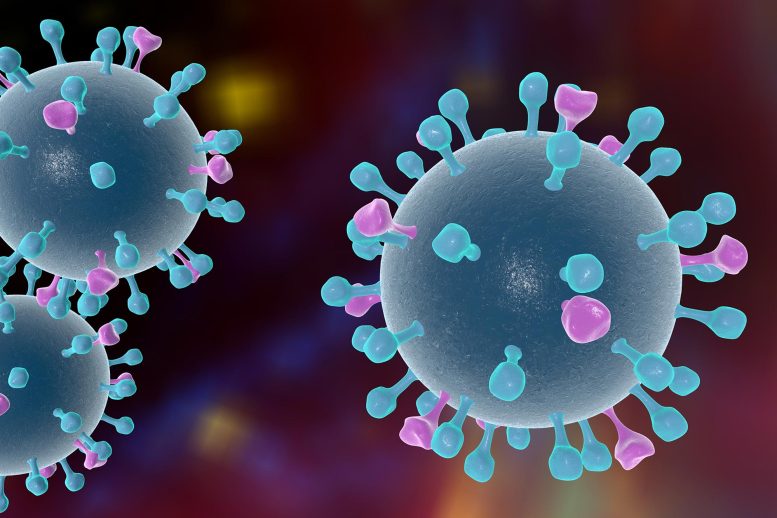
    Influenza Viruses Illustration
    Scientists have discovered a new class of molecular compounds capable of killing the influenza virus.

    In a newly published study, an international team of scientists detail a new class of molecular compounds capable of killing the influenza virus.

    Simon Fraser University virologist Masahiro Niikura and his doctoral student Nicole Bance are among an international group of scientists that has discovered a new class of molecular compounds capable of killing the influenza virus.

    Working on the premise that too much of a good thing can be a killer, the scientists have advanced previous researchers’ methods of manipulating an enzyme that is key to how influenza replicates and spreads.

    Their new compounds will lead to a new generation of anti-influenza drugs that the virus’ strains can’t adapt to, and resist, as easily as they do Tamiflu. It’s an anti-influenza drug that is becoming less effective against the constantly mutating flu virus.

    A New Class of Molecular Compounds Capable of Killing the Influenza Virus
    Simon Fraser University virologist Masahiro Niikura and his doctoral student Nicole Bance have helped find a new enemy capable of killing the potentially deadly and always-changing influenza virus. Credit: Simon Fraser University

    These increasingly less adequate anti-influenza drugs are currently doctors’ best weapons against influenza. They helped the world beat H1N1, swine flu, into submission four years ago.

    The journal Science Express has just published online the scientists’ study, revealing how to use their newly discovered compounds to interrupt the enzyme neuraminidase’s facilitation of influenza’s spread.

    Tamiflu and another anti-influenza drug, Relenza, focus on interrupting neuraminidase’s ability to help influenza detach from an infected cell’s surface by digesting sialic acid, a sugar on the surface of the cell. The flu virus uses the same sugar to stick to the cell while invading it. Once attached, influenza can invade the cell and replicate.

    This is where the newly discovered compounds come to the still-healthy cells’ rescue. They clog up neuraminidase, stopping the enzyme from dissolving the sialic acid, which prevents the virus from escaping the infected cell and spreading.

    The new compounds are also more effective because they’re water-soluble. “They reach the patient’s throat where the flu virus is replicating after being taken orally,” says Niikura, a Faculty of Health Sciences associate professor.

    “Influenza develops resistance to Replenza less frequently, but it’s not the drug of choice like Tamiflu because it’s not water-soluble and has to be taken as a nasal spray.

    “Our new compounds are structurally more similar to sialic acid than Tamiflu. We expect this closer match will make it much more difficult for influenza to adapt to new drugs.”

    Ultimately, the new compounds will buy scientists more time to develop new vaccines for emerging strains of influenza that are resistant to existing vaccines.

    Reference: “Mechanism-Based Covalent Neuraminidase Inhibitors with Broad Spectrum Influenza Antiviral Activity” by Jin-Hyo Kim, Ricardo Resende, Tom Wennekes, Hong-Ming Chen, Nicole Bance, Sabrina Buchini, Andrew G. Watts, Pat Pilling, Victor A. Streltsov, Martin Petric, Richard Liggins, Susan Barrett, Jennifer L. McKimm-Breschkin, Masahiro Niikura and Stephen G. Withers, 21 February 2013, Science.
    DOI: 10.1126/science.1232552

    Simon Fraser University is Canada’s top-ranked comprehensive university and one of the top 50 universities in the world under 50 years old. With campuses in Vancouver, Burnaby and Surrey, B.C., SFU engages actively with the community in its research and teaching, delivers almost 150 programs to more than 30,000 students, and has more than 120,000 alumni in 130 countries.

    Never miss a breakthrough: Join the SciTechDaily newsletter.
    Follow us on Google and Google News.

    Disease Simon Fraser University Virology Virus
    Share. Facebook Twitter Pinterest LinkedIn Email Reddit

    Related Articles

    Novel Coronavirus hCoV-EMC Infects Humans & Animals

    New Coronavirus Could Infect Millions During Hajj in Saudi Arabia

    West Nile Virus Might Be Linked to Kidney Problems

    Brucella Blocked From Bonding With Host, Could Lead to Superbug Cure

    Pre-Existing Mutations Can Lead to Drug Resistance in HIV

    Monkeys Cured of Ebola Zaire Virus With Antibody Cocktail

    Viruses Attack Mitochondria to Travel and Spread Within the Nervous System

    Visual Science’s Ebolavirus 3D Model is 10 Times More Complex Than Their HIV Model

    Ruminant Orthobunyavirus Takes Northern Europe By Surprise

    Leave A Reply Cancel Reply

    • Facebook
    • Twitter
    • Pinterest
    • YouTube

    Don't Miss a Discovery

    Subscribe for the Latest in Science & Tech!

    Trending News

    Largest-Ever Study Finds Medicinal Cannabis Ineffective for Anxiety, Depression, PTSD

    250-Million-Year-Old Egg Solves One of Evolution’s Biggest Mysteries

    Living With Roommates Might Be Changing Your Gut Microbiome Without You Knowing

    Century-Old Cleaning Chemical Linked to 500% Increased Risk of Parkinson’s Disease

    What if Your Memories Never Happened? Physicists Take a New Look at the Boltzmann Brain Paradox

    One of the Universe’s Largest Stars May Be Getting Ready To Explode

    Scientists Discover Enzyme That Could Supercharge Ozempic-Like Weight Loss Drugs

    Popular Sweetener Linked to DNA Damage – “It’s Something You Should Not Be Eating”

    Follow SciTechDaily
    • Facebook
    • Twitter
    • YouTube
    • Pinterest
    • Newsletter
    • RSS
    SciTech News
    • Biology News
    • Chemistry News
    • Earth News
    • Health News
    • Physics News
    • Science News
    • Space News
    • Technology News
    Recent Posts
    • Scientists Prove There Are Just Six Degrees of Separation in a Social Network
    • Bee Bacteria Could Fix a Major Flaw in Plant-Based Milk
    • Scientists Discover a Surprising Way To Make Bread Healthier and More Nutritious
    • Natural Compounds Boost Bone Implant Success While Killing Bacteria and Cancer Cells
    • After 60 Years, Scientists Uncover Unexpected Brain Effects of Popular Diabetes Drug Metformin
    Copyright © 1998 - 2026 SciTechDaily. All Rights Reserved.
    • Science News
    • About
    • Contact
    • Editorial Board
    • Privacy Policy
    • Terms of Use

    Type above and press Enter to search. Press Esc to cancel.