

Close Menu
    Facebook X (Twitter) Instagram
    SciTechDaily
    • Biology
    • Chemistry
    • Earth
    • Health
    • Physics
    • Science
    • Space
    • Technology
    Facebook X (Twitter) Pinterest YouTube RSS
    SciTechDaily
    Home»Biology»A New Era in Biophysics Discovery Unleashed by Exascale Supercomputers
    Biology

    A New Era in Biophysics Discovery Unleashed by Exascale Supercomputers

    By Auburn University Department of PhysicsAugust 25, 20232 Comments3 Mins Read
    Facebook Twitter Pinterest Telegram LinkedIn WhatsApp Email Reddit
    Share
    Facebook Twitter LinkedIn Pinterest Telegram Email Reddit
    Abstract Biophysics Concept
    The fusion of high-performance computing and biophysical research is paving the way for revolutionary discoveries in biology, with next-generation supercomputers and AI tools playing pivotal roles.

    The dynamic interplay where high-performance computing converges with biophysical exploration is pushing the frontiers of knowledge and catalyzing a new era of unprecedented discoveries in biology.

    New light has been shed on the transformative capabilities of the next generation of supercomputers in reshaping the landscape of biophysics in a recently published article featured on the cover of the Biophysical Journal. It was authored by Dr. Rafael Bernardi, assistant professor of biophysics at the Department of Physics at Auburn University, and Dr. Marcelo Melo, a postdoctoral researcher in Dr. Bernardi’s group.

    Bridging Computation and Experimentation

    The researchers at Auburn delve into the harmonious fusion of computational modeling and experimental biophysics, providing a perspective for a future in which discoveries are made with unparalleled precision. Rather than being mere observers, today’s biophysicists, with the aid of advanced high-performance computing (HPC), are now trailblazers who can challenge longstanding biological assumptions, illuminate intricate details, and even create new proteins or design novel molecular circuits.
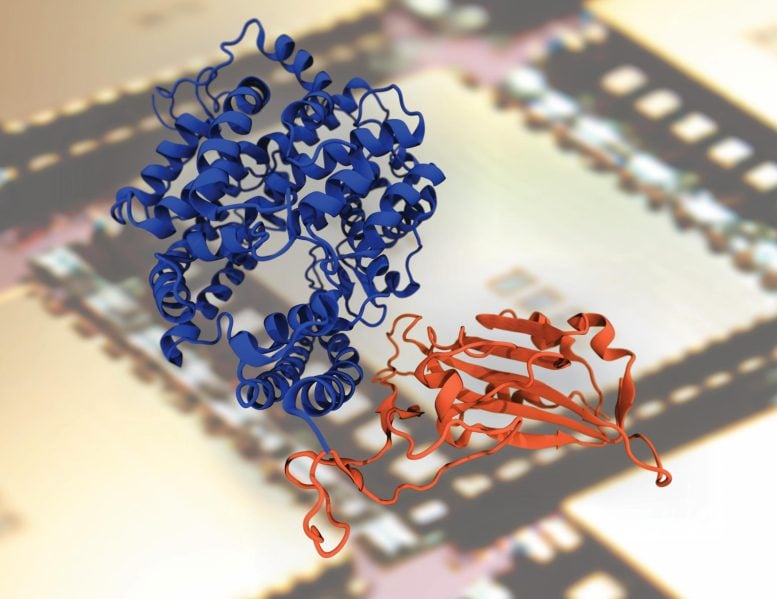
    Protein Design Era of Exascale Computing
    Illustration of a protein placed over a computer chip. New, powerful computers are helping scientists design and understand proteins like never before. Credit: Rafael C. Bernardi

    One of the most important aspects discussed in their perspective article is the new ability of computational biophysicists to simulate complex biological processes that range from subatomic processes to whole-cell models, with extraordinary detail. As Dr. Bernardi articulates, “The new exascale computers allow computational biophysicists to go beyond what can done experimentally and simulate biological processes with a much higher level of detail. For instance, we can now understand how pathogenic bacteria bind to humans during infection at an atomistic level, generating data for AI models and opening new roads of exploration.”

    The Pivotal Role of Advanced Technology

    Historically, disciplines like physics and chemistry have relied heavily on theoretical models to guide experiments. Today, biology stands at a similar crossroads, with novel software and specialized hardware becoming pivotal in deciphering experimental data and proposing innovative models. The inaugural public exascale supercomputer, Frontier, which was deployed by the Oak Ridge National Laboratory in late 2021, coupled with the rapid proliferation of artificial intelligence tools tailored for biophysics, exemplifies the profound strides being made to seamlessly bridge simulation with actual observation.

    The momentum gained by computational biophysics signifies a transformative shift in the scientific landscape. As biophysical research progresses, the seamless integration of experimental and computational efforts is expected to redefine the frontiers of knowledge, laying the groundwork for unprecedented discoveries that could reshape our understanding of the biological world.

    Reference: “Fostering discoveries in the era of exascale computing: How the next generation of supercomputers empowers computational and experimental biophysics alike” by Marcelo C.R. Melo and Rafael C. Bernardi, 2 February 2023, Biophysical Journal.
    DOI: 10.1016/j.bpj.2023.01.042

    Never miss a breakthrough: Join the SciTechDaily newsletter.
    Follow us on Google and Google News.

    Auburn University Biochemistry Biophysics Computational Biology Supercomputing
    Share. Facebook Twitter Pinterest LinkedIn Email Reddit

    Related Articles

    New Research Shatters Old Beliefs About Gold Nanoparticles and Cancer

    Mutation Mystery: Unraveling the Secret Behind COVID-19’s Rapid Spread

    Uncovering the Secrets of Skeleton Motion

    Scientists Uncover New Details of SARS-CoV-2 Coronavirus Interactions with Human Cells

    Bowl-Shaped Nanoparticles Help Untangle Alzheimer’s Disease Amyloid Beta Plaques

    Lighting the Way to Folding Next-Level Origami: Transforming Proteins Into Custom-Made Structures

    Tool Encoded in Coronaviruses Provides a Potential Drug Target for COVID-19

    Laminin Alpha 5 is Crucial to Adolescent Brain Maturation

    DNA2 Molecule Helps Repair Chromosome Rearrangements Linked to Cancer

    2 Comments

    1. Bob Mays on August 29, 2023 6:59 pm

      In order to use proteins, how do they stay alive or do you use proteins from a living subject?

      Reply
    2. Cynthia Binder on August 31, 2023 12:41 am

      ♨️wow factor☢️⚛️
      Food for the tomorrow
      Who did
      Who did not

      Reply
    Leave A Reply Cancel Reply

    • Facebook
    • Twitter
    • Pinterest
    • YouTube

    Don't Miss a Discovery

    Subscribe for the Latest in Science & Tech!

    Trending News

    Could Low Vitamin D Be Making Your Pain Worse?

    Scientists Discover Once-Weekly Workout That Melts Belly Fat Surprisingly Effectively

    Scientists Just Tested a Thruster Powerful Enough for Human Missions to Mars

    Doctors Say Your Ice Pack Might Be Making Injuries Worse

    Scientists Discover 43-Foot Sea Reptile Twice the Size of a Great White Shark

    Bees and Birds Are Drinking Alcohol From Flowers

    Scientists Discover How Obesity May Trigger Alzheimer’s Disease

    Scientists Confirm Alcohol Causes Widespread Health Damage

    Follow SciTechDaily
    • Facebook
    • Twitter
    • YouTube
    • Pinterest
    • Newsletter
    • RSS
    SciTech News
    • Biology News
    • Chemistry News
    • Earth News
    • Health News
    • Physics News
    • Science News
    • Space News
    • Technology News
    Recent Posts
    • Scientists Have Found a Way To Feed Immune Cells Without Fueling Cancer
    • Scientists Say Exercise May Be the Closest Thing to a Parkinson’s “Medicine” Yet
    • Massive Study Warns Marijuana Use in Teens Is Linked to Serious Mental Illness
    • Scientists Create Tiny Chip That Uses Light Instead of Electricity To Process Information
    • New Research Challenges the Idea That Geometry Is Uniquely Human
    Copyright © 1998 - 2026 SciTechDaily. All Rights Reserved.
    • Science News
    • About
    • Contact
    • Editorial Board
    • Privacy Policy
    • Terms of Use

    Type above and press Enter to search. Press Esc to cancel.