
Close Menu
    Facebook X (Twitter) Instagram
    SciTechDaily
    • Biology
    • Chemistry
    • Earth
    • Health
    • Physics
    • Science
    • Space
    • Technology
    Facebook X (Twitter) Pinterest YouTube RSS
    SciTechDaily
    Home»Biology»Scientists Uncover New Details of SARS-CoV-2 Coronavirus Interactions with Human Cells
    Biology

    Scientists Uncover New Details of SARS-CoV-2 Coronavirus Interactions with Human Cells

    By Biophysical SocietyJune 10, 2021No Comments3 Mins Read
    Facebook Twitter Pinterest Telegram LinkedIn WhatsApp Email Reddit
    Share
    Facebook Twitter LinkedIn Pinterest Telegram Email Reddit
    SARS-CoV-2 Virus Fusion
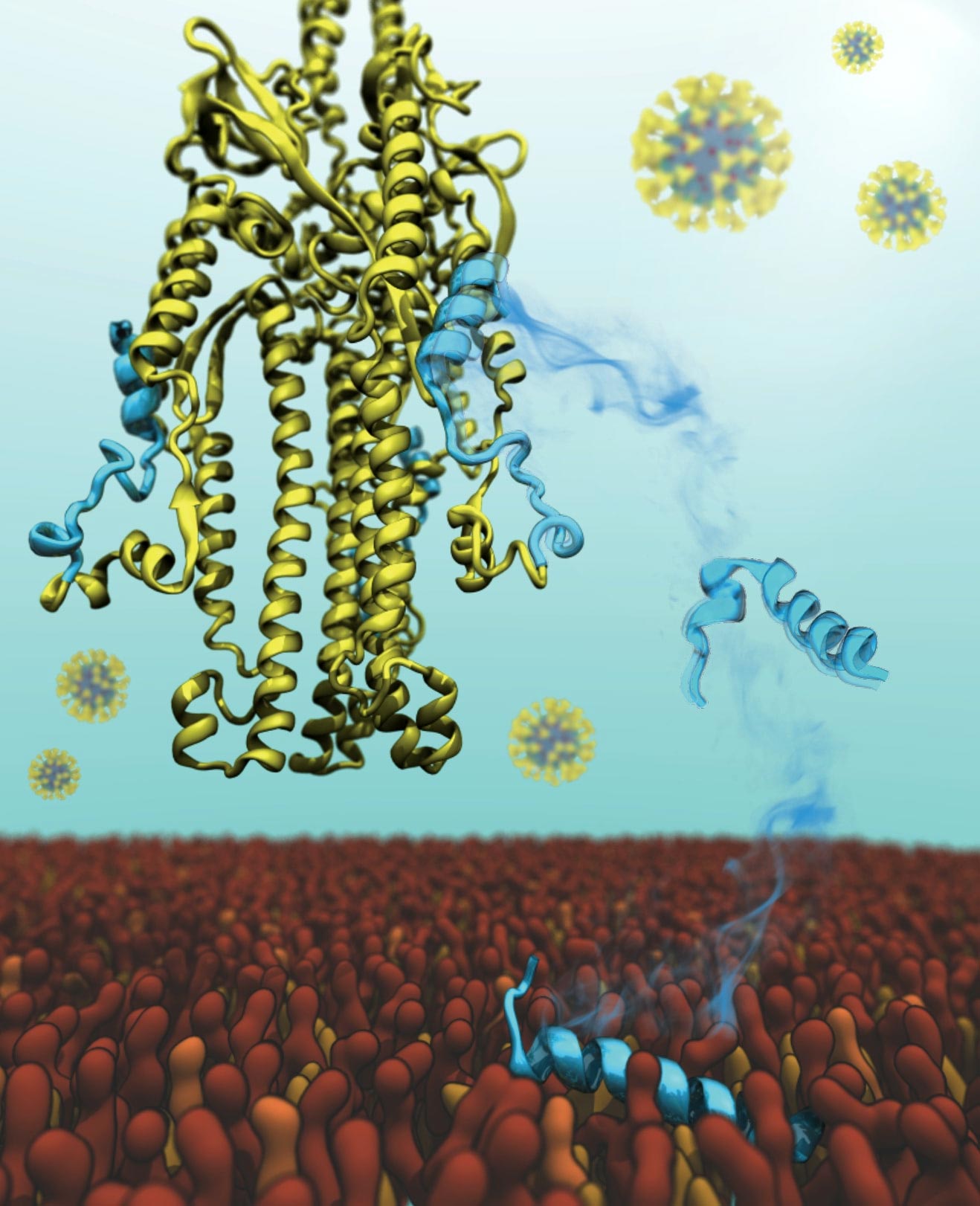
    The SARS-CoV-2 virus inserts itself into the membrane of a host human cell using a small part of its spike protein (yellow), called a fusion peptide. Computer simulations revealed the parts of peptide that are the most important for sticking to and inserting into the cell membrane. This illustration shows the fusion peptide (in blue) as it approaches, sticks to, and inserts into the membrane (brown, orange and gold). Credit: Defne Gorgun

    In order to infect cells, SARS-CoV-2, the virus that causes COVID-19, needs to insert itself into the membrane of human cells; new molecular models show what parts of SARS-CoV-2 are critical for that interaction, revealing new potential drug targets.

    If the coronavirus were a cargo ship, it would need to deliver its contents to a dock in order to infect the host island. The first step of infection would be anchoring by the dock, and step two would be tethering to the dock to bring the ship close enough that it could set up a gangplank and unload. Most treatments and vaccines have focused on blocking the ability of the ship to anchor, but the next step is another potential target. New research by Defne Gorgun, a graduate student, and colleagues in the lab of Emad Tajkhorshid at the University of Illinois addresses the molecular details of this second step, which could inform the design of drugs that block it. Gorgun presented her research at the 65th Annual Meeting of the Biophysical Society.

    In order to infect our cells, the virus that causes COVID-19, SARS-CoV-2, first attaches a molecule on our cell surface, but then it has to fuse with human cells. Before the pandemic, Gorgun was studying the interactions of molecules that stick to and insert into cell membranes, and when COVID-19 began to spread, Gorgun quickly pivoted her studies to understand how SARS-CoV-2 fused with cells.

    Fusion Peptide: The Gateway to Infection

    A small region of the SARS-CoV-2 outer spike protein called the “fusion peptide,” inserts itself into the human cell membrane to begin the fusion process. Scientists knew the location and approximate shape of the fusion peptide; however, they did not know exactly how it interacted with and penetrated into the human cell membrane and whether there would be changes in its shape when it stuck to the membrane. Without knowing the three-dimensional interactions between the SARS-CoV-2 fusion peptide and the cell membrane, it is not possible to design drugs that specifically disrupt that interaction.

    Using computer simulations, the team merged what is known about the SARS-CoV-2 fusion peptide with the established three-dimensional structures and behaviors of other coronavirus fusion peptides and simulated its interaction with a model human cell membrane. Their simulations reveal how the SARS-CoV-2 fusion peptide interacts with, and penetrates, the cell membrane. “Our study shows which parts of the fusion peptide are important and how it sticks to and sits in the membrane,” Gorgun says.

    Because their model is theoretical, the next step is to repeat their computer experiments in the lab with pieces of SARS-CoV-2 and cell membranes. But having already revealed parts of the fusion peptide that are likely to be critical to its function, those experiments will likely be completed faster and more efficiently. After that, Gorgun says, it will be possible to start testing drugs that disrupt the interaction and could help block SARS-CoV-2 from docking at our cells.

    Never miss a breakthrough: Join the SciTechDaily newsletter.
    Follow us on Google and Google News.

    Biochemistry Biophysical Society Biophysics Cell Biology COVID-19
    Share. Facebook Twitter Pinterest LinkedIn Email Reddit

    Related Articles

    Bowl-Shaped Nanoparticles Help Untangle Alzheimer’s Disease Amyloid Beta Plaques

    Sugar-Coated Shield Helps the COVID-19 Virus Become Activated and Infectious

    SARS vs. COVID-19: Why Some Coronavirus Strains Are More Infectious Than Others

    Evidence That Earth’s First Cells – 3.8 Billion Years Ago – Could Have Made Specialized Compartments

    Tool Encoded in Coronaviruses Provides a Potential Drug Target for COVID-19

    First Global Atlas of How the COVID Coronavirus Interacts With Human Cells

    Protein Storytelling to Address the COVID-19 Pandemic

    Building a Cell Membrane Defense Against COVID-19

    Laminin Alpha 5 is Crucial to Adolescent Brain Maturation

    Leave A Reply Cancel Reply

    • Facebook
    • Twitter
    • Pinterest
    • YouTube

    Don't Miss a Discovery

    Subscribe for the Latest in Science & Tech!

    Trending News

    Why Popular Diabetes Drugs Like Ozempic Don’t Work for Everyone: The “Genetic Glitch”

    Scientists Stunned After Finding Plant Thought Extinct for 60 Years

    Scientists Discover Tiny New Spider That Hunts Prey 6x Its Size

    Natural Component From Licorice Shows Promise for Treating Inflammatory Bowel Disease

    Scientists Warn: Popular Sweetener Linked to Dangerous Metabolic Effects

    Monster Storms on Jupiter Unleash Lightning Beyond Anything on Earth

    Scientists Create “Liquid Gears” That Spin Without Touching

    The Simple Habit That Could Help Prevent Cancer

    Follow SciTechDaily
    • Facebook
    • Twitter
    • YouTube
    • Pinterest
    • Newsletter
    • RSS
    SciTech News
    • Biology News
    • Chemistry News
    • Earth News
    • Health News
    • Physics News
    • Science News
    • Space News
    • Technology News
    Recent Posts
    • Trees Emit Tiny Lightning Flashes During Storms and Scientists Finally Prove It
    • Forget Chemicals. This Plant Removes Microplastics From Water
    • Breakthrough Crystal Lets Scientists “Write” Nanoscale Patterns With Light
    • Pomegranate Compound Could Help Protect Against Heart Disease
    • Your Blood Test Might Already Show Alzheimer’s Risk
    Copyright © 1998 - 2026 SciTechDaily. All Rights Reserved.
    • Science News
    • About
    • Contact
    • Editorial Board
    • Privacy Policy
    • Terms of Use

    Type above and press Enter to search. Press Esc to cancel.