
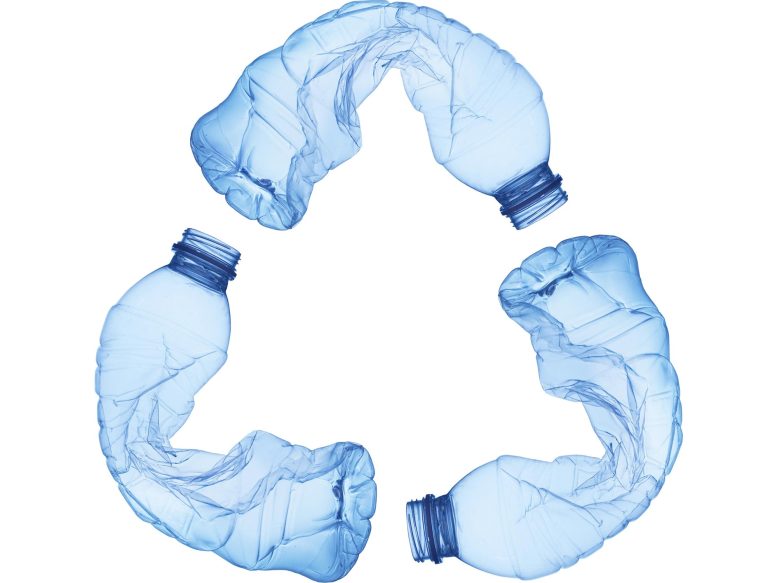
A biodegradable polyester has been developed with properties comparable to those of high-density polyethylene.
Polyethylene is known for its many advantageous properties, but its lack of biodegradability has been a challenge. However, a team of researchers has now resolved this issue by creating a plastic that possesses similar thermoplastic properties to polyethylene but also is biodegradable. The new material is a semicrystalline polyester that can undergo full breakdown into its original components through mild chemical or biological processes, as described in the team’s study recently published in the journal Angewandte Chemie.
High-density polyethylene (HDPE) is a particularly strong and durable material. It owes its thermoplastic properties to the internal structure of its molecular chains, which are arranged in a crystalline manner with added attraction due to van der Waals forces. The molecular chains are also pure hydrocarbons. The combination of crystallinity and hydrocarbon content means microorganisms, which might be able to degrade the plastic, cannot access the chains to break them up.
A Breakthrough in Biodegradable Polyesters
The research group of Stefan Mecking and colleagues, at the University of Konstanz, Germany, have now developed a polyester that has similar crystallinity to HDPE and also retains its beneficial mechanical properties. Unlike polyethylene, polyesters also contain functional groups that could theoretically be degraded chemically or enzymatically. However, under normal circumstances, the more crystalline a polyester is (i.e., the more similar to HDPE), the less readily it can be biodegraded.
The team was therefore understandably surprised by how quickly their crystalline polyester degraded when exposed to enzymes. “We tested degradation with naturally occurring enzymes, and it was an order of magnitude faster than with our reference material”, Mecking explains. It wasn’t just enzymatic solutions that degraded the material: soil microorganisms were also able to completely compost the polyester.
Ethylene Glycol’s Role in Biodegradability
But what is it that makes this polyester so exceptionally biodegradable? The team was able to identify the significant contribution of ethylene glycol, one of the building blocks of the polyester. Mecking adds: “This building block is actually really common in polyesters. It gives you a high melting point, but it also increases degradability in these polyethylene-like materials.”
Because of its good chemical and biological degradability, together with its mechanical properties, the new polyester could find applications as a recyclable thermoplastic material with minimal environmental impact. The end goal is closed-loop chemical recycling to break the plastic down into its raw materials and produce new plastics, Mecking adds. The added benefit of the team’s plastic is that, if any materials do get into the environment despite this closed loop, they can biodegrade and leave no lasting impact.
Reference: “Biodegradable High-Density Polyethylene-like Material” by Marcel Eck, Simon Timm Schwab, Taylor Frederick Nelson, Katrin Wurst, Steffen Iberl, David Schleheck, Christoph Link, Glauco Battagliarin and Stefan Mecking, Angewandte Chemie International Edition.
DOI: 10.1002/anie.202213438
The study was funded by the European Research Council.
Never miss a breakthrough: Join the SciTechDaily newsletter.
Follow us on Google and Google News.