
Close Menu
    Facebook X (Twitter) Instagram
    SciTechDaily
    • Biology
    • Chemistry
    • Earth
    • Health
    • Physics
    • Science
    • Space
    • Technology
    Facebook X (Twitter) Pinterest YouTube RSS
    SciTechDaily
    Home»Health»A New Study Links Infant Antibiotic Use to Adult Diseases
    Health

    A New Study Links Infant Antibiotic Use to Adult Diseases

    By University of MinnesotaMay 14, 2015No Comments3 Mins Read
    Facebook Twitter Pinterest Telegram LinkedIn WhatsApp Email Reddit
    Share
    Facebook Twitter LinkedIn Pinterest Telegram Email Reddit
    Infant Antibiotic Use Linked to Adult Diseases
    New research from the University of Minnesota reveals a three-way link between infant antibiotic use, gut bacteria changes, and future disease. The study also introduces a predictive model for assessing healthy gut bacteria development in young children, with potential clinical significance. Credit: Pajau Vangay, et al., University of Minnesota

    New research from the University of Minnesota reveals a three-way link among antibiotic use in infants, changes in the gut bacteria, and disease later in life. Imbalances in gut microbes have been tied to infectious diseases, allergies and other autoimmune disorders, and even obesity.

    The study, led by Biomedical Informatics and Computational Biology program graduate student fellow Pajau Vangay, also developed a predictive model with potential clinical importance for measuring healthy development of bacteria in the gut of young children. The findings were published today in the scientific journal Cell Host & Microbe.
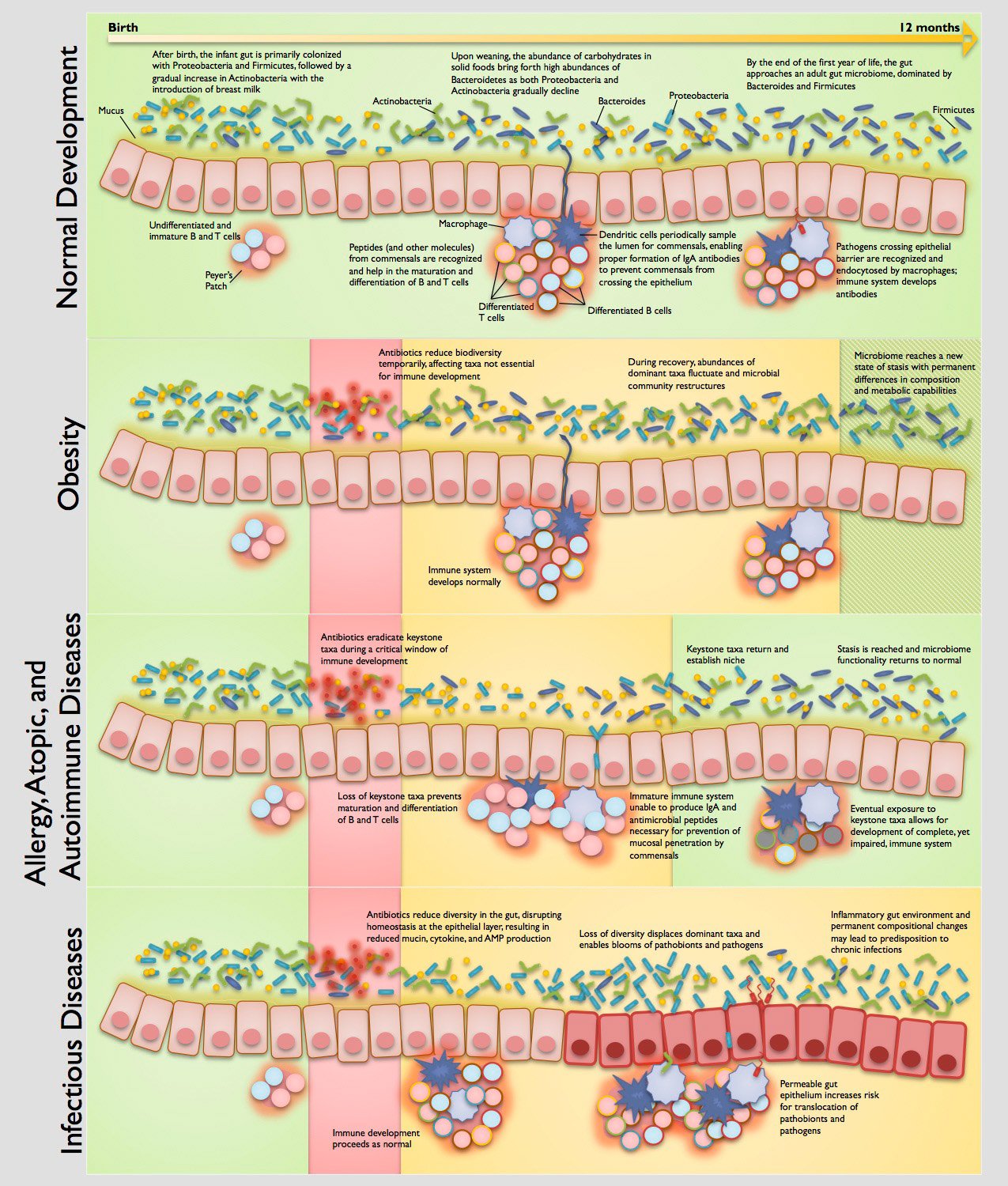
    Study Links Infant Antibiotic Use to Adult Diseases
    This framework shows different evidence-supported ways that antibiotics may disrupt the gut microbiota and increase risk of adult diseases.

    Antibiotics are by far the most common prescription drugs given to children. They account for about one-fourth of all medications prescribed to children, with a third of these prescriptions considered unnecessary. Other studies have shown profound short- and long-term effects of antibiotics on the diversity and composition of the bacteria in our bodies, called our microbiome.

    “Diseases related to metabolism and the immune system are increasing dramatically, and in many cases, we don’t know why,” said the study’s senior author Dan Knights, a computational biologist and assistant professor in the University of Minnesota’s Department of Computer Science and Engineering and Biotechnology Institute. “Previous studies showed links between antibiotic use and unbalanced gut bacteria, and others showed links between unbalanced gut bacteria and adult disease. Over the past year, we synthesized hundreds of studies and found evidence of strong correlations between antibiotic use, changes in gut bacteria, and disease in adulthood.”

    Knights and his colleagues developed a framework to map how antibiotics may be acting in the gut to cause disease later in life. In the case of allergies, for example, the use of antibiotics may eradicate key gut bacteria that help immune cells mature. These cells would have been essential for keeping the immune system at bay when confronted with allergens. Even if these bacteria return, the immune system remains impaired. Related to obesity, antibiotic-induced changes in the gut microbiota resulted in increased levels of short-chain fatty acids that affect metabolism.

    The study also examined the development of bacteria in the gut. Researchers demonstrated that an infant’s age could be predicted within 1.3 months based on the maturity of their gut bacteria. This finding could lead to a clinical test and interventions for children whose microbiome is developmentally delayed due to antibiotics or other factors.

    “We think these findings help develop a roadmap for future research to determine the health consequences of antibiotic use and for recommendations for prescribing them,” Knights said. “The clinical test we demonstrated would also allow us to think about interventions at an early age.”

    In addition to Knights and Vangay, researchers involved in the study include Tonya Ward, a postdoctoral researcher in the University of Minnesota Biotechnology Institute, and Jeffery Gerber, a researcher with the Division of Infectious Diseases at the Children’s Hospital of Philadelphia.

    Reference: “Antibiotics, Pediatric Dysbiosis, and Disease” by Pajau Vangay, Tonya Ward, Jeffrey S. Gerber and Dan Knights, 13 May 2015, Cell Host & Microbe.
    DOI: 10.1016/j.chom.2015.04.006


    Never miss a breakthrough: Join the SciTechDaily newsletter.
    Follow us on Google and Google News.

    Antibiotics Disease Pediatrics University of Minnesota
    Share. Facebook Twitter Pinterest LinkedIn Email Reddit

    Related Articles

    Mayo Clinic: Antibiotics Before Age 2 Associated With Chronic Childhood Health Problems

    New Rare Disease Uncovered With Own Facial Features, Cardiac Defects and Developmental Delay

    Infections Responsible for 20% of Childhood Deaths in England and Wales

    Physicians Slow to Use Effective New Antibiotics Against Superbugs

    New Discovery Will Help Limit the Development of Antibiotic Resistance

    New Research Shows Antibiotics Work Differently Than Thought

    Fewer Doses of Prophylaxis Provides Near-Optimal Protection Against RSV

    UCSD Biologists Develop New Method for Identifying Antibiotics

    UCLA Study Shows Childhood Obesity Linked to More Health Problems Than Previously Thought

    Leave A Reply Cancel Reply

    • Facebook
    • Twitter
    • Pinterest
    • YouTube

    Don't Miss a Discovery

    Subscribe for the Latest in Science & Tech!

    Trending News

    Millions Take These IBS Drugs, But a New Study Finds Serious Risks

    Scientists Unlock Hidden Secrets of 2,300-Year-Old Mummies Using Cutting-Edge CT Scanner

    Bread Might Be Making You Gain Weight Even Without Eating More Calories

    Scientists Discover Massive Magma Reservoir Beneath Tuscany

    Europe’s Most Active Volcano Just Got Stranger – Here’s Why Scientists Are Rethinking It

    Alzheimer’s Symptoms May Start Outside the Brain, Study Finds

    Millions Take This Popular Supplement – Scientists Discover a Concerning Link to Heart Failure

    The Universe Is Expanding Too Fast and Scientists Can’t Explain Why

    Follow SciTechDaily
    • Facebook
    • Twitter
    • YouTube
    • Pinterest
    • Newsletter
    • RSS
    SciTech News
    • Biology News
    • Chemistry News
    • Earth News
    • Health News
    • Physics News
    • Science News
    • Space News
    • Technology News
    Recent Posts
    • Doctors Surprised by the Power of a Simple Drug Against Colon Cancer
    • Why Popular Diabetes Drugs Like Ozempic Don’t Work for Everyone: The “Genetic Glitch”
    • Scientists Create Improved Insulin Cells That Reverse Diabetes in Mice
    • Scientists Stunned After Finding Plant Thought Extinct for 60 Years
    • A Common Diabetes Drug May Hold the Key to Stopping HIV From Coming Back
    Copyright © 1998 - 2026 SciTechDaily. All Rights Reserved.
    • Science News
    • About
    • Contact
    • Editorial Board
    • Privacy Policy
    • Terms of Use

    Type above and press Enter to search. Press Esc to cancel.