
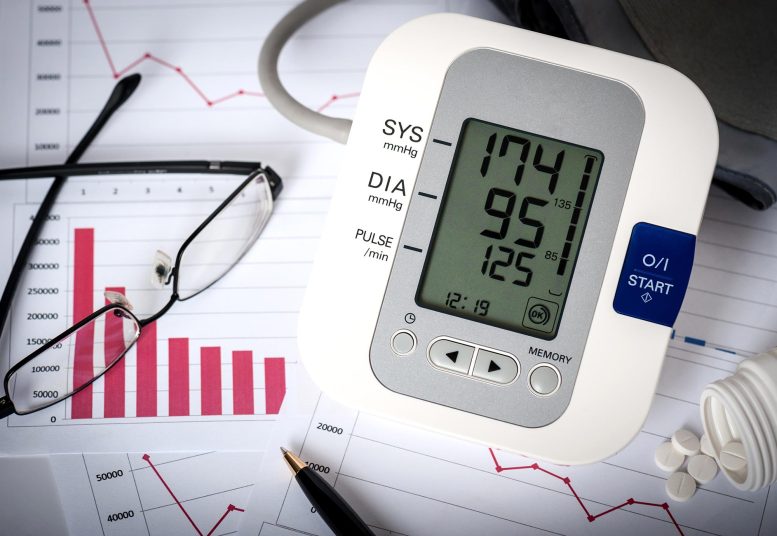
Researchers from The University of Toledo have discovered potential avenues to utilize our body’s microbiome in managing blood pressure.
Scientists at The University of Toledo have demonstrated that engineered bacteria can lower blood pressure. This groundbreaking discovery paves the way for utilizing our body’s microbiome as a potential treatment for hypertension.
The study, recently published in the peer-reviewed journal Pharmacological Research, represents a paradigm shift, said Dr. Bina Joe, a hypertension researcher at UToledo and the paper’s senior author.
“The question we always ask is, can we exploit microbiota to help our health, for which optimal blood pressure is a cardinal sign. Until now, we have simply said changes in microbiota play a role in elevated blood pressure or hypertension. Those are important findings, but they don’t always have an immediately translational application,” she said. “This is the first time we have shown that we really can do this. It’s a proof of principle that you can use microbiota to make products that measurably improve your health.”
Gut Bacteria’s Role in Blood Pressure Regulation
Joe, a Distinguished University Professor and chair of the Department of Physiology and Pharmacology in the UToledo College of Medicine and Life Sciences, is a pioneer in studying the connection between bacteria living in our gut and blood pressure regulation.
In her most recent research, Joe and her team tested Lactobacillus paracasei, a beneficial gut bacterium, that was specially modified to produce a protein called ACE2 in lab rats that are predisposed to hypertension and unable to naturally produce ACE2.
The ACE2 Protein and Blood Pressure
ACE2 has drawn considerable interest in recent years because of its role as a key receptor for the virus that causes COVID-19.
However, the protein also negatively regulates the renin-angiotensin system which generates angiotensin II, a hormone that raises blood pressure in a number of ways, including by the constriction of blood vessels.
By feeding rats the engineered Lactobacillus paracasei bacterium as a probiotic, researchers were able to introduce human ACE2 in their guts, which specifically reduced their gut angiotensin II and, in turn, lowered their blood pressure.

Interestingly, though, the blood-pressure-lowering effects were only seen in female rats. Though there was no difference in ACE2 expression between male and female rats, only the female rats saw a decrease in their blood pressure.
Researchers are unsure of exactly why that was the case, but Joe speculates it has something to do with the fact that females, but not males, have two functional copies of ACE2.
Microbiome Medicine: Future Possibilities
The gene encoding ACE2 is located in a region of the X-chromosome which escapes a genetic phenomenon called X-inactivation. It appears, Joe said, that having two functional copies of ACE2 is extremely important for females, because when both copies were lost, females had a much higher level of hypertension compared to males.
“Females therefore appear to readily accept all the help they can get from gut microbiota supplying ACE,” she said. “For now, this is a theory that requires further experimental proof.”
Even with the differing results between male and female rats, however, Joe said the findings are an important stepping stone between the theory of leveraging bacteria to treat hypertension and other chronic conditions and practically being able to bring it into the clinic.
“There have been questions about microbiome medicine — is it a fad or is it real? This is an extremely exciting demonstration that we can exploit bacteria to work for us, and it works for high blood pressure, something that affects a significant portion of the population,” she said. “It’s that ray of hope that you may not need traditional medications to keep your blood pressure in check.”
According to data from the U.S. Centers for Disease Control and Prevention, nearly half of U.S. adults have hypertension, and only about one in four of those have their blood pressure under control.
Though it rarely exhibits symptoms, uncontrolled blood pressure is a major risk factor for heart attack, stroke, and kidney disease.
Joe said more research is needed, including studies on what happens when ACE2-producing bacteria are introduced in animals whose bodies already make the protein naturally and any side effects that might come with boosting ACE2 levels in the gut.
However, the first-of-its-kind research from UToledo opens a window into the substantial potential of exploiting the bacteria living in our gut for our benefit.
“It is a real possibility that we can use bacteria to correct hypertension. This is a big deal, and the concept could be applied to other diseases,” she said. “For example, if you are unable to control your sugar, can we have a bacteria make a protein that can lower your blood glucose? There are still a lot of questions that need answered, but now we know the paradigm works.”
Reference: “Genetically engineered Lactobacillus paracasei rescues colonic angiotensin converting enzyme 2 (ACE2) and attenuates hypertension in female Ace2 knock out rats” by Xue Mei, Blair Mell, Sachin Aryal, Ishan Manandhar, Ramakumar Tummala, Jasenka Zubcevic, Khanh Lai, Tao Yang, Qiuhong Li, Beng San Yeoh and Bina Joe, 14 September 2023, Pharmacological Research.
DOI: 10.1016/j.phrs.2023.106920
Never miss a breakthrough: Join the SciTechDaily newsletter.
Follow us on Google and Google News.