
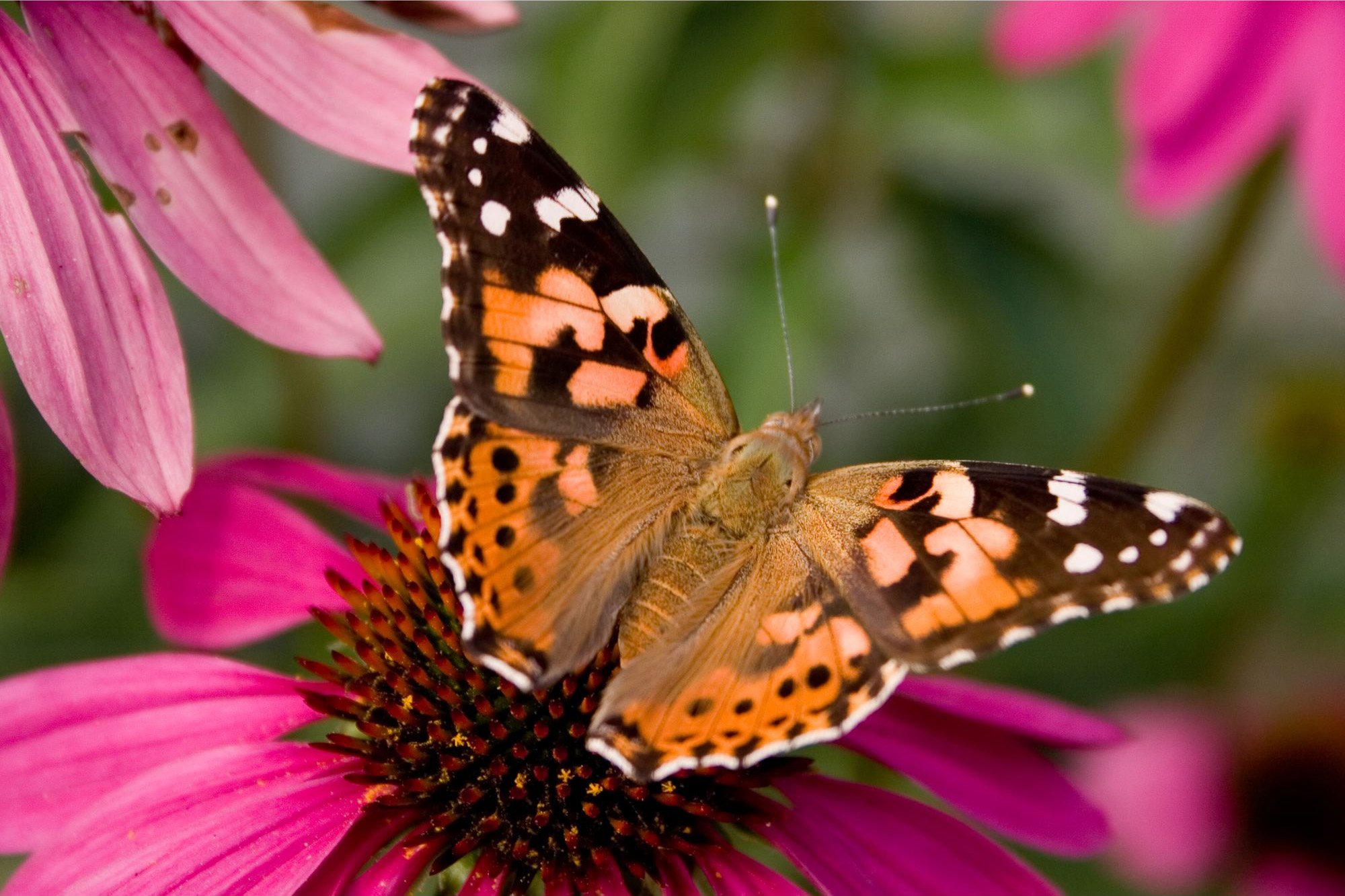
Scientists at CSIC have documented a 4200 km oceanic flight from West Africa to French Guiana in South America.
An international team of researchers, led by the Spanish National Research Council (CSIC), has documented a transoceanic flight of more than 4,200 km (2,600 miles) by painted lady butterflies (Vanessa cardui), setting a record for an insect.
The study, published in the journal Nature Communications, involved researchers from the Botanical Institute of Barcelona (IBB), a joint center of the CSIC and the Natural Sciences Museum of Barcelona, as well as from the W. Szafer Botanical Institute (Poland), the University of Ottawa (Canada), the Institute of Evolutionary Biology (IBE, CSIC-Universitat Pompeu Fabra), and Harvard University (USA).
In October 2013, Gerard Talavera, a CSIC researcher at the Botanical Institute of Barcelona, identified several painted lady butterflies on the Atlantic beaches of French Guiana. These observations were completely unusual, as this species is not found in South America. Where did they come from?
A Sum of Novel Techniques Solves the Enigma
A multidisciplinary approach has deciphered the route and origin of these butterflies. The initial hypotheses were that they could have originated in North America, where the nearest populations are found, or that they traveled from Africa or Europe. By analyzing wind trajectories, researchers observed a sustained directional pattern from West Africa, opening the possibility that they had crossed the Atlantic.
By studying the genetic diversity of the butterflies, which required collecting samples from populations on all continents, they determined that the specimens observed in South America were related to populations in Europe and Africa, ruling out the possibility of a North American origin.
The researchers also analyzed the pollen DNA that the butterflies carried on their bodies, and identified two plant species found only in tropical Africa, thus proving that the butterflies visited flowers in that region.
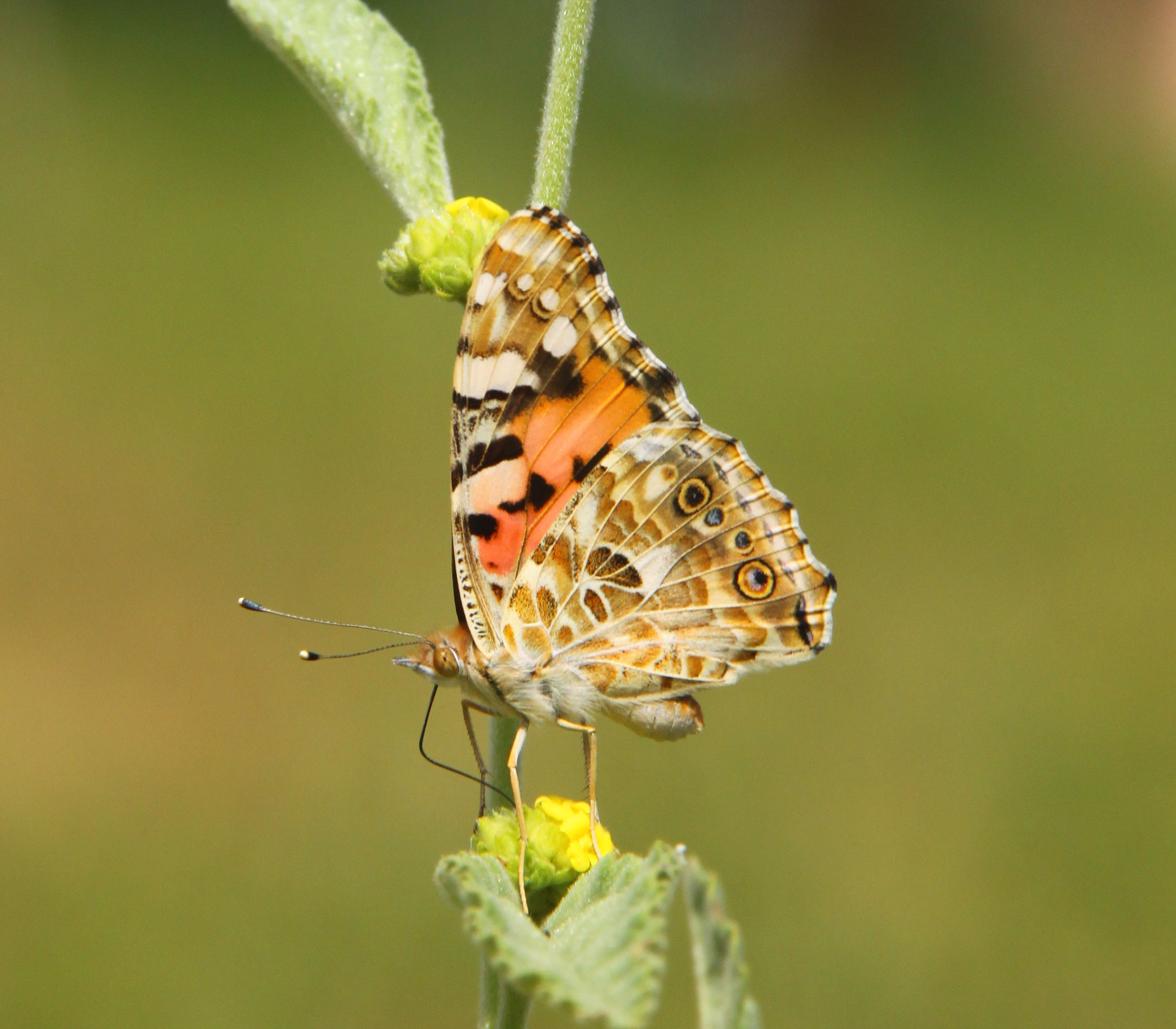
Lastly, the scientists analyzed the stable isotopes of hydrogen and strontium from the butterflies’ wings. The wings preserve isotopic signatures unique to the place where they were raised in their larval stage, allowing inference of their natal origin. With this data, they determined that their origin was most likely in western European countries such as France, Ireland, the United Kingdom, or Portugal.
“The painted lady butterflies reached South America from West Africa, flying at least 4200 km (2600 miles) over the Atlantic. But their journey could have been even longer, starting in Europe and passing through three continents, implying a migration of 7000 km (4350 miles) or more. This is an extraordinary feat for such a small insect,” explains Clément Bataille, a professor at the University of Ottawa in Canada and co-author of the study.
“We tend to see butterflies as a symbol of the fragility of beauty, but science shows us that they can perform incredible feats. There is still much to discover about their capabilities,” says Roger Vila, a researcher at the Institute of Evolutionary Biology (IBE, CSIC-Universitat Pompeu Fabra) and co-author of the study.
With the Help of the Wind
The researchers have modeled the energetic cost of the journey and calculated that the flight across the ocean, without any stop, lasted between 5 and 8 days. This was energetically possible because it was facilitated by favourable wind currents.
“The butterflies could only have completed this flight using a strategy alternating between minimal effort to avoid falling into the sea, facilitated by ascending winds, and active flight, which requires more energy consumption. We estimate that without wind, the butterflies could have flown a maximum of 780 km (480 miles) before exhausting all their fat and thus their energy,” comments Eric Toro-Delgado, one of the authors of the paper.
The researchers highlight the importance of the Saharan air layer as a potential aerial highway for dispersion. These wind currents, which are prevalent throughout the year, transport large amounts of Saharan dust from Africa to America and participate in important biogeochemical cycles. However, the biological components transported, including living organisms, should be studied in depth.
The Potential Impact of Migration in the Context of Global Change
This finding suggests that natural aerial corridors connecting continents may exist, facilitating the dispersal of species on a much larger scale than previously imagined.
“This discovery opens new perspectives on the capabilities of insects to disperse over long distances, even across seas and oceans. It is possible that we are underestimating the frequency and impact of these movements on our ecosystems,’ comments Gerard Talavera, leader of the study. “Throughout history, migratory phenomena have been important in defining the distributions of species that we observe today,” he adds.
The researchers emphasize that with global warming and changing climatic patterns, it is likely that we will observe greater alterations and even an increase in these long-distance dispersal events, which could have significant implications for biodiversity and ecosystems worldwide. “It is essential to promote systematic monitoring routines for dispersing insects, which could help predict and mitigate potential risks to biodiversity resulting from global change,” concludes Gerard Talavera.
Reference: “A trans-oceanic flight of over 4,200 km by painted lady butterflies” by Tomasz Suchan, Clément P. Bataille, Megan S. Reich, Eric Toro-Delgado, Roger Vila, Naomi E. Pierce and Gerard Talavera, 25 June 2024, Nature Communications.
DOI: 10.1038/s41467-024-49079-2
Never miss a breakthrough: Join the SciTechDaily newsletter.
Follow us on Google and Google News.
2 Comments
Or maybe they hitched a ride on a passing cargo ship?
With the cost of fuel being as it is I would suspect that it’d be the other way around, with the freighter hitching a ride on the wings of butterflies.