
A new liquid-metal process powered by light could reshape how hydrogen is produced.
Scientists have found a new way to make clean hydrogen from water using liquid metal and light, and it works with both freshwater and seawater. Instead of relying on electricity to split water, the process uses sunlight to trigger chemistry at the surface of tiny metal droplets, releasing hydrogen gas.
That seawater capability is a big deal. Many existing green hydrogen approaches perform best with highly purified water, which adds cost and complexity and can be difficult to justify in water stressed regions.
By working directly with seawater, the new method points toward hydrogen production that could be located closer to coastlines and industrial ports where demand is high and freshwater is limited.
“We now have a way of extracting sustainable hydrogen, using seawater, which is easily accessible while relying solely on light for green hydrogen production,” said lead author and PhD candidate Luis Campos.
Liquid Metals and Efficiency Gains
Senior researcher Professor Kourosh Kalantar-Zadeh from the School of Chemical and Biomolecular Engineering describes the work as a powerful example of how liquid metals can naturally drive hydrogen production through their chemistry.
Using this method, the research team achieved a peak hydrogen production efficiency of 12.9 percent. While the system is still in its early stages, efforts are underway to further raise efficiency levels to support future commercial use.
“For the first proof-of-concept, we consider the efficiency of this technology to be highly competitive. For instance, silicon-based solar cells started with six percent in the 1950s and did not pass 10 percent till the 1990s.”
“Hydrogen offers a clean energy solution for a sustainable future and could play a pivotal role in Australia’s international advantage in a hydrogen economy,” says project co-lead Dr. Francois Allioux.
Gallium stood out because of its ability to absorb light. This property led researchers to examine how gallium behaves when dispersed in water and exposed to sunlight.
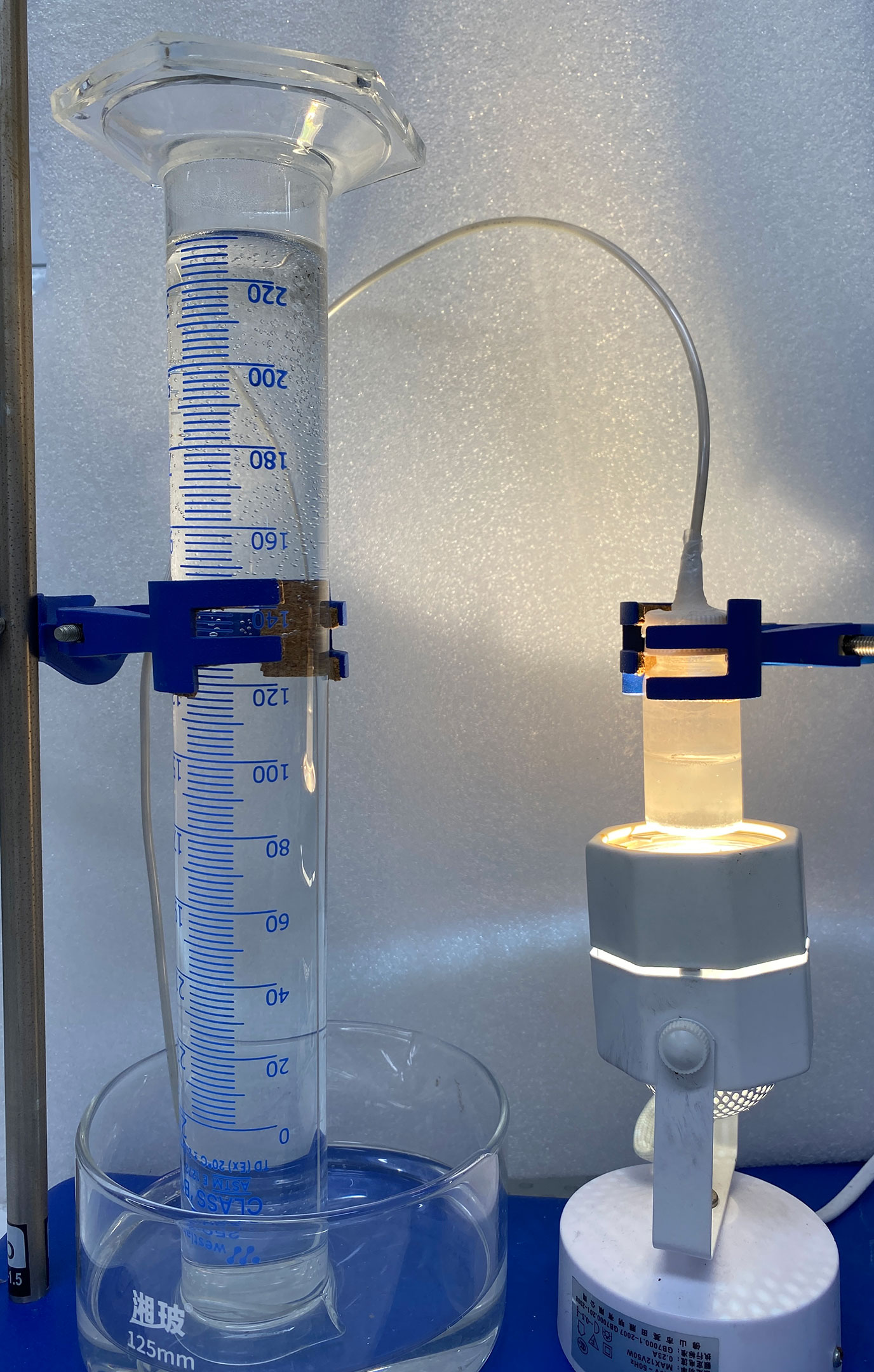
That investigation resulted in a system built around a circular chemical process. Tiny gallium particles are suspended in either freshwater or seawater and activated by sunlight or artificial illumination. During this process, gallium reacts with water to form gallium oxyhydroxide while releasing hydrogen gas.
“After we extract hydrogen, the gallium oxyhydroxide can also be reduced back into gallium and reused for future hydrogen production – which we term a circular process,” says Professor Kalantar-Zadeh.
A Simple Reaction with Big Implications
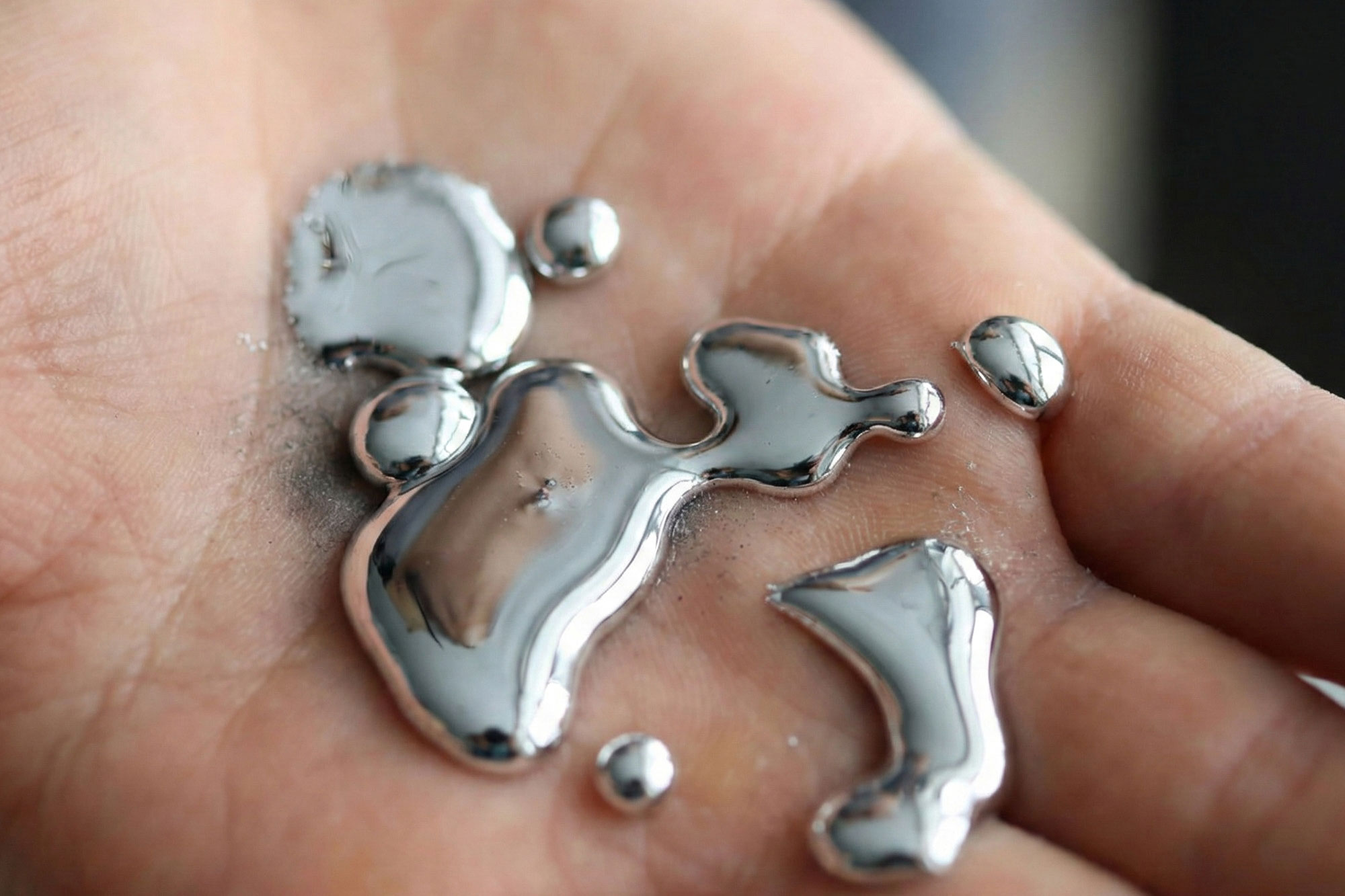
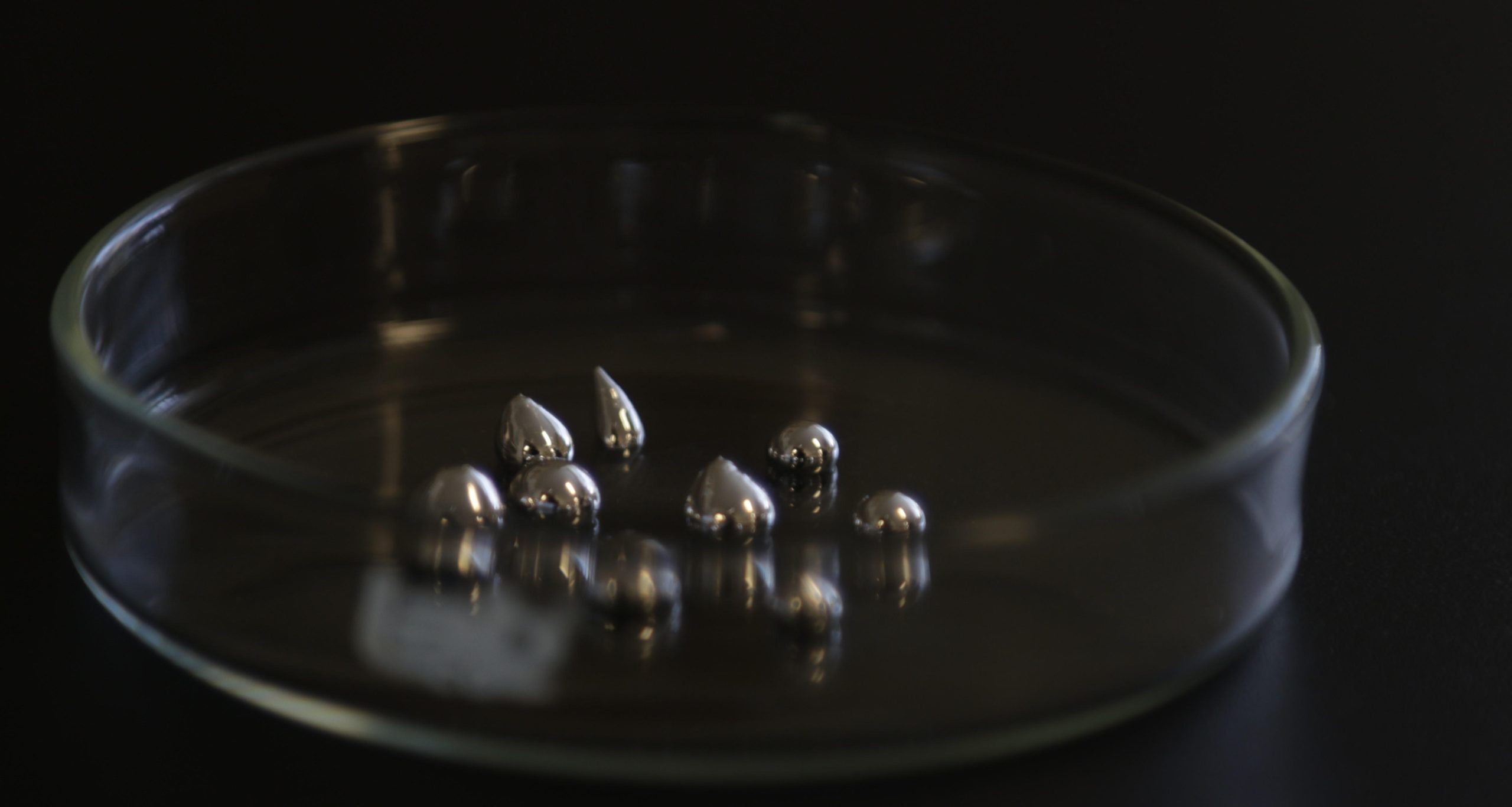
Liquid gallium displays unusual physical characteristics. Although it appears solid at room temperature, warming it to around body temperature causes it to melt into reflective pools of liquid metal.
Mr Campos explained that liquid gallium typically has a chemically “non-sticky” surface, meaning other materials do not readily adhere to it under normal conditions. When the metal is exposed to light while submerged in water, however, reactions occur at its surface.
Under these illuminated conditions, gallium slowly oxidizes and corrodes. This surface reaction leads to the release of clean hydrogen gas and the formation of gallium oxyhydroxide, both of which are central to the hydrogen production process.
“Gallium has not been explored before as a way to produce hydrogen at high rates when in contact with water – such a simple observation that was ignored previously,” says Professor Kalantar-Zadeh.
The University of Sydney-led research was published in Nature Communications.
Why scientists are so keen on hydrogen molecules
Many industries and scientists believe hydrogen is the ideal candidate for a sustainable energy source, contributing significantly to reducing greenhouse gas emissions. ‘Green’ hydrogen, as its name suggests, is made using renewable sources.
Hydrogen is one of the most abundant elements on Earth and can be sourced from a large range of compounds as well, such as water (water has two hydrogen molecules). When hydrogen burns, it produces no pollutants, only water, but still can generate high levels of energy or power.
Efforts to produce green hydrogen have focused on ‘water splitting’: splitting atoms in water molecules to release hydrogen using methods including electrolysis, photocatalysis, and plasma (artificial lightning).
But the process required to separate hydrogen and oxygen atoms in water has faced multiple obstacles, including the need to use purified water, incurring high cost or producing low yields of hydrogen.
The method Professor Kalantar-Zadeh’s team introduced with liquid gallium avoids many of those obstacles. The method can use both sea and fresh water, and because the process is circular, gallium in the reaction can be reused.
Professor Kalantar-Zadeh said: “There is a global need to commercialize a highly efficient method for producing green hydrogen. Our process is efficient and easy to scale up.”
The team is now working on increasing the efficiency of the technology, and their next goal is to establish a mid-scale reactor to extract hydrogen.
Reference: “Low temperature and rapid photothermal oxidation of liquid gallium for circular hydrogen production” by Luis G. B. Campos, Francois-Marie Allioux, Gustavo Fimbres Weihs, Sarina Sarina, Anthony P. O’Mullane, Torben Daeneke, Richard B. Kaner and Kourosh Kalantar-Zadeh, 20 January 2026, Nature Communications.
DOI: 10.1038/s41467-026-68664-1
Funding: Australian Research Council Discovery Project
Never miss a breakthrough: Join the SciTechDaily newsletter.
Follow us on Google and Google News.
6 Comments
“When hydrogen burns, it produces no pollutants, only water, but still can generate high levels of energy or power.”
What the authors mean by “pollutants,” is carbon dioxide, used by all marine and terrestrial photosynthetic organisms. Hydrogen dioxide (water) is not without its problems! It is actually a more powerful greenhouse gas than carbon dioxide (CO2). Water vapor is not as well-mixed as CO2 and if it is used as a replacement for CO2 derived from hydrocarbons, it can be expected to double the local concentration of urban water vapor leading to an increased Heat Index and mold in the Summer, and increased rime ice in the Winter. The efficiency of hydrogen engines for transportation can be expected to decline if the condensed water is stored on-board to avoid increasing the humidity, not to mention the tendency to decrease the life-expectancy of the vehicles exposed to water vapor and liquid.
Instead of focusing on what is assumed widely as a problem — warming — we should be looking at the big picture and the potential unintended consequences. Regenerating the gallium will take energy, making the system less efficient. Additionally, hydrogen has a known problem of embrittling steel used in storage tanks, transmission pipes, and valves. We need input from knowledgeable, objective observers, not from people who hope to sell us hydrogen or get a publication to add to their CV.
Hydrogen as fuel – in vehicles- requires new aqueous-friendly parts, ceramic engine blocks and newly structured variations for non rusting parts, etc. The area beckons a robust industry expansion. Your point about water vapor is interesting, and should be an area to parse.
I see oil as a fully developed source for materials and materials science – but burning is profound waste in the long term.
There is a reason that metals like steel and brass are commonly used for making things — they are what are called ‘machinable’ or capable of being made with subtractive fabrication. Ceramics are generally not machinable and are brittle. I doubt that additive fabrication, using 3D printers, will produce pressurized storage tanks that are as cheap to make as current steel tanks, or have walls that are as thin. That generally translates to more expensive fabrication. Also, for the same tensile strength, brittle ceramics have to be thicker, making them heavier and bulkier. One can make ceramic storage tanks, but for the same tensile strength of steel the walls of the pressurized tanks will have to be much thicker. The current fabrication techniques are mature and relatively inexpensive. It is difficult to predict whether that will be true for casting or additive fabrication.
I stopped reading when I saw that “water contains 2 molecules of hydrogen”…
If the author doesn’t know the difference between atoms and molecules I don’t trust any other statements that are made in the article…
Using sunlight to generate hydrogen is a good idea. It is actually a process of harvesting the freely available solar energy. Considering the energy required to recycle gallium, the question is whether it will be more efficient than solar cells.
There is no such thing as a ‘free lunch.’ PV cells are created from mining, benificiating, smelting, purifying, and fabricating silicon cells. All of those require energy upfront, as does the creation of an infrastructure to build the scaffolding for the solar panels. What is necessary is ‘cradle to grave’ analysis of all related costs to determine which energy sources are truly the cheapest, with subsidies that don’t typically show up on the accounting sheets.