
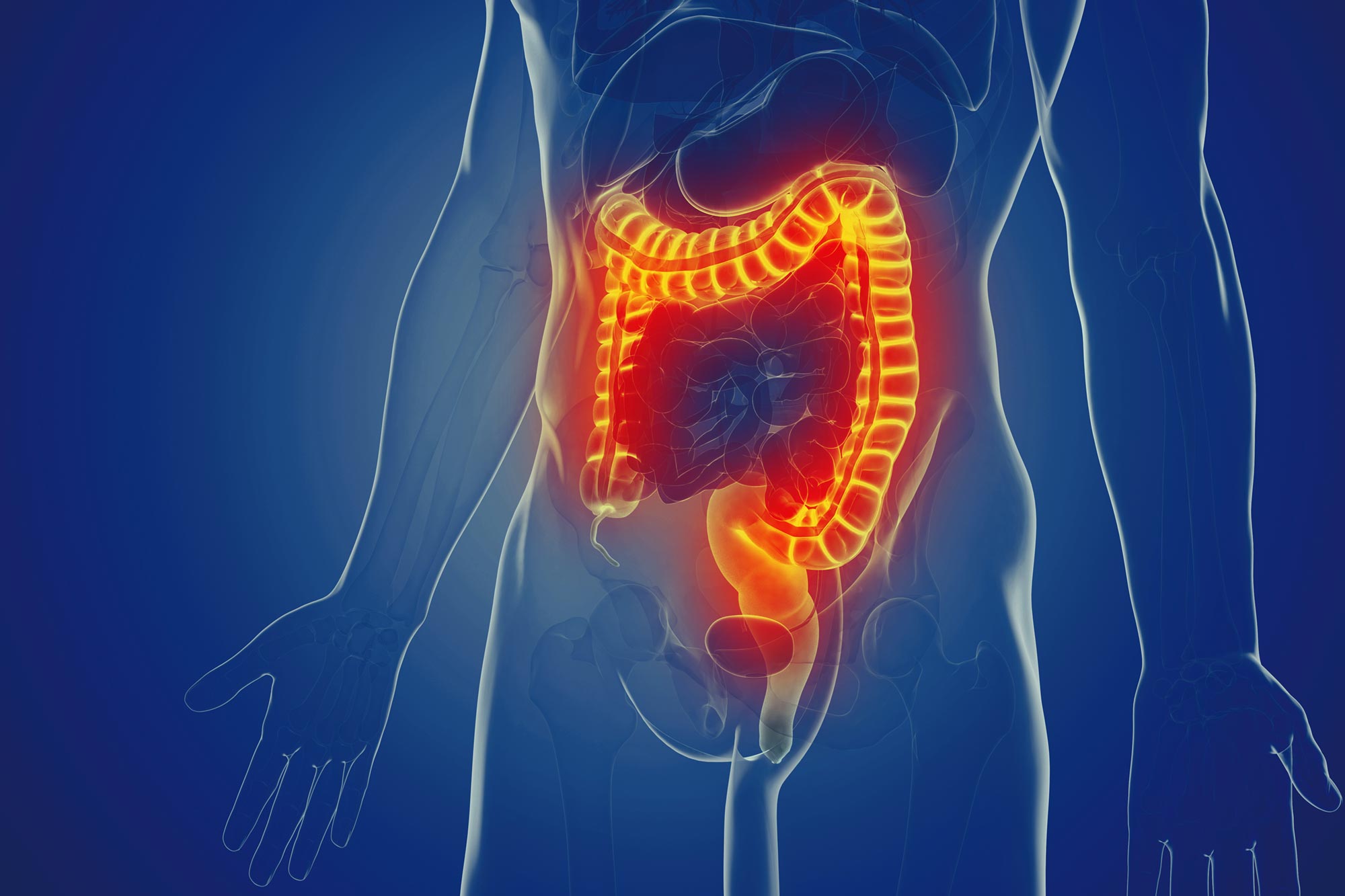
New research shows that the gene PTPN2 helps regulate gut bacteria and plays a key role in protecting the body from excessive inflammation.
Scientists at the University of California, Riverside, are uncovering how a single gene can influence whether the gut remains resilient or becomes vulnerable to disease. In two related studies published in the journal Gut Microbes, researchers focused on PTPN2, a gene increasingly linked to inflammatory bowel disease (IBD) and the body’s ability to control harmful bacteria.
The work was led by Declan McCole, a professor of biomedical sciences in the School of Medicine. His team found that when PTPN2 activity is reduced, the gut’s natural defenses weaken, creating conditions that allow infection and inflammation to take hold more easily.
One of the clearest consequences appears in the behavior of adherent-invasive E. coli (AIEC), a strain of bacteria commonly found at higher levels in people with IBD. Unlike most gut bacteria, AIEC can cling tightly to the intestinal lining, slip inside gut cells, erode the protective barrier of the intestine, and fuel ongoing inflammation.
How PTPN2 Loss Enables Harmful Bacteria
Under healthy conditions, PTPN2 plays an important role in keeping inflammation in check and maintaining a stable mix of gut microbes. In some people with IBD, however, a defective version of the gene lowers PTPN2 activity. This disruption alters the microbial balance in the gut, creating an environment where harmful bacteria are more likely to thrive.
McCole and his colleagues showed that when this protective function is lost, bacteria such as AIEC are better able to latch onto intestinal cells, penetrate the gut lining, and reproduce more efficiently.
“Our findings help explain why certain people are more prone to ongoing gut inflammation,” McCole said. “The research also points to potential treatment strategies that could restore gut defenses and limit harmful bacteria in patients who are genetically at risk for IBD.”
Increased Bacterial Entry Into Gut Cells
In the first paper, the researchers examined gut tissue from IBD patients with the faulty PTPN2 gene, as well as lab-grown gut cells engineered with the same genetic change. They found that when PTPN2 is not functioning, gut cells produce more “docking sites” on their surface, allowing AIEC to enter the cells more easily.
“We also found that treatment with a medication already used to treat IBD, called a JAK inhibitor, could partially reduce this problem by limiting the bacteria’s ability to invade gut cells,” McCole said. “Our findings suggest that JAK inhibitors may help control harmful bacterial growth in people genetically predisposed to IBD.”
Strengthening the Gut’s Antimicrobial Response
In the second paper, the researchers report that PTPN2 helps gut lining cells fight bacteria such as AIEC by producing natural bacteria-killing substances and maintaining a strong gut barrier.
“This protection works against normal gut bacteria as well as harmful bacteria, such as AIEC,” McCole said. “When PTPN2 functions properly, it helps prevent bad bacteria from entering gut cells and triggering inflammation.”
References:
“The PTPN2 rs1893217 IBD risk allele increases susceptibility to AIEC invasion by a JAK-STAT-CEACAM6 axis” by Pritha Chatterjee, Vinicius Canale, Stephanie J. King, Ali Shawki, Hillmin Lei, Alina N. Santos, Michael Haddad, Casey Gries, Dermot P. B. McGovern, James Borneman and Declan F. McCole, 7 July 2025, Gut Microbes.
DOI: 10.1080/19490976.2025.2526136
“Intestinal epithelial PTPN2 limits pathobiont colonization by immune-directed antimicrobial responses” by Pritha Chatterjee, Marianne R. Spalinger, Charly Acevedo, Alina N. Santos, Casey M. Gries, Salomon M. Manz, Vinicius Canale, Ali Shawki, Anica Sayoc-Becerra, Hillmin Lei, Meli’sa S. Crawford, Lars Eckmann, James Borneman and Declan F. McCole, 15 September 2025, Gut Microbes.
DOI: 10.1080/19490976.2025.2559029
The research was supported by grants from the National Institutes of Health.
Never miss a breakthrough: Join the SciTechDaily newsletter.
Follow us on Google and Google News.