
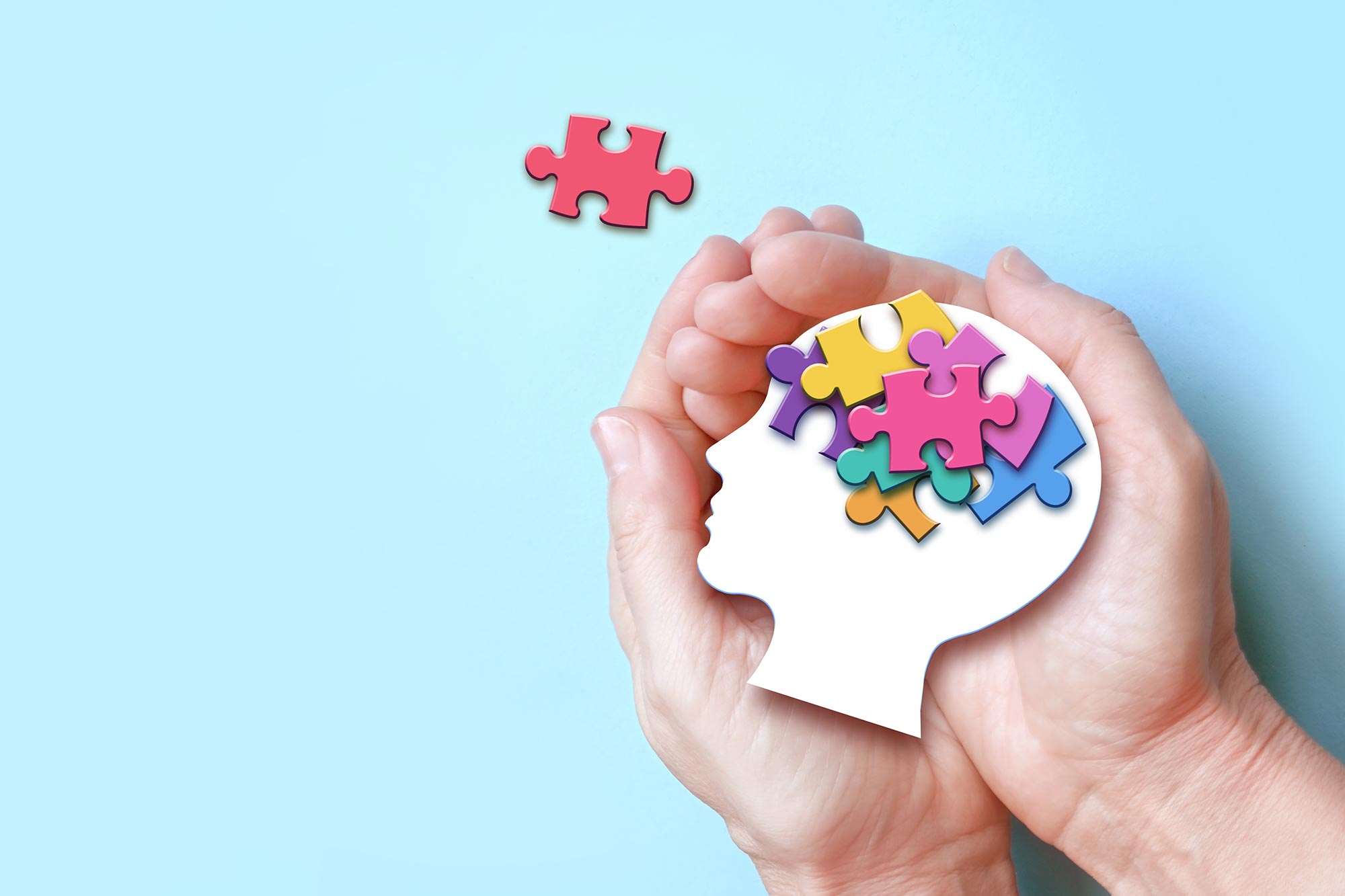
A hidden molecular chain reaction in the brain may push key cellular systems into overdrive in autism—and scientists just found a way to switch it off.
The brain relies on a constant flow of chemical messages to keep its networks working smoothly. One way to picture this system is like traffic lights in a busy city, guiding signals so everything moves in the right direction. In a new study, scientists investigated nitric oxide, a common signaling molecule in the brain. They found that in some forms of autism, higher levels of nitric oxide may stop acting like a helpful messenger and begin behaving more like a “stuck button.”
When this occurs, it can set off a chain reaction inside cells. A protective protein called TSC2, which normally helps regulate cellular activity, begins to disappear. Without this safeguard, an important cellular control system called mTOR can become overly active. Because mTOR helps control cell growth and protein production, this surge may disrupt normal brain signaling. The encouraging finding is that when researchers blocked a key step in this process, the system returned to a more balanced state. This discovery offers a clearer target for understanding autism biology and suggests potential paths for future treatments.
Nitric Oxide and Autism Brain Signaling
Nitric oxide typically acts as one of the brain’s subtle helpers. This tiny molecule moves between cells and helps fine tune communication within neural circuits. However, new research from the Hebrew University of Jerusalem suggests that in certain cases of autism spectrum disorder (ASD), nitric oxide may also initiate a biochemical cascade that pushes cellular signaling into overdrive.
The study was led by Prof. Haitham Amal, The Satell Family Professor of Brain Sciences, and first-authored by PhD student Shashank Ojha. The findings were published in Molecular Psychiatry, one of the leading journals in psychiatry and part of the Nature Publishing Group. The research examines how three key components interact: nitric oxide, the protective protein TSC2, and the mTOR pathway, a major regulator of cell growth and protein production.
Scientists have long suspected that mTOR signaling can become abnormal in ASD. What has been less clear is the sequence of biological steps that lead to these changes in the brain.
How Nitric Oxide Affects the TSC2 Protein
To investigate this question, the research team focused on a biochemical process called S-nitrosylation. This occurs when nitric oxide attaches to proteins and alters how they function.
Using a systems-level protein analysis approach, the researchers found that proteins connected to the mTOR pathway were particularly affected by this modification. This led them to examine TSC2 more closely. Under normal conditions, TSC2 acts as a brake that limits mTOR activity and keeps cellular processes in balance.
The experiments revealed that nitric oxide can modify TSC2 in a way that marks the protein for removal. As TSC2 levels decline, its braking effect weakens and mTOR signaling rises. Since mTOR influences protein production and other core cellular functions, this overactivity may interfere with how neurons operate and communicate.
Blocking the Chain Reaction
The scientists then explored whether this process could be interrupted. They used pharmacological strategies that reduce nitric oxide production in neurons.
When nitric oxide signaling was lowered, the modification of TSC2 no longer occurred. As a result, mTOR activity returned to normal levels. The researchers also observed improvements in measurements related to protein translation and autism linked cellular changes in their experimental system.
In a second approach, the team engineered a version of the TSC2 protein that could resist nitric oxide-related modification. Preventing that single chemical tag preserved TSC2 levels and reduced the downstream effects associated with excessive mTOR activity. These results strengthen the idea that this specific molecular change may be an important driver of the pathway.
Evidence From Children With Autism
The study also included clinical samples from children diagnosed with ASD. These samples came from children with SHANK3 mutations as well as those with idiopathic ASD (cases without a single known genetic cause). The participants were recruited by Dr. Adi Aran, MD.
Analysis of these samples revealed patterns that matched the laboratory findings. Researchers observed lower levels of TSC2 along with increased activity in the mTOR signaling pathway. These results suggest that the molecular mechanism identified in the lab may also occur in real world cases of autism.
“Autism is not one condition with one cause, and we don’t expect one pathway to explain every case,” said Prof. Haitham Amal. “But by identifying a clearer chain of events, how nitric oxide-related changes can affect a key regulator like TSC2 and, in turn, mTOR, we hope to provide a more precise map for future research and, eventually, more targeted therapeutic ideas.”
New Directions for Autism Research and Treatment
The findings highlight the potential importance of developing nitric oxide inhibitors for ASD. By clarifying the link between nitric oxide, TSC2, and the mTOR pathway, the study provides a new framework for understanding how cellular signaling can become imbalanced in autism.
This clearer map of the molecular pathway may also guide scientists as they explore new treatment strategies and investigate ways to restore normal signaling in the brain.
About Autism Spectrum Disorder (ASD)
ASD is a neurodevelopmental condition marked by differences in social communication and patterns of behavior. The condition is highly diverse, and many genetic and biological factors can contribute to its development and outcomes.
Researchers increasingly focus on cellular pathways such as mTOR because they play an important role in how brain cells grow, adapt, and form connections. Understanding these mechanisms may help reveal new opportunities for future therapies.
Reference: “Nitric Oxide-Mediated S-Nitrosylation of TSC2 Drives mTOR dysregulation across Shank3 and Cntnap2 Models of Autism Spectrum Disorder” by Shashank Kumar Ojha, Maryam Kartawy, Wajeha Hamoudi, Manish Kumar Tripathi, Adi Aran and Haitham Amal, 25 February 2026, Molecular Psychiatry.
DOI: 10.1038/s41380-026-03514-6
Never miss a breakthrough: Join the SciTechDaily newsletter.
Follow us on Google and Google News.
2 Comments
thanks for this
I’ve long mused on what I would do if offered a “cure” for my mental peculiarities. At my age, I should not even entertain having to learn to handle a whole new array of mental interactions and all the social signals that flew over my head and went unprocessed. That aside there is the extremely strong factor, “I won’t be ME anymore. I’d be a stranger to myself.” I honestly think my reaction to being offered the cure would be so strong the doctor’s life would be in danger. I’ve SO MUCH wished I was normal until I realized that would be I’d be somebody normal who cannot concentrate more than minutes at a time and is dumb as horny toads. The autistic “trance” state is fantastic. Super high productivity leaves the best high in the universe, doing something beyond most people other than those like me. “I did it!” “I fixed it!” Potent words to an ASD.
{O.O}