
Scientists have identified tricellulin loss as the root cause of dry mouth in Sjögren’s syndrome, and successfully reversed it in lab models.
A major breakthrough has identified the loss of a crucial “gatekeeper” protein as the underlying cause of dry mouth in Sjögren’s syndrome, a discovery that could reshape how the disease is treated. Researchers have pinpointed tricellulin, a protein responsible for sealing tight junctions between salivary gland cells, as the key player. When inflammation disrupts tricellulin, these cellular barriers break down, halting saliva production and allowing harmful substances to leak through the tissue.
The study not only mapped out the precise biological chain of events that leads to this breakdown but also successfully reversed the damage in laboratory models using two different therapeutic approaches. These findings open the door to treatments that could repair the underlying damage, offering the possibility of true disease-modifying therapies, rather than just symptom management.
Sjögren’s syndrome is a chronic autoimmune condition affecting millions globally, particularly women. It causes persistent dryness of the mouth and eyes, significantly impairing daily functions like speaking, eating, and sleeping. While it’s long been known that the immune system attacks the body’s moisture-producing glands, the exact mechanism behind the loss of saliva production had remained elusive. Scientists suspected that specialized intercellular junctions, often described as “zipper-like” structures, were compromised, but the specific failure point was unclear.
This discovery finally answers a key question: What’s tearing open those cellular zippers? And more importantly, can we close them again?
Peking University Uncovers the Role of Tricellulin
On March 19, 2025, researchers at Peking University reported a series of pivotal findings that answer this very question. Their study, published in the International Journal of Oral Science, revealed that tricellulin — a protein acting as a clasp at the three-way junctions of glandular cells — is destroyed early in the progression of Sjögren’s syndrome.
Using human tissue samples and specialized mice, the team traced the damage to a specific inflammatory pathway. Most notably, they tested two intervention strategies: an investigational drug (AT1001) and a molecule that blocks microRNA-145. Both approaches successfully restored saliva secretion in mice, demonstrating that the damage is not only identifiable but also reversible.
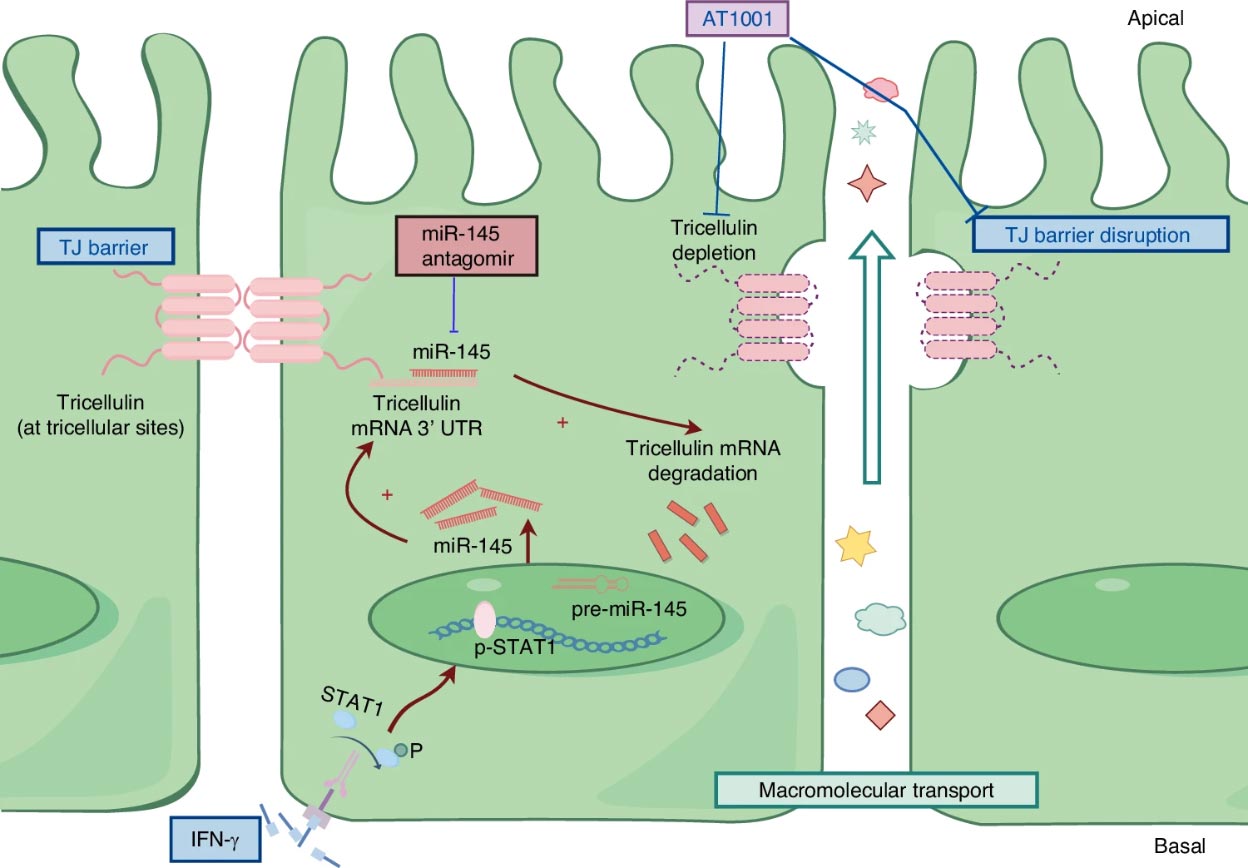
The research showed that tricellulin functions as the glue at three-cell junctions in saliva glands. Its loss causes leakiness and disrupts normal secretion. Interferon-gamma and other inflammatory molecules launch a molecular cascade: they activate the JAK/STAT1 pathway, boosting levels of microRNA-145, which then targets and dismantles tricellulin.
To confirm tricellulin’s central role, scientists engineered mice lacking the protein — and reproduced Sjögren’s symptoms almost exactly. The breakthrough came when they reversed this engineered damage: AT1001 repaired the cell junctions, while microRNA-145 inhibitors stopped the breakdown before it began. Both restored normal gland function, offering a potential blueprint for human treatment.
From Managing Symptoms to Structural Repair
“This changes how we think about treating Sjögren’s syndrome,” said lead researcher Dr. Xin Cong. “We’re moving beyond simply calming inflammation — now we can fix the actual structural damage in the glands. It’s like repairing a burst pipe instead of just drying the floor. What’s even more encouraging is that both approaches worked, which gives us real confidence in developing patient-ready therapies.”
This discovery holds vast potential for the millions struggling with Sjögren’s dry mouth. Early detection of tricellulin loss could lead to preemptive care before irreversible damage sets in. The repurposing of AT1001, already tested for other illnesses, might accelerate clinical trials. Meanwhile, the microRNA-145 insight offers a gateway to highly targeted therapies that halt the problem at its root. Beyond Sjögren’s, this research could extend to other disorders involving damaged glands or leaky epithelial barriers — including dry eye disease and certain gut conditions. While clinical trials in humans are the next step, the leap from symptom management to glandular repair marks a watershed moment in autoimmune disease research.
Reference: “Loss of tricellular tight junction tricellulin leads to hyposalivation in Sjögren’s syndrome” by Xiangdi Mao, Haibing Li, Sainan Min, Jiazeng Su, Pan Wei, Yan Zhang, Qihua He, Liling Wu, Guangyan Yu and Xin Cong, 19 March 2025, International Journal of Oral Science.
DOI: 10.1038/s41368-025-00349-9
Never miss a breakthrough: Join the SciTechDaily newsletter.
Follow us on Google and Google News.
1 Comment
Keep me updated