
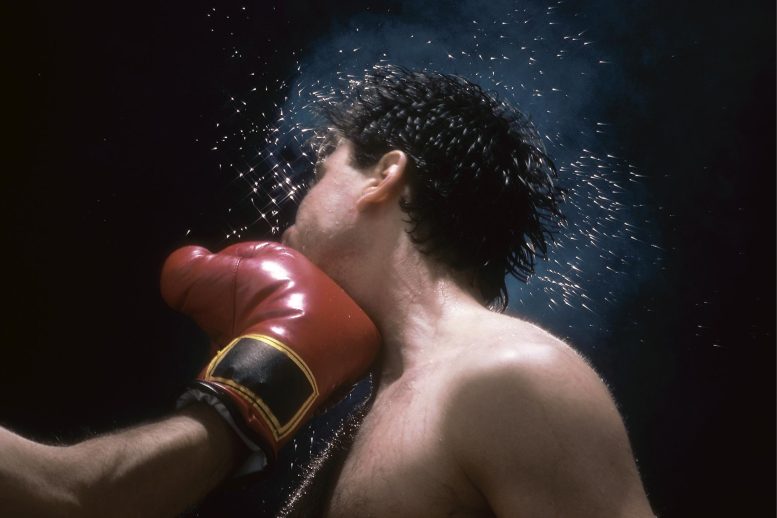
A study in Neurology suggests that retired boxers and MMA fighters may recover some cognitive abilities after they stop fighting. The findings point to potential brain recovery but call for more research.
After they stop fighting, boxers and mixed martial arts (MMA) fighters may see some recovery in their thinking and memory skills as well as brain structure. This is according to the results of new research that will be published today in the September 14, 2022, online issue of Neurology®, the medical journal of the American Academy of Neurology.
“Repetitive hits to the head increase the risk of long-term neurologic conditions like chronic traumatic encephalopathy (CTE), cognitive and behavior problems, and parkinsonism,” said study author Aaron Ritter, MD, of Cleveland Clinic Lou Ruvo Center for Brain Health in Las Vegas, Nevada. “However, we haven’t known what happens to people who have been fighting and then stop fighting. The good news is we saw some improvement in thinking and memory scores in these retired fighters.”
For the study, researchers identified 45 male retired fighters who had not competed in two years. They had an average age of 32, with 22 boxers, 22 MMA fighters, and one martial artist. In addition, they identified 45 male active fighters. They had an average age of 30, with 17 boxers, 27 mixed martial artists, and one martial artist. At the beginning of the study, the groups were matched for age, education, race, and number of fights.
Within a year of the start of the study, all fighters had a professional fight. However, retired fighters then went two years without any fights while active fighters continued to participate in professional fights.
All fighters had brain scans and completed tests to see how well their brains were working at both the beginning and the end of the three-year study. Scientists also examined participants’ fighting histories. Half of the participants also had blood tests for a biological marker of brain injury called neurofilament light chain, which is a component of nerve fibers that can be detected in the blood when the fibers are injured.
In addition, the participants took tests to measure verbal memory, executive functioning, motor speed, and processing speed.
Cognitive Improvements in Retired Fighters
In the areas of verbal memory, motor speed, and processing speed, the retired fighters had improvements in their scores over time. On the other hand, the active fighters’ scores were stable or showed subtle declines.
For verbal memory, scientists used scores from an FDA-approved thinking and behavior test. Higher scores on the test indicate better memory. It was found that over time, retired fighters on average had an increase of three points while active fighters had an average decrease of two points.
Different patterns of change over time between retired and active fighters in the ability to detect and respond to rapid changes in the environment and the length of time it takes to complete tasks were also found by scientists.
Blood Markers and Brain Structure Changes
For neurofilament light chain levels, retired fighters showed a decrease in levels in their blood from the start to the end of the study, whereas active fighters remained stable throughout the study.
Scientists also measured brain thickness in the areas of the brain that control emotion, memory, and executive function. These correlate to a person’s ability to plan, focus, and manage multiple tasks. Out of 68 brain regions measured, 54 regions had a consistently changing trajectory. For the retired fighters, the thickness measures stabilized. However, for active fighters, the thickness measures declined subtlely over time.
Implications for Long-Term Brain Health
“The results of this study suggest a recovery of cognitive functioning in fighters who are no longer exposed to repetitive hits to the head,” said Ritter. “Future research is needed to determine if there is a time in a fighter’s career where recovery is less likely to happen or to identify factors that might indicate greater risk for developing a neurodegenerative condition.”
A limitation of the study was the inability to pinpoint the exact number of repetitive head hits sustained by each participant. Although many head impacts occur during training, there is no generally accepted way of measuring them. Another limitation is that this study only looked at male fighters.
Reference: 14 September 2022, Neurology.
The study was funded by the National Institutes of Health, Lincy Foundation, Belator, Ultimate Fighting Championship Company (UFC), the August Rapone Family Foundation, Top Rank, and Haymon Boxing.
Never miss a breakthrough: Join the SciTechDaily newsletter.
Follow us on Google and Google News.