
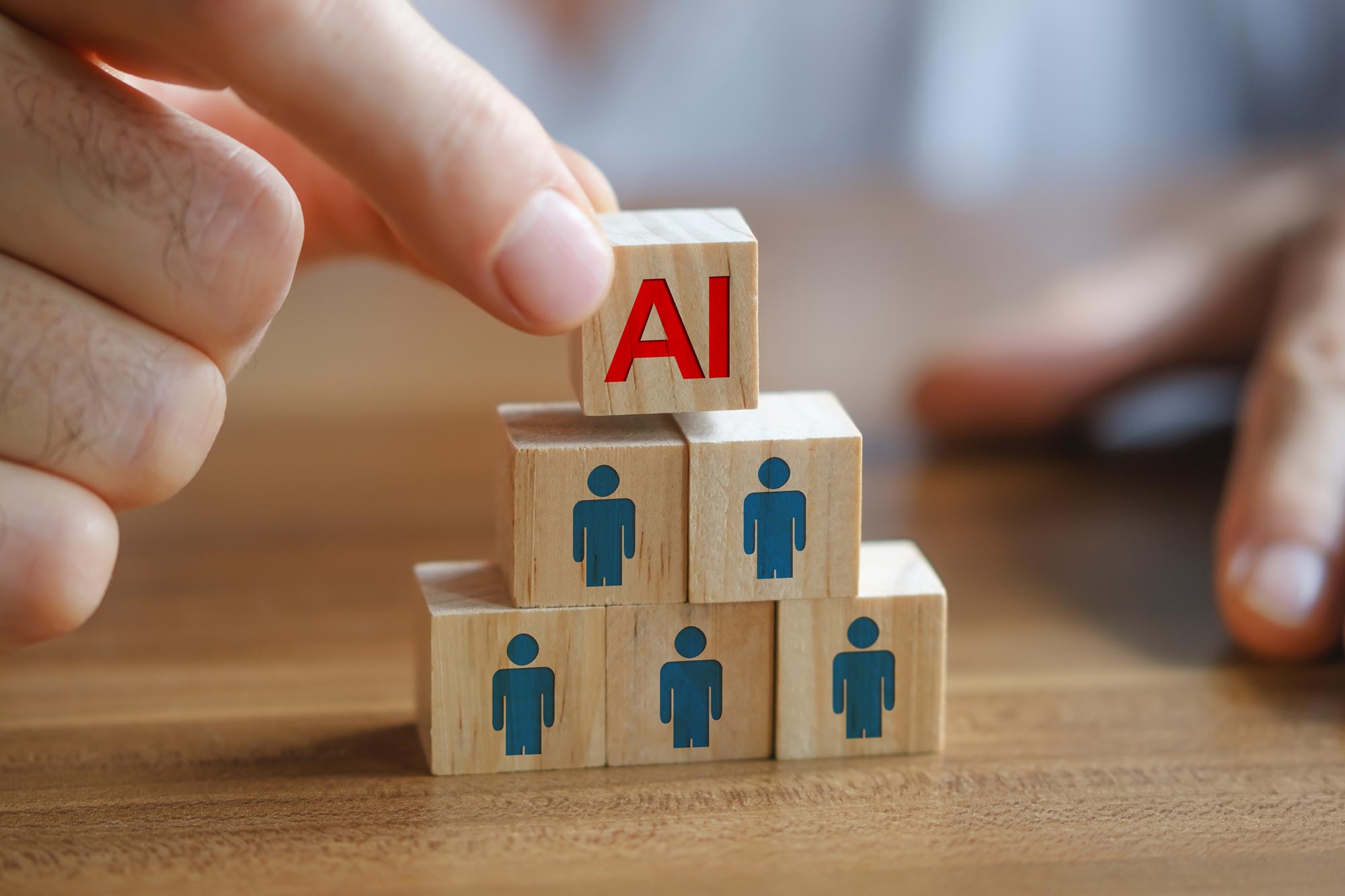
Are generative artificial intelligence systems such as ChatGPT capable of real creativity? A new large-scale study led by Professor Karim Jerbi from the Department of Psychology at the Université de Montréal set out to answer that question. The research team also included Yoshua Bengio, a leading AI pioneer and professor at the Université de Montréal. Together, they conducted the most extensive comparison to date between human creativity and the creative abilities of large language models.
The findings, published in Scientific Reports, point to a major shift. Generative AI systems have now reached a level where they can outperform the average human on certain creativity measures. At the same time, the study makes it clear that the most creative people still exceed the performance of even the strongest AI models.
AI Reaches Average Human Creativity Levels
The researchers evaluated several major large language models, including ChatGPT, Claude, Gemini, and others, and compared their results with data from 100,000 human participants. The outcome marks a clear turning point. Some AI systems, including GPT-4, scored higher than the average human on tasks designed to measure divergent linguistic creativity.
“Our study shows that some AI systems based on large language models can now outperform average human creativity on well-defined tasks,” explains Professor Karim Jerbi. “This result may be surprising — even unsettling — but our study also highlights an equally important observation: even the best AI systems still fall short of the levels reached by the most creative humans.”
Further analysis by the study’s co-first authors, postdoctoral researcher Antoine Bellemare-Pépin (Université de Montréal) and PhD candidate François Lespinasse (Université Concordia), revealed an important pattern. While some AI models now outperform the average person, the highest levels of creativity remain uniquely human.
When the researchers looked more closely, they found that the most creative half of human participants achieved higher average scores than all AI systems tested. The difference was even more pronounced among the top 10 percent of the most creative individuals.
“We developed a rigorous framework that allows us to compare human and AI creativity using the same tools, based on data from more than 100,000 participants, in collaboration with Jay Olson from the University of Toronto,” says Professor Karim Jerbi, who is also an associate professor at Mila.
How Creativity Was Measured in Humans and AI
To make a fair comparison between people and machines, the research team used several methods. The primary tool was the Divergent Association Task (DAT), a psychological test designed to measure divergent creativity, or the ability to generate many original and varied ideas from a single prompt.
Created by study co-author Jay Olson, the DAT asks participants, whether human or AI, to generate ten words that are as different in meaning from one another as possible. A highly creative response might include words such as “galaxy, fork, freedom, algae, harmonica, quantum, nostalgia, velvet, hurricane, photosynthesis.”
Performance on this task in humans closely mirrors results on other well-established creativity tests used in idea generation, writing, and creative problem solving. Although the task is language-based, it does not simply test vocabulary. Instead, it taps into broader cognitive processes involved in creative thinking across many domains. Another advantage of the DAT is its speed and accessibility, as it takes only two to four minutes to complete and is available online to the general public.
From Simple Word Tests to Creative Writing
Building on these results, the researchers examined whether AI performance on this basic word association task could translate into more complex creative activities. To test this, they directly compared AI systems and human participants on creative writing tasks.
These included writing haiku (a short three-line poetic form), producing movie plot summaries, and creating short stories. Once again, the pattern was clear. While AI sometimes outperformed average human participants, the most skilled human creators continued to demonstrate a clear advantage.
Can AI Creativity Be Adjusted?
The findings raised an important follow-up question. Can AI creativity be shaped or controlled? According to the study, it can. One key factor is the model’s temperature, a technical setting that influences how predictable or adventurous an AI’s responses are.
At lower temperature settings, AI systems tend to generate safer and more predictable outputs. At higher temperatures, the responses become more varied and less constrained, encouraging risk-taking and more original associations.
The researchers also found that the way prompts are written plays a major role. For example, instructions that encourage AI models to consider the origins and structure of words using etymology lead to more unexpected ideas and higher creativity scores. Together, these results show that AI creativity depends heavily on human input and guidance, making interaction between people and machines a central part of the creative process.
Will AI Replace Human Creators?
The study offers a balanced perspective on fears that artificial intelligence could replace creative professionals. While some AI systems can now rival human creativity on specific tasks, the research also highlights clear limitations and the continued importance of human creativity.
“Even though AI can now reach human-level creativity on certain tests, we need to move beyond this misleading sense of competition,” says Professor Karim Jerbi. “Generative AI has above all become an extremely powerful tool in the service of human creativity: it will not replace creators, but profoundly transform how they imagine, explore, and create — for those who choose to use it.”
Rather than predicting the end of creative careers, the findings encourage a new way of thinking about AI. The technology may serve as a creative assistant that expands possibilities for exploration and inspiration. The future of creativity may depend less on humans versus machines and more on new forms of collaboration, where AI supports and enhances human imagination.
“By directly confronting human and machine capabilities, studies like ours push us to rethink what we mean by creativity,” concludes Professor Karim Jerbi.
The article “Divergent creativity in humans and large language models” was published in Scientific Reports on January 21, 2026.
Reference: “Divergent creativity in humans and large language models” by Antoine Bellemare-Pepin, François Lespinasse, Philipp Thölke, Yann Harel, Kory Mathewson, Jay A. Olson, Yoshua Bengio and Karim Jerbi, 21 January 2026, Scientific Reports.
DOI: 10.1038/s41598-025-25157-3
The research involved collaboration among scientists from Université de Montréal, Université Concordia, University of Toronto Mississauga, Mila (Quebec AI Institute), and Google DeepMind.
The study was led by Professor Karim Jerbi, with Antoine Bellemare-Pépin (Université de Montréal) and François Lespinasse (Université Concordia) serving as co-first authors. The author team also included Yoshua Bengio, founder of Mila and LoiZéro, and one of the world’s leading pioneers of deep learning, the technology behind modern AI systems such as ChatGPT.
Never miss a breakthrough: Join the SciTechDaily newsletter.
Follow us on Google and Google News.
6 Comments
“AI Is Now More Creative Than the Average Human”
Certainly! It is called hallucinations.
AI is especially problematic when it comes to medicine. See my article, AI BS and the Big C. https://www.academia.edu/145481904/AI_BS_and_the_Big_C
Yeah, let’s all kiss up to AI now. 🤨
Well that’s a big threshold – but tell AI to get involved with 17 year old girl who gets pregnant, demands marriage and tells AI to go out and get a job; and after a few years of crying babies and midnight diaper changes, see how it fairs on the test.
I’m not up on the AI phenomenon; I’m always decades behind. my first thought is that 100 monkeys in a room full of typewriters writing Shakespeare could be credited to AI.
but the problem I have is with the assumption that the common man has any active brains at all. he doesn’t. he is functionally illiterate, spineless, stupid and weak. let’s compare him to a tin can, intellectually.
this is the kind of unexamined given that includes schools (as if anyone’s teaching anything there), stringless handouts to poor people, vacation dreams of places actually teeming with poverty ridden street vendors, noise, pollution and litter, also casino gambling, McDonald’s fries, etc.
anyway, brilliant writing requires a brilliant mind, so both computers and common people are not involved.
I’m not up on the AI phenomenon; I’m always decades behind. my first thought is that 100 monkeys in a room full of typewriters writing Shakespeare could be credited to AI.
but the problem I have is with the assumption that the common man has any active brains at all. he doesn’t. he is functionally illiterate, spineless, stupid and weak. let’s compare him to a tin can, intellectually.
this is the kind of unexamined given that includes schools (as if anyone’s teaching anything there), stringless handouts to poor people, vacation dreams of places actually teeming with poverty ridden street vendors, noise, pollution and litter, also casino gambling, McDonald’s fries, etc. everyone ooohs and cooos at their mention, but none of them are worth a bucket of warm spit.
anyway, brilliant writing requires a brilliant mind, so both computers and common people are not involved.