
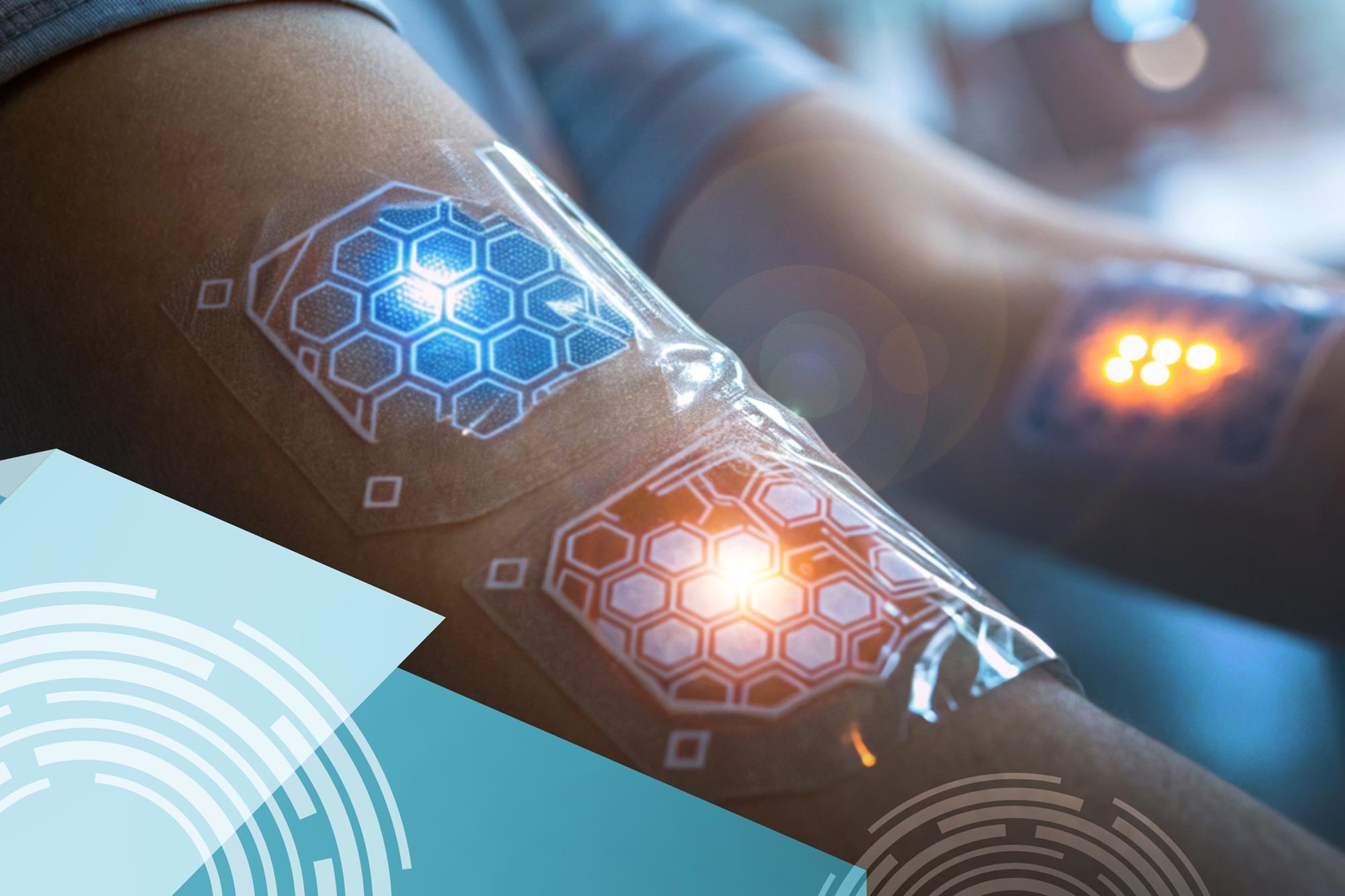
Researchers are uncovering how sweat could become a powerful tool for real-time health monitoring.
Sweat carries a surprisingly rich collection of biological signals, and a new study suggests that artificial intelligence combined with advanced sensor technology may soon allow us to use those signals in powerful new ways to track health and well-being.
Published in the Journal of Pharmaceutical Analysis, the research explores how sweat could be used to follow changes in hormones and other biomarkers in real time, monitor medication levels, and potentially detect early signs of conditions such as diabetes, cancer, Parkinson’s, and Alzheimer’s.
“Collecting sweat is painless, simple and non-invasive,” said co-author Dr. Dayanne Bordin, an analytical chemist at the University of Technology Sydney (UTS). “It’s an attractive alternative to blood or urine, especially for continuous monitoring in real-time.”
“Anyone who is already interested in tracking their health using wearables such as an Apple watch – for example their heart rate, step count or blood pressure – would be interested in the information sweat can provide.
“There are already sweat monitoring devices on the market such as the Gatorade sweat patch, which is a single-use, wearable sticker that pairs with an app to analyse your sweat rate and sodium loss, and provide tailored advice.”
Rapid progress in areas such as microfluidics, flexible electronics, and wireless technology has supported the development of a new class of wearable sensors. These lightweight, skin-adhering patches can collect sweat continuously, creating opportunities for more comprehensive and ongoing health insights.
AI-Enabled Diagnostics
When paired with artificial intelligence, these sensors have the potential to identify particular metabolites and make sense of intricate biochemical signals. This capability could give individuals access to tailored health information and early indicators of various medical conditions.
For athletes, the technology may allow real-time tracking of electrolyte depletion during workouts and could eventually serve as a way to confirm they are drug-free before competition. People with diabetes may also benefit, as future versions of these patches could monitor glucose levels through sweat rather than requiring traditional blood-based testing.
“Sweat is an underused diagnostic fluid,” said co-author Dr. Janice McCauley from the UTS Faculty of Science.
“The ability to measure multiple biomarkers simultaneously, and transmit that data wirelessly, provides enormous potential for preventive health care. The year 2023 was marked by an evolutionary step in artificial intelligence, opening the door for improved pattern analysis and classification algorithms to improve diagnostic precision and therapeutic accuracy,” she said.
Advances in AI and Sensor Design
AI can now process huge datasets to link subtle molecular signals in sweat to specific physiological states. The next step, the authors suggest, is integrating this with compact, low-power devices with secure data transmission.
UTS researchers are currently working on understanding the baseline physiological aspects of sweat. They are also developing microfluidic devices that are sensitive enough to detect trace amounts of biomarkers such as glucose and cortisol.
While much of the research remains at the prototype stage, commercial interest is growing.
“We’re not far from a future where your wearable can tell you when you’ve got high stress hormone levels, and by monitoring this over time, whether you are at risk of chronic health conditions,” Dr. Bordin said.
Reference: “Sweat as a diagnostic biofluid: analytical advances and future directions” by Dayanne Mozaner Bordin, Janice Irene McCauley, Eduardo G. de Campos, David P. Bishop and Bruno Spinosa De Martinis, 21 October 2025, Journal of Pharmaceutical Analysis.
DOI: 10.1016/j.jpha.2025.101473
Never miss a breakthrough: Join the SciTechDaily newsletter.
Follow us on Google and Google News.
2 Comments
the answer would be putting a minute amounts of gold in the computer chip known as a this and having a hematite alloy on the skin. study the arma of the salt In the sweat glands before its moisturized and break it down with an Arma alloy. property of apple skin
excuse me a thid not a this