
New Technology To Improve Cancer Detection and Treatment
A new device can detect cancer cells without invasive and expensive surgery.
Researchers from the University of Technology Sydney (UTS) have developed a new device that can detect and analyze cancer cells from blood samples, enabling doctors to avoid invasive biopsy surgeries and monitor treatment progress.
Cancer is a leading cause of illness and death in Australia, with more than 150,000 Australians diagnosed every year. Those with suspected cancer, particularly in organs such as the liver, colon, or kidney, often require surgery for a definitive diagnosis.
Professor Majid Warkiani from the UTS School of Biomedical Engineering said getting a biopsy can cause discomfort to patients, as well as an increased risk of complications due to surgery and higher costs, but an accurate cancer diagnosis is vital to effective treatment.
“Managing cancer through the assessment of tumor cells in blood samples is far less invasive than taking tissue biopsies. It allows doctors to do repeat tests and monitor a patient’s response to treatment,” he said.
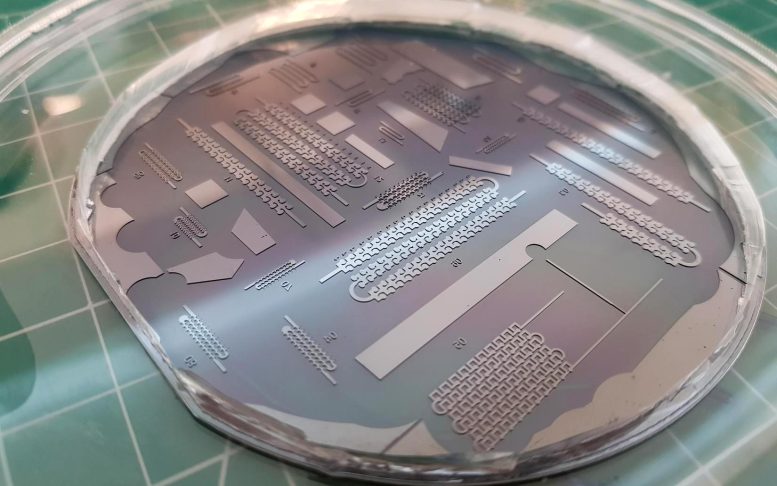
The Static Droplet Microfluidic device is able to rapidly detect circulating tumor cells that have broken away from a primary tumor and entered the bloodstream. The device uses a unique metabolic signature of cancer to differentiate tumor cells from normal blood cells.
The study, “Rapid metabolomic screening of cancer cells via high-throughput static droplet microfluidics,” has just been published in the peer-reviewed scientific journal, Biosensors and Bioelectronics.
How the Device Works
“In the 1920s, Otto Warburg discovered that cancer cells consume a lot of glucose and so produce more lactate. Our device monitors single cells for increased lactate using pH sensitive fluorescent dyes that detect acidification around cells,” said Professor Warkiani.
“A single tumor cell can exist among billions of blood cells in just one milliliter of blood, making it very difficult to find. The new detection technology has 38,400 chambers capable of isolating and classifying the number of metabolically active tumor cells,” he said.
Once the tumor cells are identified with the device, they can undergo genetic and molecular analysis, which can aid in the diagnosis and classification of the cancer and inform personalized treatment plans.
Circulating tumor cells are also precursors of metastasis – where cancer migrates to distant organs – which is the cause of 90% of cancer-associated deaths. Studying these cells may provide insights into the biology of cancer metastasis, which can inform the development of new treatments.
Existing liquid biopsy technologies are time-consuming, expensive, and rely on skilled operators, limiting their application in clinical settings.
This new technology is designed for integration into research and clinical labs without relying on high-end equipment and trained operators. This will enable doctors to diagnose and monitor cancer patients in a practical and cost-effective manner.
The UTS research team has filed a provisional patent for the Static Droplet Microfluidic device and has plans to commercialize the product.
Reference: “Rapid metabolomic screening of cancer cells via high-throughput static droplet microfluidics” by Payar Radfar, Lin Ding, Laura Rodriguez de la Fuente, Hamidreza Aboulkheyr, David Gallego-Ortega and Majid Ebrahimi Warkiani, 16 December 2022, Biosensors and Bioelectronics.
DOI: 10.1016/j.bios.2022.114966
Never miss a breakthrough: Join the SciTechDaily newsletter.
Follow us on Google and Google News.