
Close Menu
    Facebook X (Twitter) Instagram
    SciTechDaily
    • Biology
    • Chemistry
    • Earth
    • Health
    • Physics
    • Science
    • Space
    • Technology
    Facebook X (Twitter) Pinterest YouTube RSS
    SciTechDaily
    Home»Health»The Human Cell Atlas: AI Helps To Spot Single Diseased Cells
    Health

    The Human Cell Atlas: AI Helps To Spot Single Diseased Cells

    By Helmholtz Zentrum MünchenSeptember 18, 2021No Comments3 Mins Read
    Facebook Twitter Pinterest Telegram LinkedIn WhatsApp Email Reddit
    Share
    Facebook Twitter LinkedIn Pinterest Telegram Email Reddit
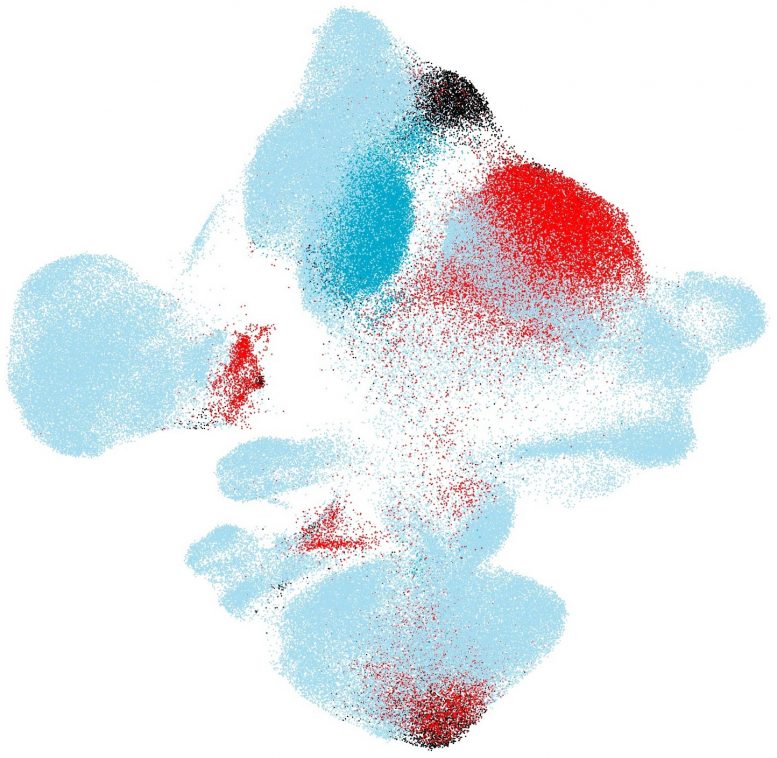
    ScArches COVID-19
    Mapping new cohorts of cells of healthy individuals and COVID-19 patients onto a healthy cells reference atlas. Credit: Helmholtz Zentrum München / Mohammad Lotfollahi

    scArches is a novel algorithm that uses transfer learning to map new single-cell data to existing references without compromising privacy. It enables global, secure collaboration in understanding diseases like COVID-19 through efficient and accurate cell mapping.

    The Human Cell Atlas is the world’s largest, growing single-cell reference atlas. It contains references of millions of cells across tissues, organs and developmental stages. These references help physicians to understand the influences of aging, environment and disease on a cell – and ultimately diagnose and treat patients better. Yet, reference atlases do not come without challenges. Single-cell datasets may contain measurement errors (batch effect), the global availability of computational resources is limited and the sharing of raw data is often legally restricted.

    Researchers from Helmholtz Zentrum München and the Technical University of Munich (TUM) developed a novel algorithm called “scArches,” short for single-cell architecture surgery. The biggest advantage: “Instead of sharing raw data between clinics or research centers, the algorithm uses transfer learning to compare new datasets from single-cell genomics with existing references and thus preserves privacy and anonymity. This also makes annotating and interpreting of new data sets very easy and democratizes the usage of single-cell reference atlases dramatically,” says Mohammad Lotfollahi, the leading scientist of the algorithm.

    Example COVID-19

    The researchers applied scArches to study COVID-19 in several lung bronchial samples. They compared the cells of COVID-19 patients to healthy references using single-cell transcriptomics. The algorithm was able to separate diseased cells from the references and thus enabled the user to pinpoint the cells in need of treatment, for both mild and severe COVID-19 cases. Biological variation between patients did not affect the quality of the mapping process.

    Fabian Theis: “Our vision is that in the future we will use cell references as easily as we nowadays do for genome references. In other words, if you want to bake a cake, you usually do not want to try coming up with your own recipe – instead you just look one up in a cookbook. With scArches, we formalize and simplify this lookup process.”

    Learn more about scArches: https://github.com/theislab/scarches

    Reference: “Mapping single-cell data to reference atlases by transfer learning” by Mohammad Lotfollahi, Mohsen Naghipourfar, Malte D. Luecken, Matin Khajavi, Maren Büttner, Marco Wagenstetter, Žiga Avsec, Adam Gayoso, Nir Yosef, Marta Interlandi, Sergei Rybakov, Alexander V. Misharin and Fabian J. Theis, 30 August 2021, Nature Biotechnology.
    DOI: 10.1038/s41587-021-01001-7

    Computational biologist Mohammad Lotfollahi is a team leader at Fabian Theis’ lab at Helmholtz Zentrum München and doctoral student at TUM School of Life Sciences at the Technical University of Munich. He works closely with Fabian Theis, who is Director of the Institute of Computational Biology at Helmholtz Zentrum München and Coordinator of the Helmholtz Artificial Intelligence Cooperation Unit (Helmholtz AI). Theis holds the chair for Mathematical Modelling of Biological Systems at TUM.

    Never miss a breakthrough: Join the SciTechDaily newsletter.
    Follow us on Google and Google News.

    Artificial Intelligence Biotechnology Helmholtz Zentrum München
    Share. Facebook Twitter Pinterest LinkedIn Email Reddit

    Related Articles

    AI Now Decodes Your Sweat to Spot Early Signs of Disease

    AI PIONEER Transforms Drug Discovery With Breakthrough Protein Mapping

    Revolutionizing Antibiotic Discovery: The Power of Explainable Deep Learning

    Artificial Intelligence Unlocks New Possibilities in Anti-Aging Medicine

    Artificial Intelligence Takes On Cancer: AI Analysis of Mutations Could Lead to Improved Therapy

    Immune System “Clock” Developed That Accurately Predicts Illness and Mortality

    Injectable, Spontaneously Assembling Vaccines Could Fight Cancer

    Yale Researchers Develop Method to Attack Cancer at Its Source

    Engineered Liposomes: A Possible Alternative to Antibiotics

    Leave A Reply Cancel Reply

    • Facebook
    • Twitter
    • Pinterest
    • YouTube

    Don't Miss a Discovery

    Subscribe for the Latest in Science & Tech!

    Trending News

    AI Could Detect Early Signs of Alzheimer’s in Under a Minute – Far Before Traditional Tests

    What if Dark Matter Has Two Forms? Bold New Hypothesis Could Explain a Cosmic Mystery

    This Metal Melts in Your Hand – and Scientists Just Discovered Something Strange

    Beef vs. Chicken: Surprising Results From New Prediabetes Study

    Alzheimer’s Breakthrough: Scientists Discover Key Protein May Prevent Toxic Protein Clumps in the Brain

    Quantum Reality Gets Stranger: Physicists Put a Lump of Metal in Two Places at Once

    Scientists May Have Found the Key to Jupiter and Saturn’s Moon Mystery

    Scientists Uncover Brain Changes That Link Pain to Depression

    Follow SciTechDaily
    • Facebook
    • Twitter
    • YouTube
    • Pinterest
    • Newsletter
    • RSS
    SciTech News
    • Biology News
    • Chemistry News
    • Earth News
    • Health News
    • Physics News
    • Science News
    • Space News
    • Technology News
    Recent Posts
    • Scientists Discover Enzyme That Could Supercharge Ozempic-Like Weight Loss Drugs
    • Asthma and Depression Don’t Mix the Way Scientists Expected
    • Why Promising Cancer Drugs Failed: Scientists Uncover the Missing Piece
    • Popular Sweetener Linked to DNA Damage – “It’s Something You Should Not Be Eating”
    • Ancient “Rock” Microbes May Reveal How Complex Life Began
    Copyright © 1998 - 2026 SciTechDaily. All Rights Reserved.
    • Science News
    • About
    • Contact
    • Editorial Board
    • Privacy Policy
    • Terms of Use

    Type above and press Enter to search. Press Esc to cancel.