
Close Menu
    Facebook X (Twitter) Instagram
    SciTechDaily
    • Biology
    • Chemistry
    • Earth
    • Health
    • Physics
    • Science
    • Space
    • Technology
    Facebook X (Twitter) Pinterest YouTube RSS
    SciTechDaily
    Home»Technology»AI Surpasses Reality: White AI Faces More Convincing Than Real Humans
    Technology

    AI Surpasses Reality: White AI Faces More Convincing Than Real Humans

    By Australian National UniversityDecember 22, 20231 Comment3 Mins Read
    Facebook Twitter Pinterest Telegram LinkedIn WhatsApp Email Reddit
    Share
    Facebook Twitter LinkedIn Pinterest Telegram Email Reddit
    AI Face Generation Analysis
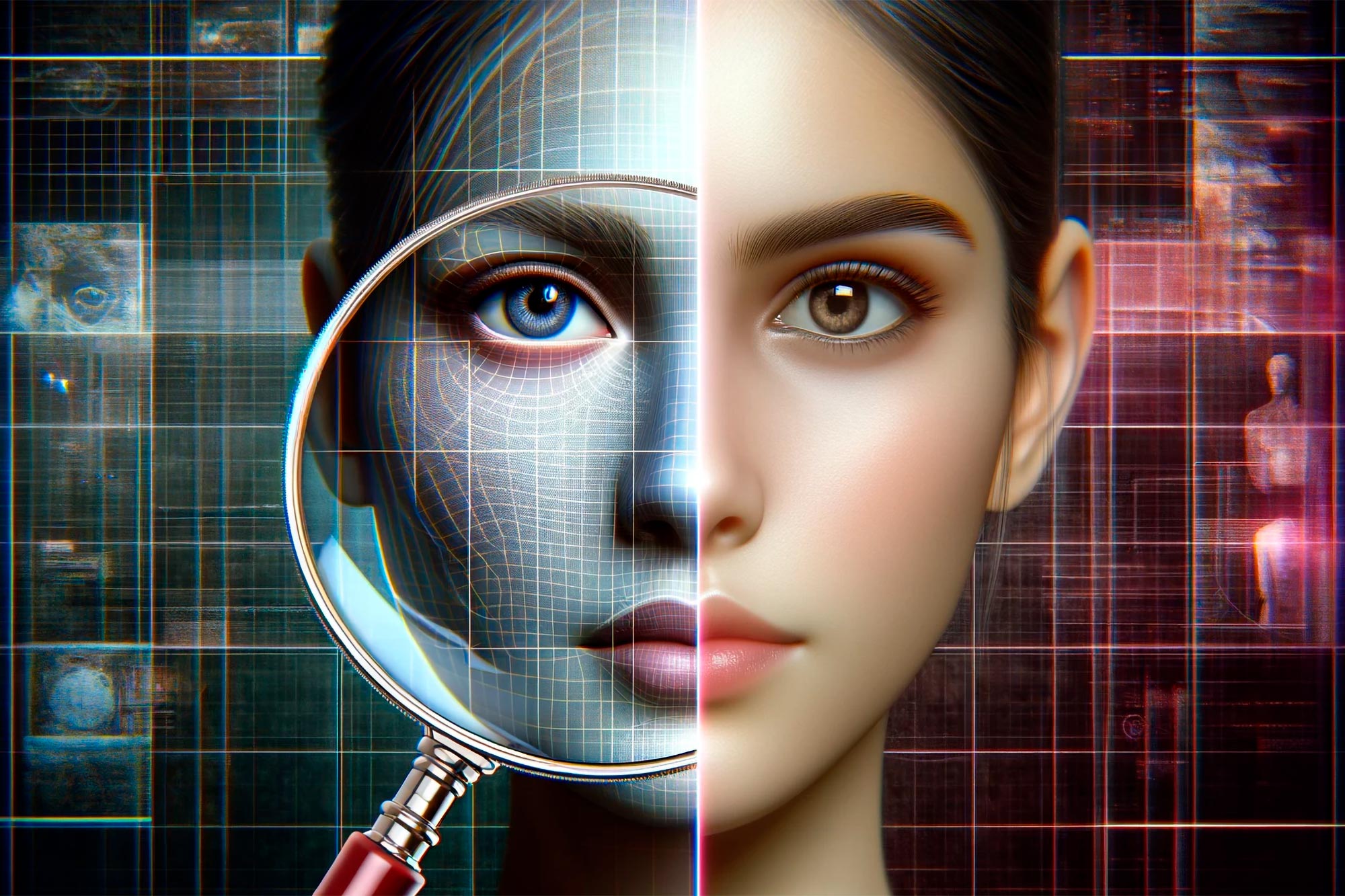
    A study reveals that AI-generated white faces are now perceived as more real than actual human faces, with a notable discrepancy in the realism of AI faces of people of color. This trend, attributed to AI training biases, raises concerns about reinforcing racial biases and the spread of misinformation. Credit: SciTechDaily.com

    New research shows that AI-generated white faces appear more realistic than real human faces, signaling potential risks of racial bias and misinformation in AI technology.

    White faces generated by artificial intelligence (AI) now appear more real than human faces, according to new research led by experts at The Australian National University (ANU).

    In the study, more people thought AI-generated white faces were human than the faces of real people. The same wasn’t true for images of people of color.

    The reason for the discrepancy is that AI algorithms are trained disproportionately on white faces, Dr. Amy Dawel, the senior author of the paper, said.

    Implications of AI Realism

    “If white AI faces are consistently perceived as more realistic, this technology could have serious implications for people of color by ultimately reinforcing racial biases online,” Dr. Dawel said.

    “This problem is already apparent in current AI technologies that are being used to create professional-looking headshots. When used for people of color, the AI is altering their skin and eye color to those of white people.”
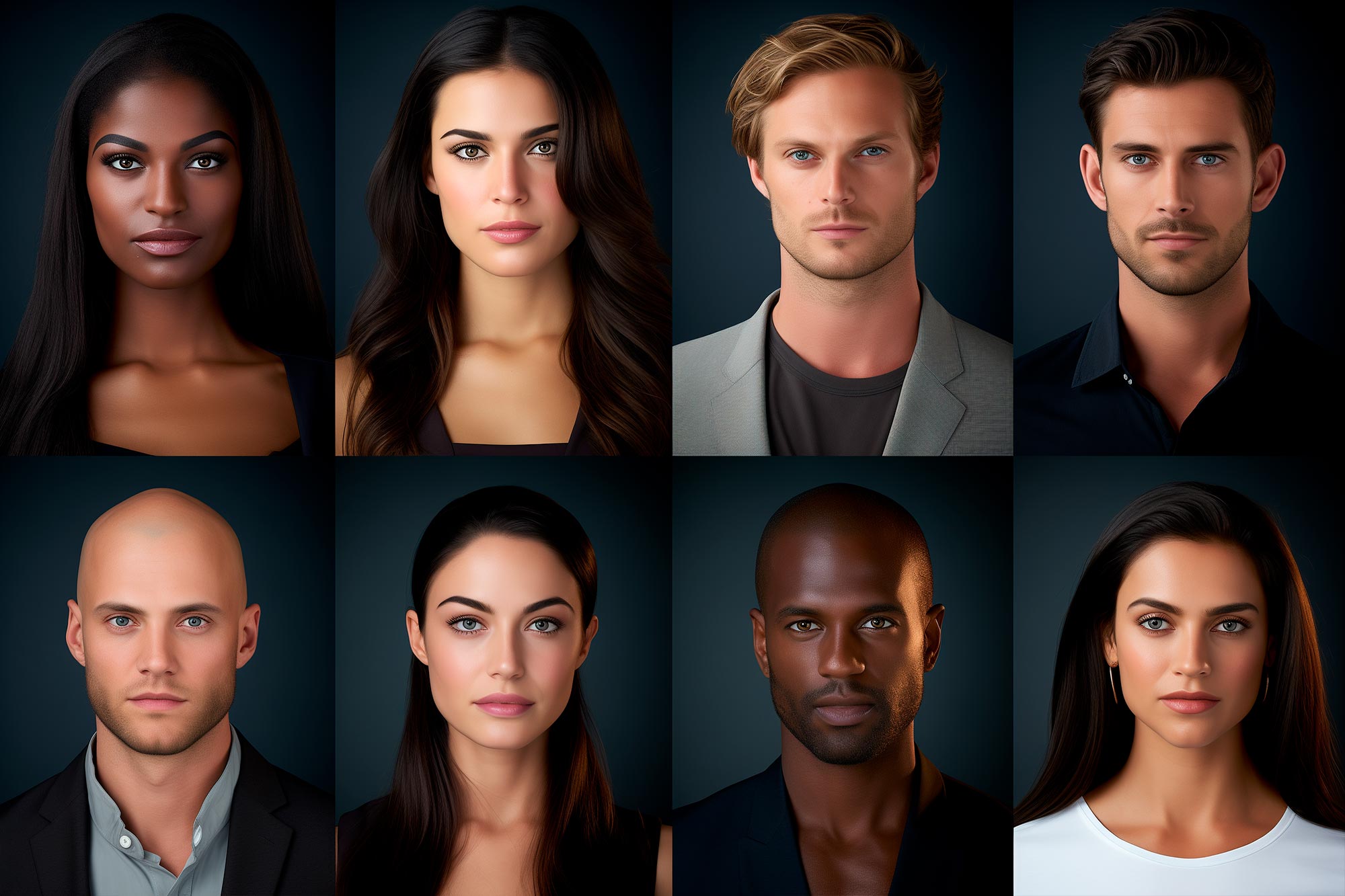
    Headshots Art Concept
    This image was generated by AI, specifically with Midjourney V5.2. Credit: SciTechDaily.com

    Understanding AI ‘Hyper-Realism’

    One of the issues with AI ‘hyper-realism’ is that people often don’t realize they’re being fooled, the researchers found.

    “Concerningly, people who thought that the AI faces were real most often were paradoxically the most confident their judgments were correct,” Elizabeth Miller, study co-author and PhD candidate at ANU, said.

    “This means people who are mistaking AI imposters for real people don’t know they are being tricked.”

    The researchers were also able to discover why AI faces are fooling people.

    Why AI Faces Are Deceptive

    “It turns out that there are still physical differences between AI and human faces, but people tend to misinterpret them. For example, white AI faces tend to be more in-proportion and people mistake this as a sign of humanness,” Dr. Dawel said.

    “However, we can’t rely on these physical cues for long. AI technology is advancing so quickly that the differences between AI and human faces will probably disappear soon.”

    Potential Consequences

    The researchers argue this trend could have serious implications for the proliferation of misinformation and identity theft, and that action needs to be taken.

    “AI technology can’t become sectioned off so only tech companies know what’s going on behind the scenes. There needs to be greater transparency around AI so researchers and civil society can identify issues before they become a major problem,” Dr. Dawel said.

    Raising public awareness can also play a significant role in reducing the risks posed by the technology, the researchers argue.

    “Given that humans can no longer detect AI faces, society needs tools that can accurately identify AI imposters,” Dr. Dawel said.

    “Educating people about the perceived realism of AI faces could help make the public appropriately skeptical about the images they’re seeing online.”

    The study was published in Psychological Science, a journal of the Association for Psychological Science.

    Reference: “AI Hyperrealism: Why AI Faces Are Perceived as More Real Than Human Ones” by Elizabeth J. Miller, Ben A. Steward, Zak Witkower, Clare A. M. Sutherland, Eva G. Krumhuber and Amy Dawel, 12 November 2023, Psychological Science.
    DOI: 10.1177/09567976231207095

    Never miss a breakthrough: Join the SciTechDaily newsletter.
    Follow us on Google and Google News.

    Artificial Intelligence Australian National University Popular
    Share. Facebook Twitter Pinterest LinkedIn Email Reddit

    Related Articles

    Widely Used AI Machine Learning Methods Don’t Work as Claimed

    Researchers Develop a Machine Capable of Solving Complex Problems in Theoretical Physics

    Artificial Intelligence System Learns the Fundamental Laws of Quantum Mechanics

    Human Brain-Like Functions Emerge in Neuromorphic Metallic Nanowire Network

    Researchers Find Way to Harness AI Creativity – Dramatic Performance Boost to Deep Learning

    Neuroscientist: Animal Brains Key for Next Generation of Artificial Intelligence

    New AI System Identifies Personality Traits from Eye Movements

    TrueNorth Computer Chip Emulates Human Cognition

    AI Framework Predicts Better Patient Health Care and Reduces Cost

    1 Comment

    1. stephen p schaffer on December 23, 2023 10:08 am

      Here we go again, first Facial Recognition was branded as racist now AI is branded as racist albeit for a different reason. Are there people whose lives are committed to identifying and scolding White people at every turn?
      Wokieness is so tiresome.

      Reply
    Leave A Reply Cancel Reply

    • Facebook
    • Twitter
    • Pinterest
    • YouTube

    Don't Miss a Discovery

    Subscribe for the Latest in Science & Tech!

    Trending News

    A Star Near the Milky Way’s Black Hole Is Losing Mass at an Astonishing Rate

    Scientists Solve a Vitamin B12 Mystery With an Unexpected Culprit

    Has the Autism Spectrum Become Too Broad? Leading Scientist Warns of Hidden Consequences

    Rewriting History: Researchers Uncover a Forgotten Amazon Civilization That May Have Housed 3 Million People

    New Research May Change How We Think About Weight Loss Drugs Like Ozempic

    Coffee Drinkers Show Surprising Differences in Fat, Muscle, and Hormones

    New Treatment Targets Gum Disease Without Killing Good Bacteria

    Scientists Discover a 245-Million-Year-Old Reptile With Its Organs Still Preserved

    Follow SciTechDaily
    • Facebook
    • Twitter
    • YouTube
    • Pinterest
    • Newsletter
    • RSS
    SciTech News
    • Biology News
    • Chemistry News
    • Earth News
    • Health News
    • Physics News
    • Science News
    • Space News
    • Technology News
    Recent Posts
    • Quantum Fluctuations Break a Crystal’s Symmetry Rules
    • Researchers Discover a Mysterious New Frog Species in the Amazon
    • Scientists Spotted This Mysterious Congo Monkey 18 Years Ago – Now They Finally Know What It Is
    • Why Does an Irregular Heartbeat Strike 40 Years Early in Some People?
    • Scientists Reveal How ADHD Could Fuel Creative Thinking
    Copyright © 1998 - 2026 SciTechDaily. All Rights Reserved.
    • Science News
    • About
    • Contact
    • Editorial Board
    • Privacy Policy
    • Terms of Use

    Type above and press Enter to search. Press Esc to cancel.