

Scientists are turning to a surprising new ally in the fight against climate change: digital twins — smart, AI-powered replicas of real-world energy systems.
These virtual models can help us better understand and improve everything from solar panels and wind farms to geothermal and hydroelectric plants. While the potential is huge, current versions aren’t perfect — they struggle with messy real-world variables and data gaps. Still, researchers believe that with the right improvements, digital twins could play a major role in moving us away from fossil fuels and toward a cleaner, greener future.
AI-Powered Digital Twins: A Bold Step Toward Climate Solutions
As efforts intensify around the world to cut carbon emissions and address climate change, researchers at the University of Sharjah are exploring a powerful new technology that could transform how we produce and manage energy: AI-powered digital twins.
These advanced digital models act as virtual versions of real-world systems. According to the researchers, they have the potential to significantly improve how clean energy is generated, controlled, and optimized across a wide range of sources. Their use could help speed up the global shift away from fossil fuels, which scientists have long linked to global warming.
The Role of Digital Twins in Modern Innovation
Digital twins can simulate and interact with complex systems in real time, which has made them a key tool in advancing innovation across multiple industries. Their use has led to greater efficiency, reduced costs, and new problem-solving approaches.
Still, the scientists emphasize that current digital twin models are not without their flaws. These tools face several limitations that make it difficult to fully unlock their potential in renewable energy systems, including wind, solar, geothermal, hydroelectric, and biomass power.
“Digital twins are highly effective in optimizing renewable energy systems,” the researchers write in the journal Energy Nexus. “Yet, each energy source presents unique challenges—ranging from data variability and environmental conditions to system complexity—that can limit the performance of digital twin technologies, despite their considerable promise in improving energy generation and management.”
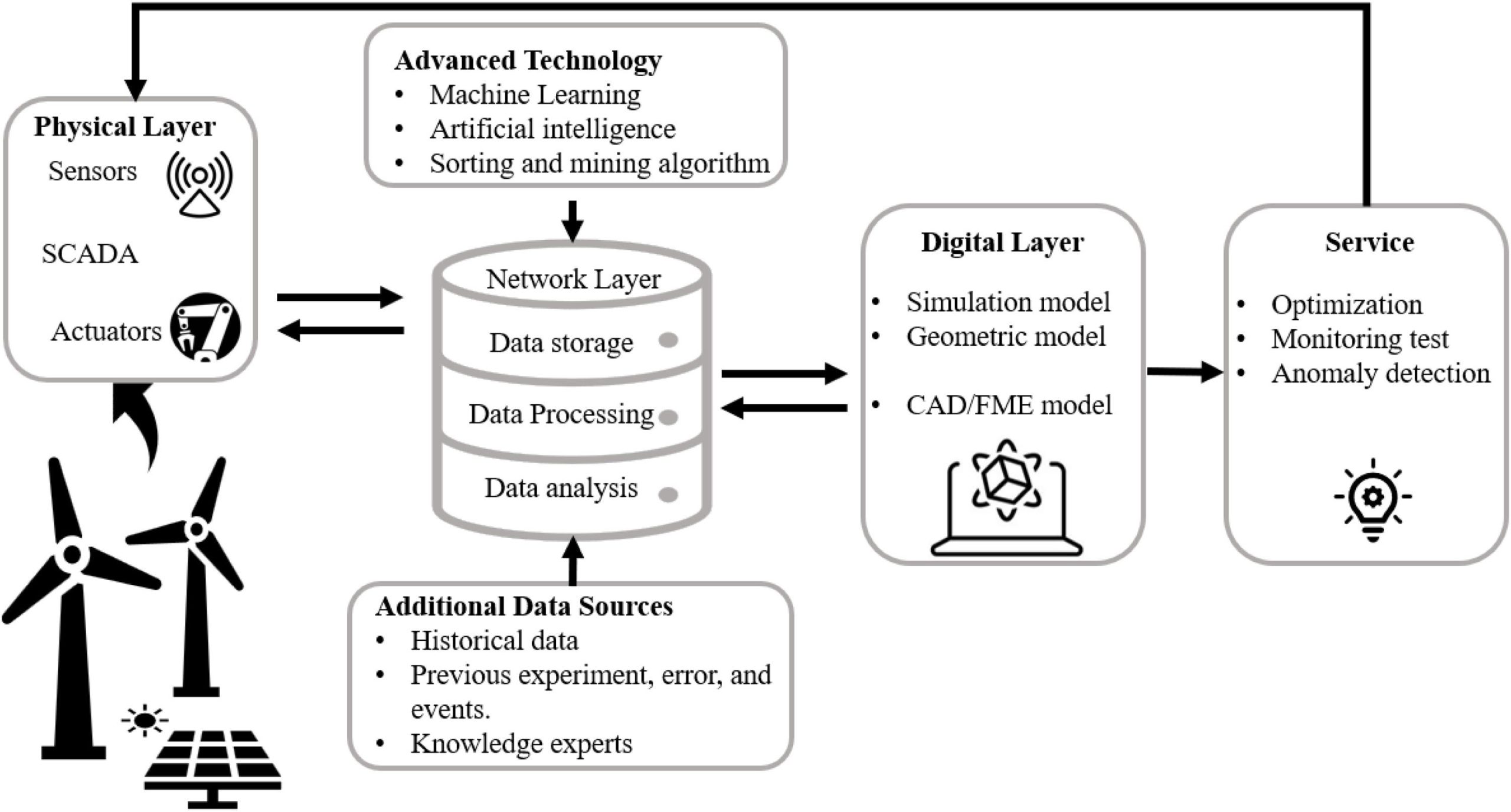
Mapping the Digital Twin Landscape Through Literature
In their study, the authors conducted an extensive review of existing literature on the application of digital twins in renewable energy systems. They examined various contexts, functions, lifecycles, and architectural frameworks to understand how digital twins are currently being utilized and where gaps remain.
To extract meaningful insights, the researchers employed advanced text mining techniques, leveraging artificial intelligence, machine learning, and natural language processing. This scientifically rigorous approach enabled them to analyze large volumes of raw data and uncover structured patterns, concepts, and emerging trends.
Gaps, Goals, and a Path Forward
From this in-depth analysis, the authors drew several key conclusions. They identified research gaps, proposed new directions, and outlined the challenges that must be addressed to fully harness the potential of digital twin technology in the renewable energy sector.
Following a detailed discussion on the integration of digital twins across various renewable energy applications, the authors summarized their most significant findings across five major energy sources: wind, solar, geothermal, hydroelectric, and biomass. Each source presents unique opportunities and challenges, and the study offers a comprehensive overview of how digital twins can be tailored to optimize performance in each domain.
How Digital Twins Boost Each Energy System
The study reveals that digital twins offer significant advantages across various renewable energy systems:
Wind Energy: Digital twins can predict unknown parameters and correct inaccurate measurements, enhancing system reliability and performance.
Solar Energy: They help identify key factors that influence efficiency and output power, enabling better system design and optimization.
Geothermal Energy: Digital twins can simulate the entire operational process—particularly drilling—facilitating cost analysis and reducing both time and expenses.
Hydroelectric Energy: The AI-driven models simulate system dynamics to identify influencing factors. In older hydro plants, they are used to mitigate the impact of worker fatigue on productivity.
Biomass Energy: Digital twins improve performance and management by offering deep insights into operational processes and plant configurations.
But the authors’ contribution to the field stands out in highlighting critical limitations in the application of digital twin technology across these energy sources. Their analysis underscores the need for more robust models that can address specific challenges unique to each renewable energy system.
Technical Hurdles for Each Renewable Sector
The authors identify several limitations in the application of digital twins across different renewable energy systems:
Wind Energy: Digital twins face challenges in accurately modeling and monitoring environmental conditions. They struggle to simulate critical factors such as blade erosion, gearbox degradation, and electrical system performance—particularly in aging turbines.
Solar Energy: Despite their potential, digital twins still fall short in reliably predicting long-term performance. They have difficulty tracking panel degradation and accounting for environmental influences over time, which affects their accuracy and usefulness.
Geothermal Energy: A major obstacle is the lack of high-quality data, which hampers the ability of digital twins to simulate geological uncertainties and subsurface conditions. The technology also faces complexity in modeling the long-term behavior of geothermal systems, including heat transfer and fluid flow dynamics.
Hydroelectric energy: Applied to hydroelectric projects, digital twins face challenges in accurately modeling water flow variability and in capturing environmental and ecological constraints. These limitations reduce their effectiveness in optimizing system performance and sustainability.
Biomass energy: When used with biomass energy systems, digital twins still struggle to simulate the entire production supply chain. They fall short in providing precise models for biological processes, biomass conversion, and the complex biochemical and thermochemical reactions involved.
Paving the Way for Smarter, More Reliable Twins
The authors emphasize the broader implications of these shortcomings for the renewable energy sector. To address these challenges, they offer a set of guidelines and a research roadmap aimed at helping scientists enhance the reliability and precision of digital twin technologies.
Their recommendations focus on improving data collection methods, advancing modeling techniques, and expanding computational capabilities to ensure digital twins can deliver trustworthy insights for decision-making and system optimization.
Reference: “Harnessing the future: Exploring digital twin applications and implications in renewable energy” by Concetta Semeraro, Haya Aljaghoub, Hamad Khalid Mohamed Hussain Al-Ali, Mohammad Ali Abdelkareem and Abdul Ghani Olabi, 17 March 2025, Energy Nexus.
DOI: 10.1016/j.nexus.2025.100415
Never miss a breakthrough: Join the SciTechDaily newsletter.
Follow us on Google and Google News.
1 Comment
“Still, the scientists emphasize that current digital twin models are not without their flaws.”
That has always been the case. There is a famous saying that “All models are wrong. But some are useful.”