
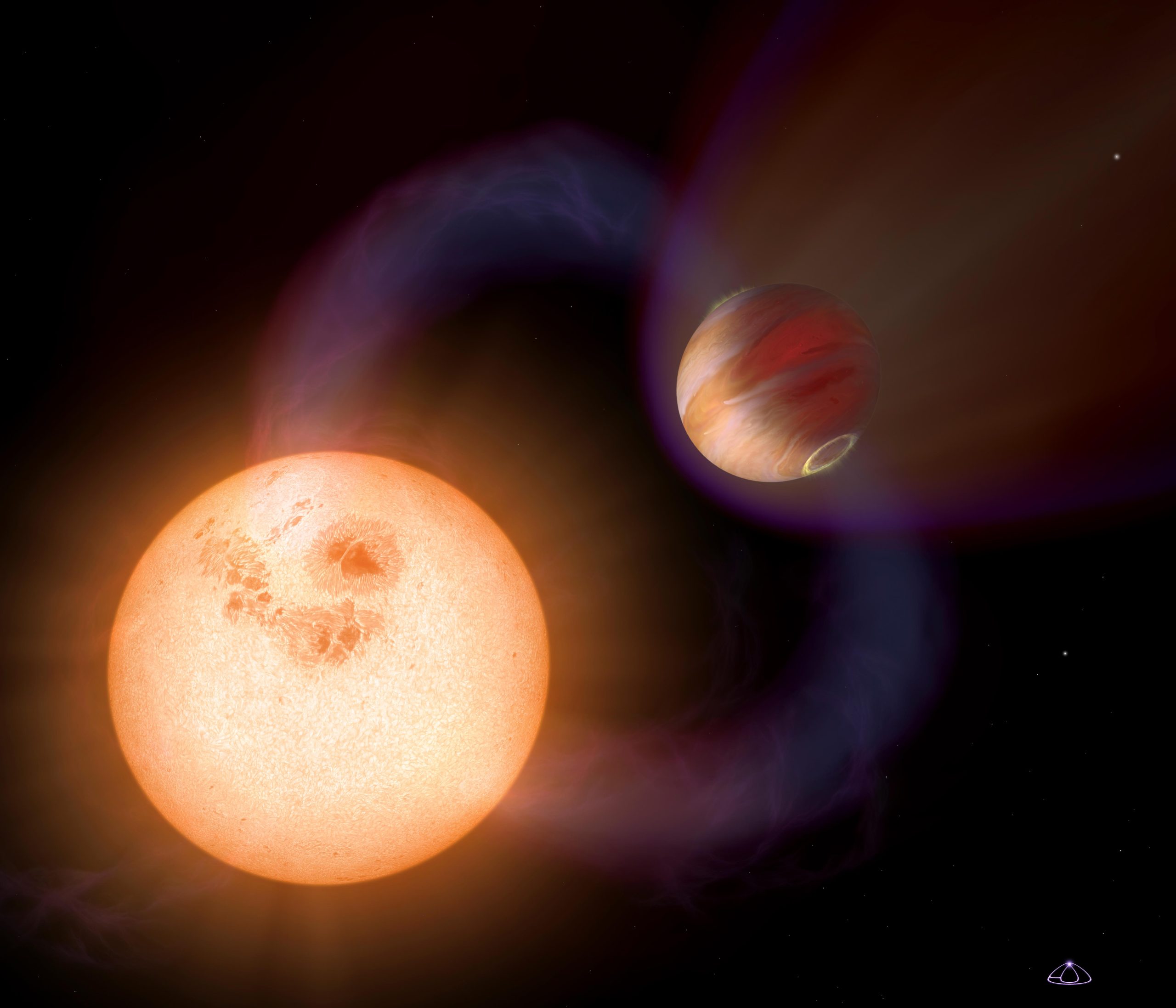
By applying machine learning to vast TESS datasets, researchers have built one of the most precise catalogs of nearby exoplanets to date.
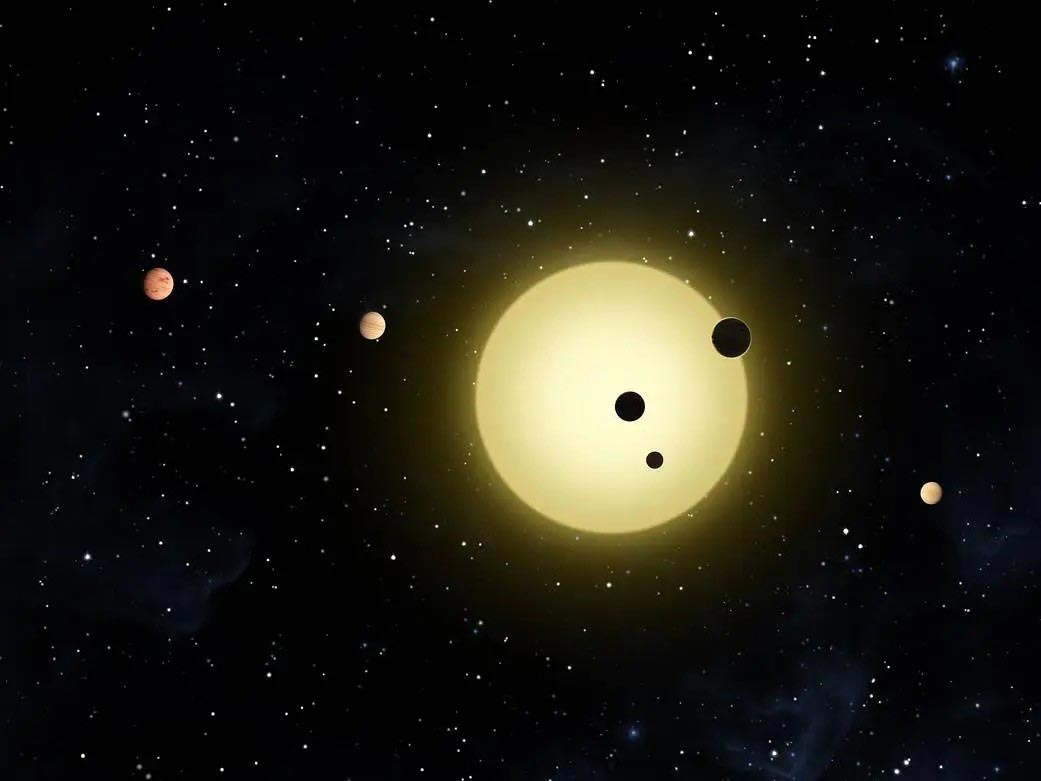
Astronomers at the University of Warwick have confirmed more than 100 exoplanets, including 31 newly identified worlds, using a new artificial intelligence system applied to data from NASA’s Transiting Exoplanet Survey Satellite (TESS). This mission scans the sky for slight dips in starlight that occur when planets pass in front of their host stars.
The findings, published in MNRAS, come from a newly developed AI pipeline called RAVEN. The team used it to analyze observations of more than 2.2 million stars gathered during TESS’s first four years. Their search focused on planets with very short orbits, completing a trip around their stars in under 16 days, to better understand how common these close-in worlds are.
“Using our newly developed RAVEN pipeline, we were able to validate 118 new planets, and over 2,000 high-quality planet candidates, nearly 1,000 of them entirely new,” said first author Dr. Marina Lafarga Magro, Postdoctoral Researcher at the University of Warwick. “This represents one of the best characterized samples of close in planets and will help us identify the most promising systems for future study.”
Among the confirmed planets are several especially important groups:
- Ultra-short-period planets that orbit their stars in less than 24 hours
- “Neptunian desert” planets, a rare type found in a region where few planets are expected
- Multi-planet systems with tight orbits, including newly discovered pairs around the same star
RAVEN’s edge
Modern surveys often flag thousands of possible planets, but verifying which signals are real remains difficult. Many false signals come from phenomena such as eclipsing binary stars.
“The challenge lies in identifying if the dimming is indeed caused by a planet in orbit around the star or by something else, like eclipsing binary stars, which is what RAVEN tries to answer. Its strength stems from our carefully created dataset of hundreds of thousands of realistically simulated planets and other astrophysical events that can masquerade as planets. We trained machine learning models to identify patterns in the data that can tell us the type of event we have detected, something that AI models excel at.” said Warwick’s Dr. Andreas Hadjigeorghiou, who led the development of the pipeline.
“In addition, RAVEN is designed to handle the whole process in one go, from detecting the signal, to vetting it with machine learning and statistically validating it. This gives the pipeline an additional edge over contemporary tools that only focus on specific parts of the workflow.”
Dr. David Armstrong, Associate Professor at Warwick and senior co-author on the RAVEN studies, added: “RAVEN allows us to analyze enormous datasets consistently and objectively. Because the pipeline is well-tested and carefully validated, this is not just a list of potential planets — it is also reliable enough use as a sample to map the prevalence of distinct types of planets around Sun-like stars.”
Planetary Prevalences
With this large and well-defined dataset, the researchers could go beyond individual discoveries and examine overall trends. In a companion MNRAS study, they measured how often close-orbiting planets appear around Sun-like stars, mapping results by orbital period and planet size in unprecedented detail.
They found that about 9 to 10 percent of Sun-like stars host a close-in planet. This aligns with earlier results from NASA’s Kepler mission, but RAVEN reduces uncertainty by up to a factor of ten.
The study also provides the first direct measurement of “Neptunian desert” planets, showing they exist around only 0.08 percent of Sun-like stars. “For the first time, we can put a precise number on just how empty this ‘desert’ is,” said Dr. Kaiming Cui, a postdoctoral researcher at Warwick and lead author of the population study. “These measurements show that TESS can now match, and in some cases surpass, Kepler for studying planetary populations.”
A foundation for future discoveries
Together, these studies highlight how large-scale astronomical data and advanced AI can work together to drive discovery. The approach not only identifies new planets but also improves confidence in the results and deepens understanding of planetary systems.
The team has also released interactive tools and catalogs, enabling other researchers to explore the findings and select promising targets for future observations using ground-based telescopes and upcoming missions such as ESA’s PLATO.
References:
“Automatic search for transiting planets in TESS-SPOC FFIs with RAVEN: over 100 newly validated planets and over 2000 vetted candidates” by M Lafarga, D J Armstrong, K Cui, A Hadjigeorghiou, V Kunovac, L Doyle, E M Bryant, R F Díaz, L A Nieto and A Osborn, 25 March 2026, Monthly Notices of the Royal Astronomical Society.
DOI: 10.1093/mnras/stag512
“Demographics of close-in TESS exoplanets orbiting FGK main-sequence stars” by Kaiming Cui, David J Armstrong, Andreas Hadjigeorghiou, Marina Lafarga, Vedad Kunovac, Lauren Doyle, Luis Agustín Nieto and Rodrigo F Díaz, 7 January 2026, Monthly Notices of the Royal Astronomical Society.
DOI: 10.1093/mnras/stag022
This research was supported by UKRI funding under the Horizons Frontier research guarantee program – INNATE. reference EP/X027562/1
Never miss a breakthrough: Join the SciTechDaily newsletter.
Follow us on Google and Google News.
2 Comments
Look for orbiting space junk
There is some text below the artists offering:
“An artist’s impression shows a “hot Jupiter” exoplanet discovered with Hubble, orbiting extremely close to its star, just 750,000 miles away, and completing a full orbit in 10.5 hours.”
Are you really sure about the suggested distance? Can you not afford to pay any proof readers?
Yes, there are indeed other websites that are equally lax!