
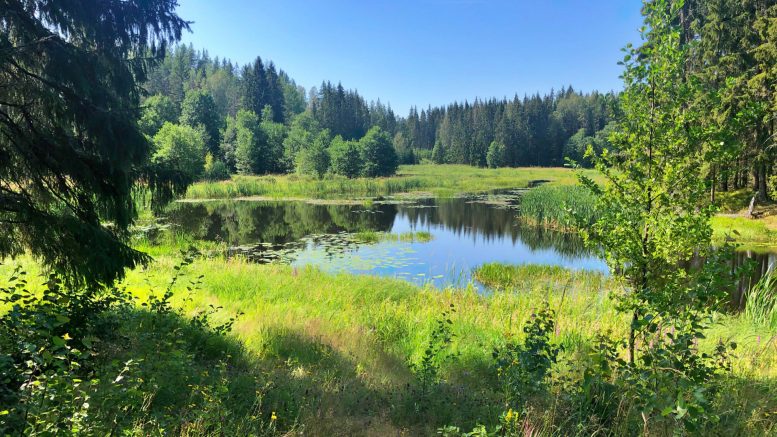
By studying green algae in Swedish lakes, a research team, led by Lund University in Sweden, has succeeded in identifying which environmental conditions promote multicellularity. The results give us new clues to the amazing paths of evolution.
A research team from Lund University in Sweden has identified environmental conditions that promote multicellularity by studying green algae in Swedish lakes, providing new insights into the evolutionary paths of life. The findings challenge the belief that multicellularity evolves due to inherent benefits, such as protection against predators. Instead, multicellularity arises as a by-product of single-celled organisms’ strategies to reduce environmental stress. The study highlights that there are no inherent benefits or costs to living in multicellular groups, and the results contribute to our understanding of the origins of biological diversity and how green algae, a key group of species, reproduce and survive under various environmental conditions.
The evolution of multicellular life has played a pivotal role in shaping biological diversity. However, we have up until now known surprisingly little about the natural environmental conditions that favor the formation of multicellular groups.
The cooperation between cells within multicellular organisms has enabled eyes, wings, and leaves to evolve. The predominant explanation for why multicellularity evolves is that being in a group enables species to better cope with environmental challenges – where being in a large group can, for instance, protect cells against being eaten.
“Our results challenge this idea, showing that multicellular groups form, not because they are inherently beneficial, but rather as a by-product of single-celled strategies to reduce environmental stress. In particular, cells produce a range of substances to protect themselves from the environment and these substances appear to prevent daughter cells from dispersing away from their mother cell,” says Charlie Cornwallis, biology researcher at Lund University.
To understand how and why single-celled organisms evolve to be multicellular, the scientists experimented on green algae where some species are always single-celled, some are single-celled but become multicellular under certain conditions, while others are always multicellular containing thousands of cells. They could then identify the environmental conditions that promote multicellularity and find out the benefits and costs for organisms. The researchers then combined data with information on the environments that single-celled and multicellular green algae are adapted to across the whole of Sweden.
No Costs or Benefits to Multicellularity
“I was surprised that there were no benefits or costs to living in multicellular groups. The conditions that individual cells experience can be extremely different when swimming around on their own, to being stuck to other cells and having to coordinate activities. Imagine you were physically tied to your family members, I think it would have quite an effect on you,” says Charlie Cornwallis.
The study was conducted in Swedish lakes, and it not only provides information on which green algae occur where, and why – it also helps us understand the origins of biological diversity that shape the world around us.
“The results of this study contribute to our understanding of how complex life on Earth has evolved. They also provide information on how a key group of species – green algae that generate fuel for ecosystems – are able to reproduce and survive under different environmental conditions. The next time you walk along the shores of a lake rich in nitrogen just imagine that this fosters the evolution of multicellular life,” says Charlie Cornwallis.
Reference: “Single-cell adaptations shape evolutionary transitions to multicellularity in green algae” by Charlie K. Cornwallis, Maria Svensson-Coelho, Markus Lindh, Qinyang Li, Franca Stábile, Lars-Anders Hansson and Karin Rengefors, 20 April 2023, Nature Ecology & Evolution.
DOI: 10.1038/s41559-023-02044-6
Never miss a breakthrough: Join the SciTechDaily newsletter.
Follow us on Google and Google News.
2 Comments
How does is foster life? Scitechdaily always misses the actual meat of the paper. They pose an interesting headline or new theory, but then give us zero actual information.
The evolutionary goalpost continues to move! There are always new discoveries, new missing links, but never really explained! I asked this particular professor of biology how everything on this planet could evolve from the same primordial ooze? And, the answer was very scatter gun. So there would have had to have been a spontaneous evolutionary event that produced many different types of cells and therefore life forms. But the possibility of just one is almost incalculable, so how could there be many? It boggles the mind especially if you really are familiar with how long humanity has been trying to duplicate the process of life. And still have not been able to do so.