
Titan may seem like a prime candidate for alien life with its organic-rich surface and deep subsurface ocean, but new research suggests any life there would be extremely limited.
Scientists modeled how microbes might survive on Titan using fermentation, a basic metabolic process that doesn’t require oxygen. Despite Titan’s vast organics, only a tiny fraction would be biologically useful, and delivery to the ocean through the thick ice is scarce. If life does exist, it would likely be microscopic, sparse, and very hard to find—more like a small patch of cells scattered across an entire moon-sized ocean.
A Mysterious Moon with Methane Lakes
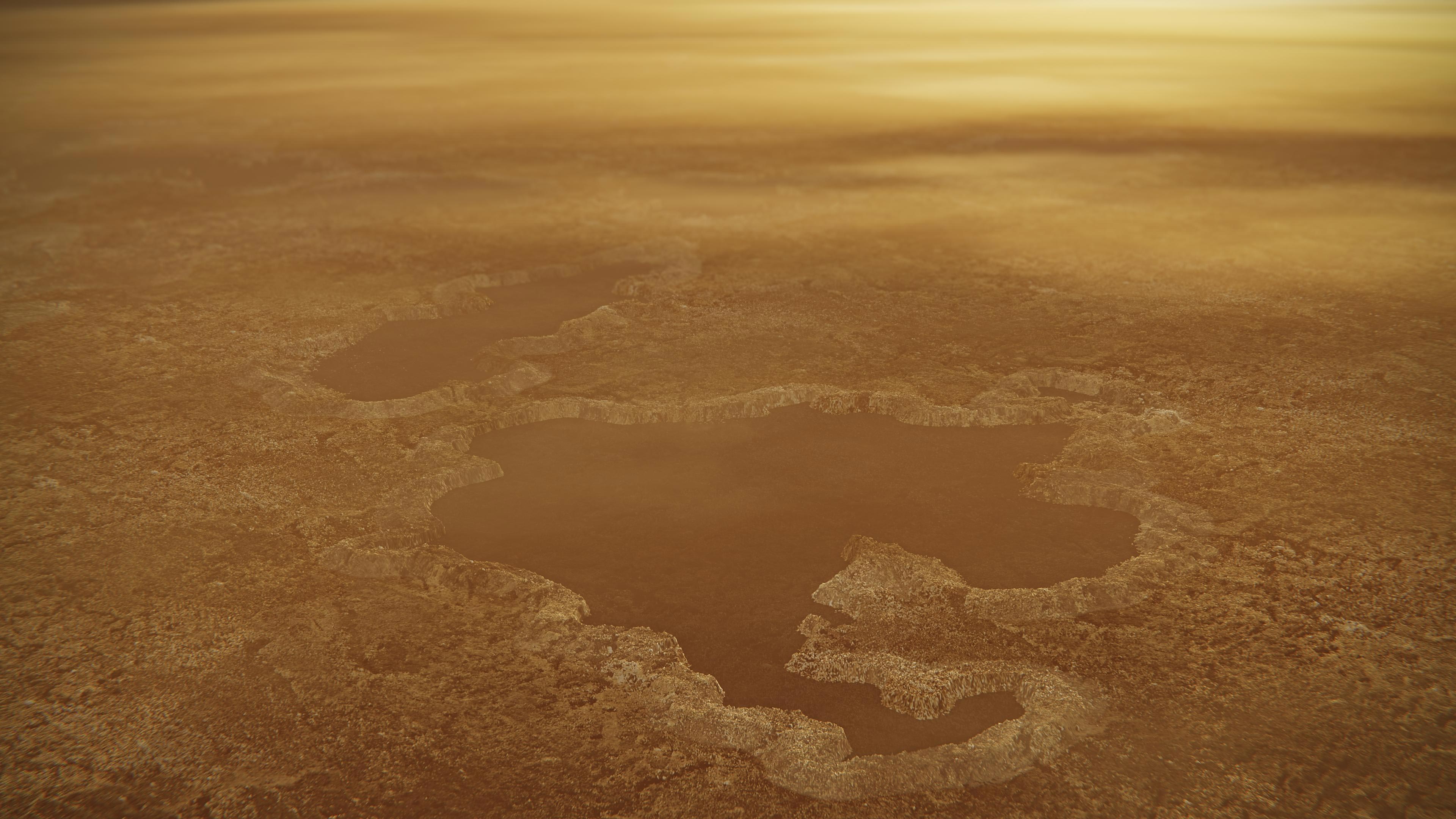
Titan, the largest of Saturn’s moons, is a strange and alien world. Its surface is dotted with rivers and lakes of liquid methane, scattered with icy boulders, and blanketed by dunes made of soot-like “sand.” This unique landscape has long intrigued scientists and sparked questions about whether life could exist beneath its thick, hazy atmosphere.
To explore that possibility, an international team of researchers, co-led by Antonin Affholder from the University of Arizona’s Department of Ecology and Evolutionary Biology and Peter Higgins from Harvard University’s Department of Earth and Planetary Sciences, set out to create a scientifically grounded scenario for life on Titan. They aimed to understand what such life might look like, where it could exist, and how much of it there might be.
“In our study, we focus on what makes Titan unique when compared to other icy moons: its plentiful organic content,” said Affholder, who is a postdoctoral research associate.
Limited Biomass, Vast Ocean
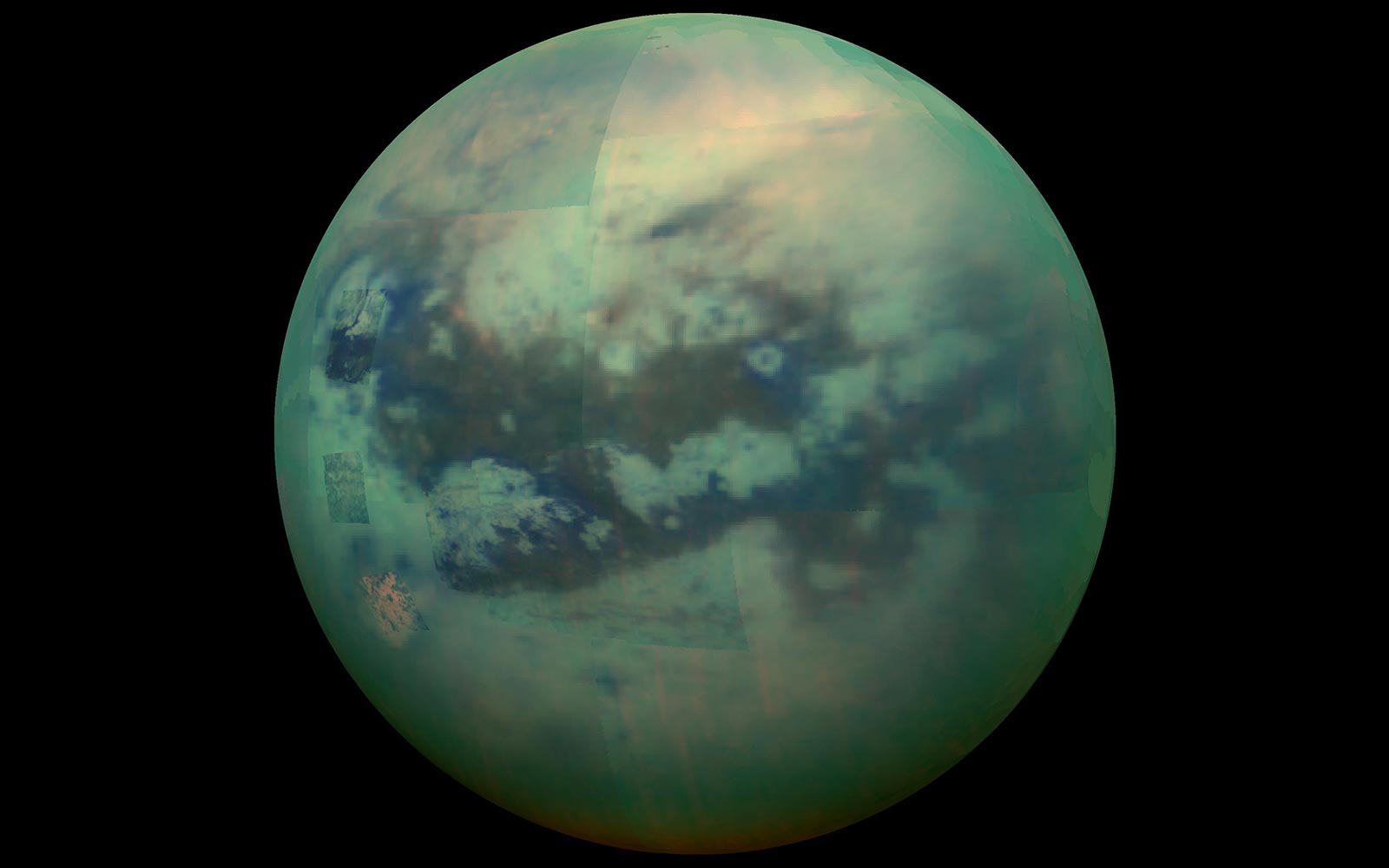
Using bioenergetic modeling, the researchers analyzed whether life could survive in Titan’s subsurface ocean, which may extend nearly 300 miles deep. Their findings, published on April 7 in The Planetary Science Journal, suggest that while Titan might support simple, microscopic life forms that feed on organic compounds, the total amount of life would be extremely limited, likely no more than a few pounds of biomass in total.
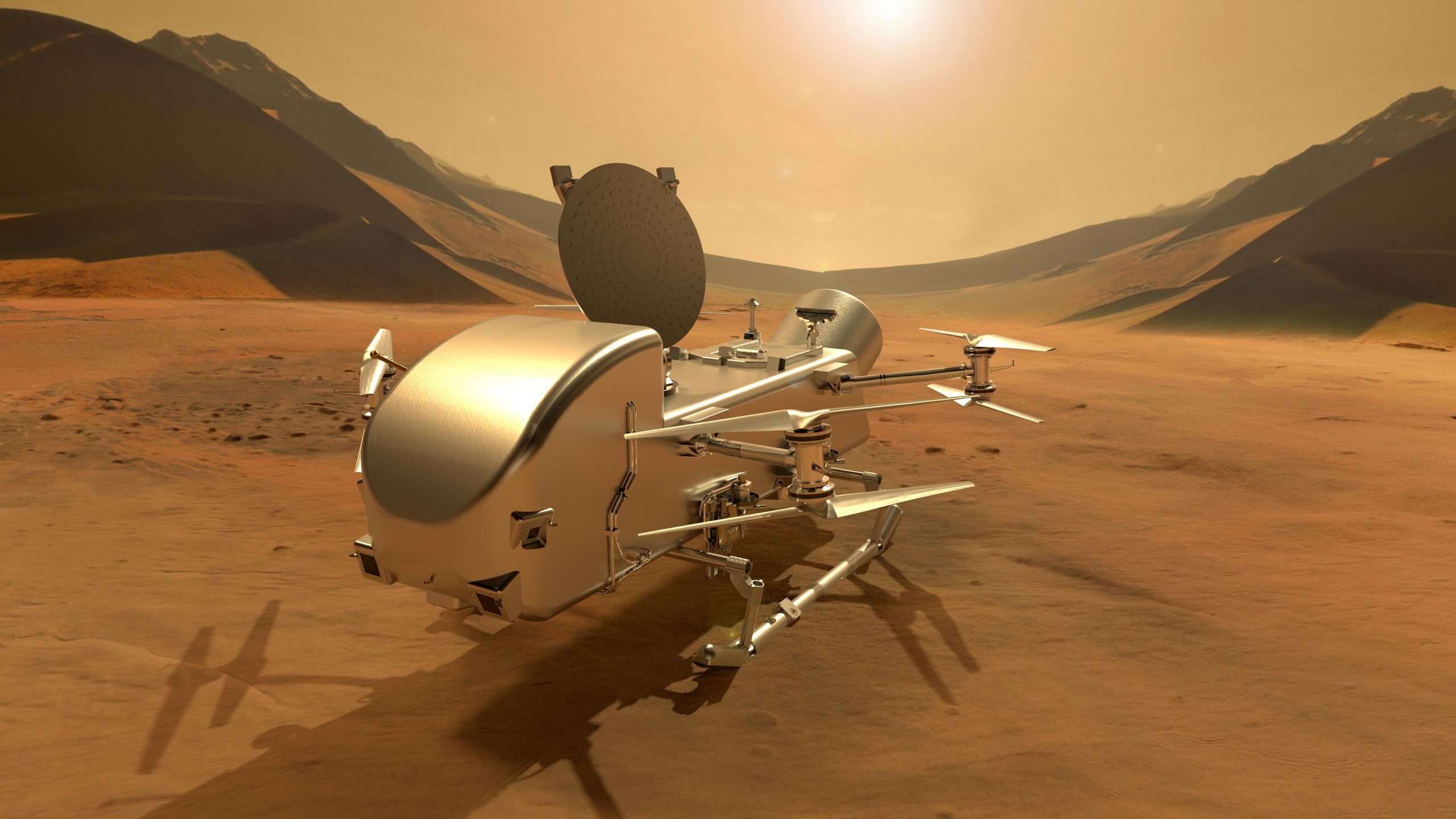
Often described as “Earthlike on the surface, ocean world on the inside,” Titan is the target for future exploration via NASA’s Dragonfly mission. While much has been speculated about possible scenarios that could give rise to living organisms on Titan based on the moon’s abundant organic chemistry, previous estimates have suffered from what Affholder considers an overly simplistic approach.
Not All Organics Are Food
“There has been this sense that because Titan has such abundant organics, there is no shortage of food sources that could sustain life,” Affholder said. “We point out that not all of these organic molecules may constitute food sources, the ocean is really big, and there’s limited exchange between the ocean and the surface, where all those organics are, so we argue for a more nuanced approach.”
At the core of the research lies a “back-to-basics” approach that attempted to come up with a plausible scenario for life on Titan that assumed one of the simplest and most remarkable of all biological metabolic processes: fermentation. Familiar to Earthlings for its use in sourdough breadmaking, beer brewing and – less desirably – its role in spoiling forgotten leftovers, fermentation only requires organic molecules, but no “oxidant” such as oxygen, a crucial requirement for other metabolic processes, such as respiration.
Could Titan Host Microbes?
“Fermentation probably evolved early in the history of Earth’s life, and does not require us to open any door into unknown or speculative mechanisms that may or may not have happened on Titan,” Affholder said, adding that life on Earth could have first emerged as feeding on organic molecules left over from Earth’s formation.
“We asked, could similar microbes exist on Titan?” Affholder said. “If so, what potential does Titan’s subsurface ocean have for a biosphere feeding off of the seemingly vast inventory of abiotic organic molecules synthesized in Titan’s atmosphere, accumulating at its surface and present in the core?”
Glycine: A Universal Building Block
The researchers specifically focused on one organic molecule, glycine, the simplest of all known amino acids.
“We know that glycine was relatively abundant in any sort of primordial matter in the solar system,” Affholder said. “When you look at asteroids, comets, the clouds of particles and gas from which stars and planets like our solar system form, we find glycine or its precursors in pretty much all those places.”
Meteorites and the Delivery Pipeline
However, computer simulations revealed that only a small fraction of Titan’s organic material may be suitable for microbial consumption. Glycine-consuming microbes in Titan’s ocean would depend on a steady supply of the amino acid from the surface, through the thick icy shell. Previous work by the same team had shown that meteorites impacting the ice could leave behind “melt pools” of liquid water, which then sink through the ice and deliver surface materials to the ocean.
“Our new study shows that this supply may only be sufficient to sustain a very small population of microbes weighing a total of only a few kilograms at most – equivalent to the mass of a small dog,” Affholder said. “Such a tiny biosphere would average less than one cell per liter of water over Titan’s entire vast ocean.”

Searching for a Needle in a Moon
For a future mission to Titan, the odds of finding life – if it is indeed there – could be like looking for a needle in a haystack, unless Titan’s potential for life is to be found elsewhere than in its surface organic content, the team suggests.
“We conclude that Titan’s uniquely rich organic inventory may not in fact be available to play the role in the moon’s habitability to the extent one might intuitively think,” Affholder said.
Reference: “The Viability of Glycine Fermentation in Titan’s Subsurface Ocean” by Antonin Affholder, Peter M. Higgins, Charles S. Cockell, Catherine Neish, Krista M. Soderlund, Michael J. Malaska, Kendra K. Farnsworth, Rosaly M. C. Lopes, Conor A. Nixon, Mohit Melwani Daswani, Kelly E. Miller and Christophe Sotin, 7 April 2025, The Planetary Science Journal.
DOI: 10.3847/PSJ/adbc66
The International Space Science Institute, or ISSI in Bern, Switzerland, funded the research.
Never miss a breakthrough: Join the SciTechDaily newsletter.
Follow us on Google and Google News.
1 Comment
Really – kind a dumb – but let’s pretend we found a DNA type life form somewhere. Our world has poisons and strange diseases that can kill us pretty good, What do you think a foreign DNA might do when it starts reproducing (and eating) in our environment? Remembering that all life here in our closed system is the result of DNA-based life.
humm?