Close Menu
    Facebook X (Twitter) Instagram
    SciTechDaily
    • Biology
    • Chemistry
    • Earth
    • Health
    • Physics
    • Science
    • Space
    • Technology
    Facebook X (Twitter) Pinterest YouTube RSS
    SciTechDaily
    Home»Space»Almost Lights Out: See NASA’s InSight Mars Lander’s Final Selfie
    Space

    Almost Lights Out: See NASA’s InSight Mars Lander’s Final Selfie

    By NASAMay 25, 20223 Comments2 Mins Read
    Facebook Twitter Pinterest Telegram LinkedIn WhatsApp Email Reddit
    Share
    Facebook Twitter LinkedIn Pinterest Telegram Email Reddit
    NASA InSight's Final Selfie
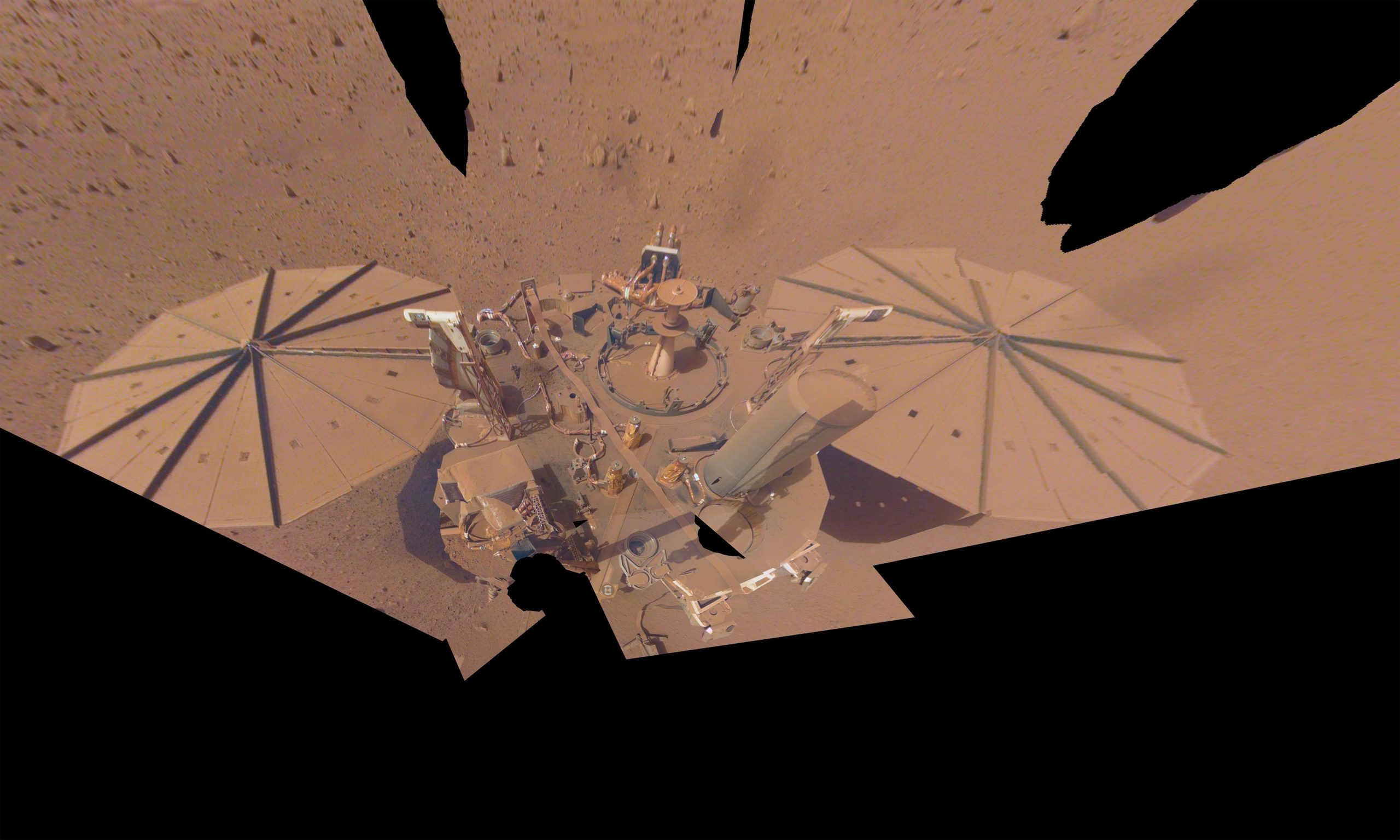
    NASA’s InSight Mars lander took this final selfie on April 24, 2022, the 1,211th Martian day, or sol, of the mission. The lander is covered with far more dust than it was in its first selfie, taken in December 2018, not long after landing – or in its second selfie, composed of images taken in March and April 2019. Credit: NASA/JPL-Caltech

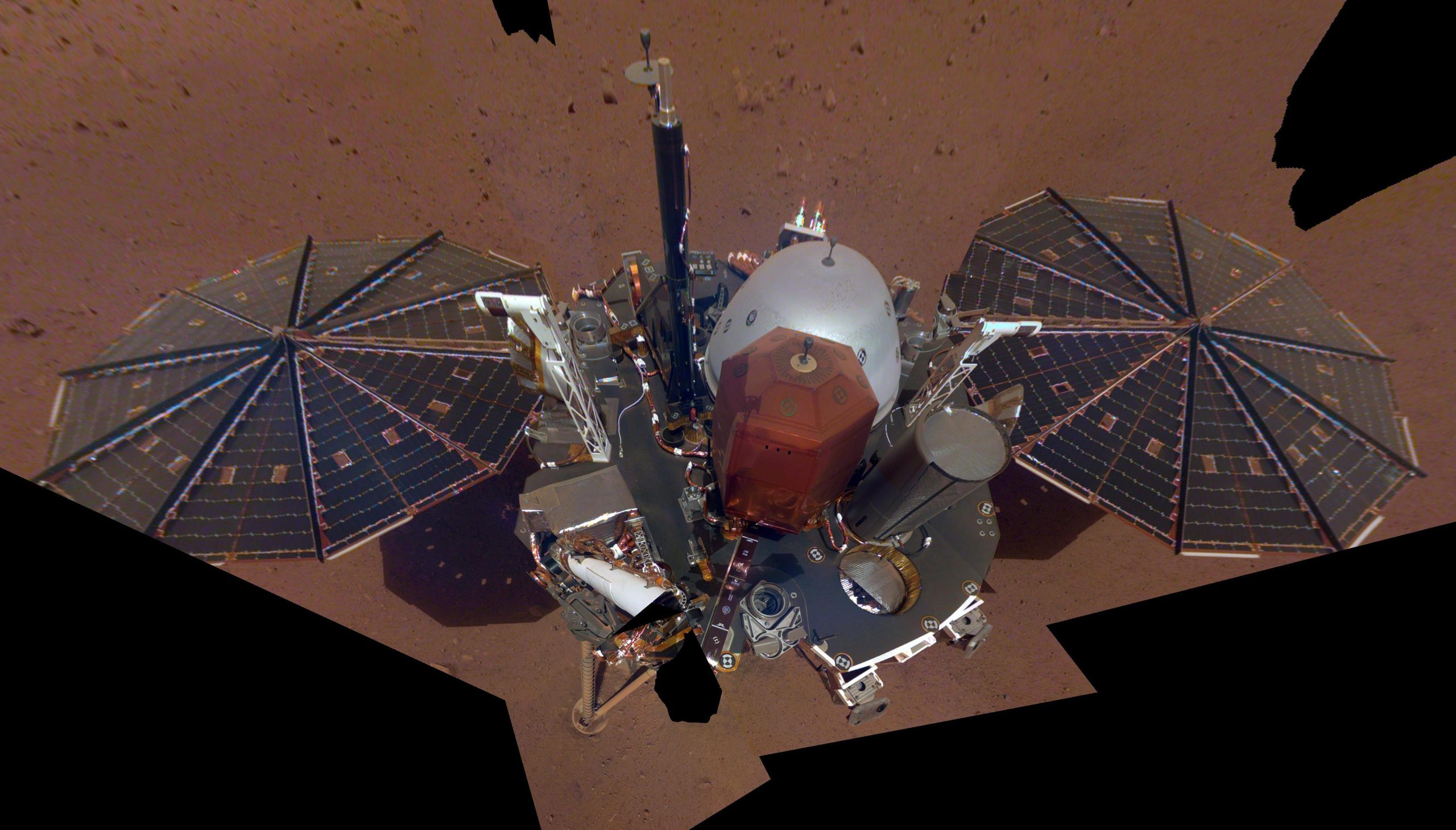
    NASA’s InSight Mars lander took this final selfie on April 24, 2022, the 1,211th Martian day, or sol, of the mission. The lander is covered with far more dust than it was in its first selfie (see below), taken in December 2018, not long after landing – or in its second selfie (see below), composed of images taken in March and April 2019.

    InSight First Selfie Mars
    This is NASA InSight’s first full selfie on Mars. It displays the lander’s solar panels and deck. On top of the deck are its science instruments, weather sensor booms, and UHF antenna. The selfie was taken on December 6, 2018 (Sol 10). Credit: NASA/JPL-Caltech
    InSight Selfie
    This is NASA InSight’s second full selfie on Mars. Since taking its first selfie, the lander has removed its heat probe and seismometer from its deck, placing them on the Martian surface; a thin coating of dust now covers the spacecraft as well. This selfie is a mosaic made up of 14 images taken on March 15 and April 11 – the 106th and 133rd Martian days, or sols, of the mission – by InSight’s Instrument Deployment Camera, located on its robotic arm. Credit: NASA/JPL-Caltech

    The arm needs to move several times in order to capture a full selfie. Because InSight’s dusty solar panels are producing less power, the team will soon put the lander’s robotic arm in its resting position (called the “retirement pose”) for the last time in May of 2022.

    Insight First and Last Selfies
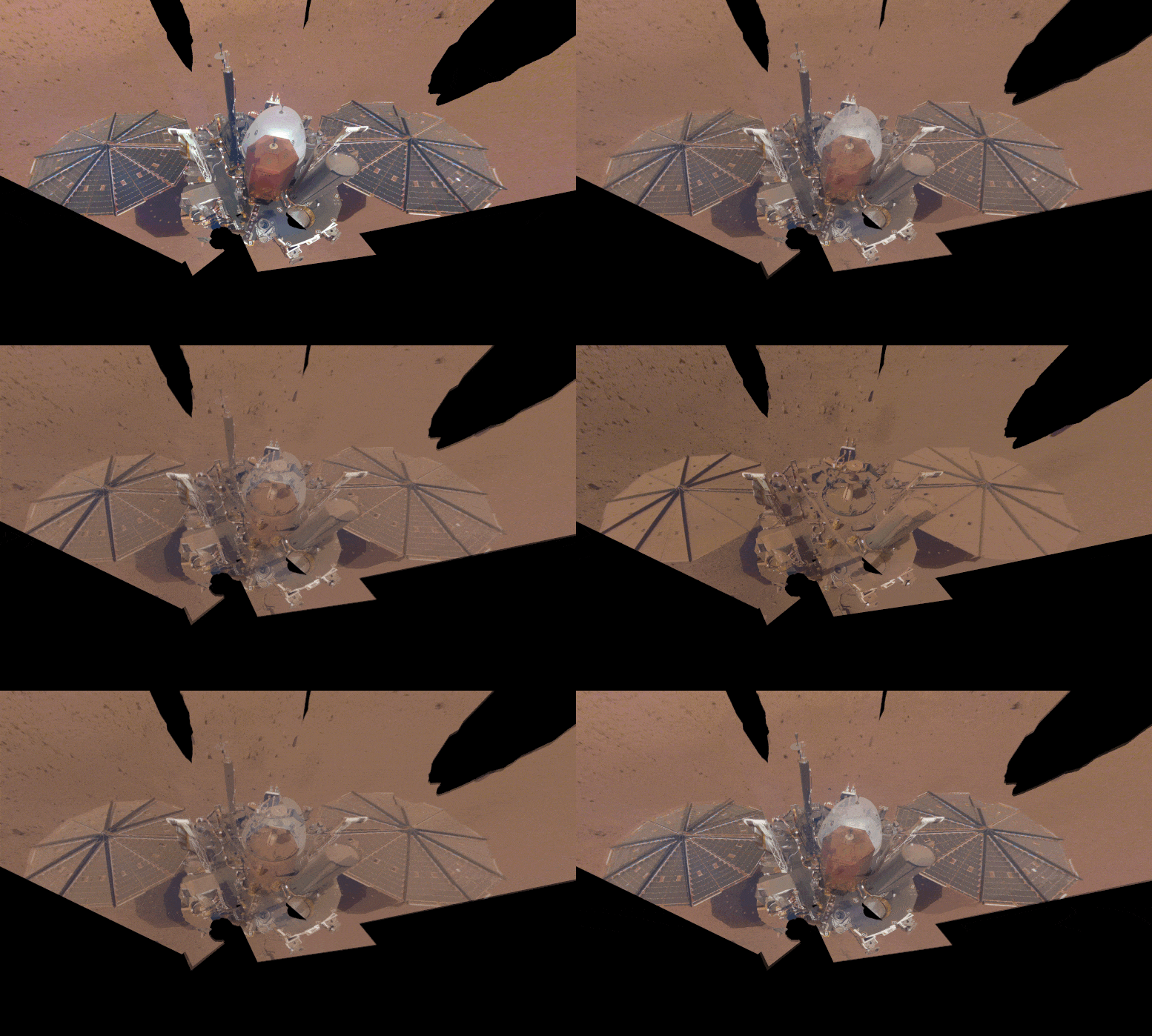
    This image alternates between Insight’s first and last selfies, for comparison purposes. Credit: NASA/JPL-Caltech

    Jet Propulsion Laboratory (JPL) manages the InSight mission for NASA’s Science Mission Directorate. InSight is part of NASA’s Discovery Program, managed by the agency’s Marshall Space Flight Center in Huntsville, Alabama. Lockheed Martin Space in Denver built the InSight spacecraft, including its cruise stage and lander, and supports spacecraft operations for the mission.

    Never miss a breakthrough: Join the SciTechDaily newsletter.
    Follow us on Google and Google News.

    JPL Mars NASA NASA InSight Lander
    Share. Facebook Twitter Pinterest LinkedIn Email Reddit

    Related Articles

    A Meteor Strike Just Revealed a Hidden Seismic Highway on Mars

    NASA’s InSight Lander Fades Into Mars Dust: Final Images Unveiled

    NASA’s Farside Seismic Suite: Measuring Moonquakes With Help From Mars InSight Lander

    At Last! NASA InSight’s “Mole” Is Out of Sight, Below the Surface of Mars

    Mars InSight Lander Yields a Year of Surprising Discoveries Above and Below the Surface of the Red Planet

    Mars InSight Lander’s Heat Probe Has Been Stuck for a Year – But NASA Has a New Plan

    NASA Devises Clever Tactic to Save the Mars InSight Lander’s Heat Probe

    Eerie Sounds on Mars Picked Up by NASA’s InSight Lander [Audio/Video]

    NASA’s InSight Mission to Investigate Interior of Red Planet

    3 Comments

    1. Paul st.john slowe on May 25, 2022 9:37 am

      it’s all fantastic stuff I love it I hope the perseverance rover don’t get damaged in any dust storm fold it’s solar panels in before it’s too late ???

      Reply
      • William Adama on May 26, 2022 2:26 pm

        Not a problem. Perseverance is nuclear powered.

        Reply
    2. Marco on May 25, 2022 11:03 am

      So many millions spent in such many missions and nobody thinks about a process of cleaning the solar panels …. when those panels are critical to the mission. I Just dont get it.

      What about retracting and expanding the panels again?

      Reply
    Leave A Reply Cancel Reply

    • Facebook
    • Twitter
    • Pinterest
    • YouTube

    Don't Miss a Discovery

    Subscribe for the Latest in Science & Tech!

    Trending News

    Scientists Discover Crows Make Decisions Twice As Fast as Humans

    Animal vs. Plant Protein: New Study Reveals Unexpected Testosterone Differences

    A Black Hole Could Split in Two, According to a Surprising New Theory

    Scientists Sound the Alarm As Colorectal Cancer Reverses a 20-Year Decline

    A Devastating Disease Is Threatening the World’s Chocolate Supply – but Scientists May Have Found the Answer

    NASA’s Voyager 1 Is About to Become the First Spacecraft One Light-Day From Earth

    A Woman Who Lived 30,000 Years Ago Is Changing What We Know About Ice Age Europe

    A Rare Radioactive Element Reveals a Hidden Secret About the Heaviest Atoms

    Follow SciTechDaily
    • Facebook
    • Twitter
    • YouTube
    • Pinterest
    • Newsletter
    • RSS
    SciTech News
    • Biology News
    • Chemistry News
    • Earth News
    • Health News
    • Physics News
    • Science News
    • Space News
    • Technology News
    Recent Posts
    • Scientists Discover Greenland’s Ice Sheet Once Retreated 60 Miles
    • Researchers Recover DNA from 7,000-Year-Old Leather, Revealing a Link to Goats Alive Today
    • Scientists Discover Climate Change May Have Stopped Earth’s Next Ice Age
    • Strange Materials Make Waves Behave in Ways That Defy Expectations
    • Quantum Discovery Reveals Why More Powerful Lasers Can Actually Slow Atoms Down
    Copyright © 1998 - 2026 SciTechDaily. All Rights Reserved.
    • Science News
    • About
    • Contact
    • Editorial Board
    • Privacy Policy
    • Terms of Use

    Type above and press Enter to search. Press Esc to cancel.