
Close Menu
    Facebook X (Twitter) Instagram
    SciTechDaily
    • Biology
    • Chemistry
    • Earth
    • Health
    • Physics
    • Science
    • Space
    • Technology
    Facebook X (Twitter) Pinterest YouTube RSS
    SciTechDaily
    Home»Health»Alzheimer’s Drug May Slow Progression of Lewy Body Dementia
    Health

    Alzheimer’s Drug May Slow Progression of Lewy Body Dementia

    By Karolinska InstitutetAugust 23, 2024No Comments3 Mins Read
    Facebook Twitter Pinterest Telegram LinkedIn WhatsApp Email Reddit
    Share
    Facebook Twitter LinkedIn Pinterest Telegram Email Reddit
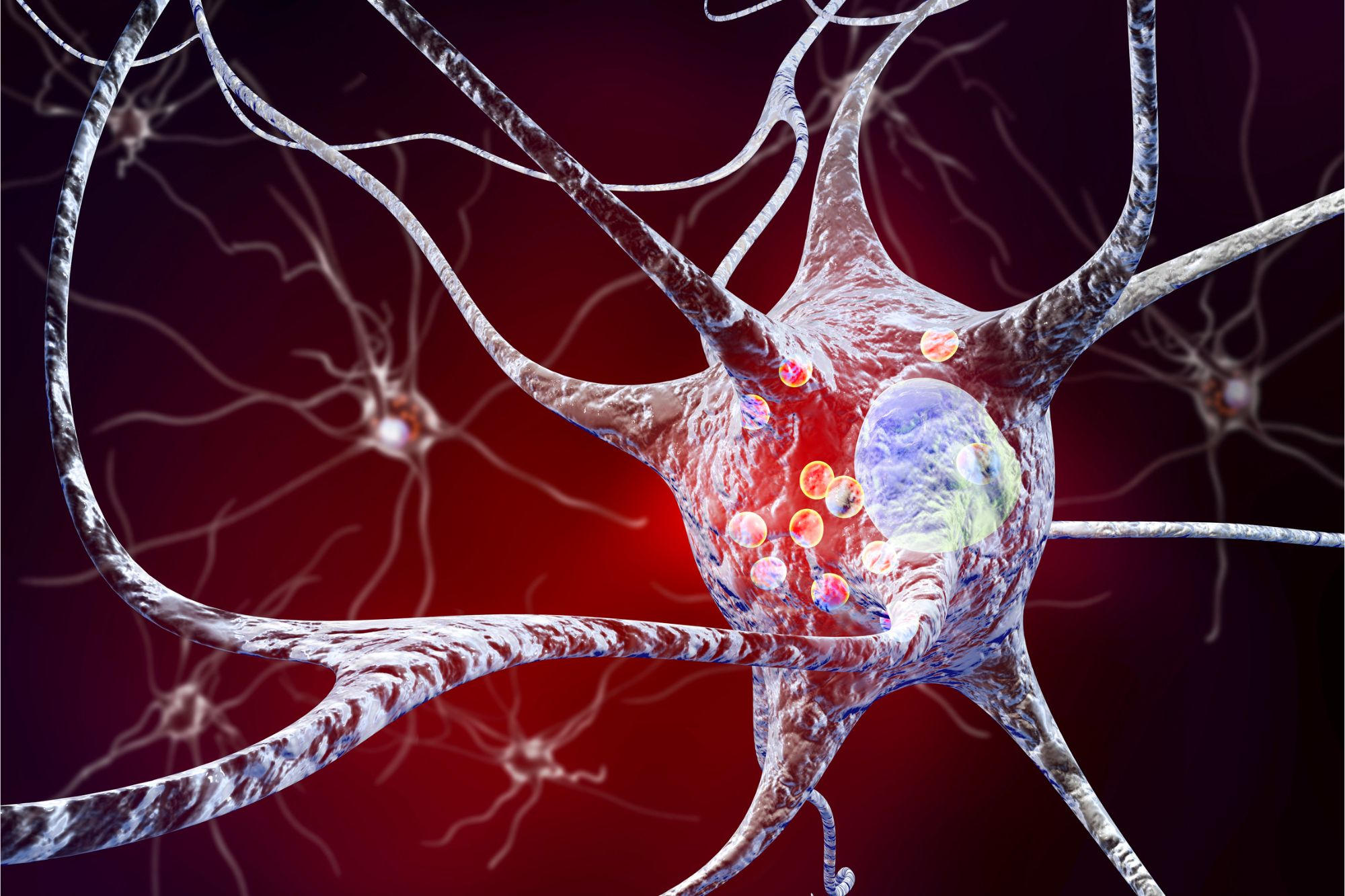
    Neurons Parkinson's Lewy Body Disease
    Recent research reveals that cholinesterase inhibitors could potentially slow down cognitive decline and reduce mortality in the first year for patients with dementia with Lewy bodies.

    Lewy body disease, particularly dementia with Lewy bodies (DLB), affects a significant portion of dementia patients and is marked by a variety of symptoms including sleep disruptions and cognitive impairments.

    Recent research at Karolinska Institutet investigated the long-term effectiveness of cholinesterase inhibitors and memantine in managing DLB. The study, involving over a thousand patients, suggests that cholinesterase inhibitors not only slow cognitive decline over five years but also decrease mortality risk in the first year post-diagnosis, though these observations are limited by the study’s non-experimental design.

    Lewy body disease, which includes dementia with Lewy bodies (DLB) and Parkinson’s disease with and without dementia, is the second most common neurodegenerative disorder, following Alzheimer’s disease. DLB accounts for approximately 10–15 percent of dementia cases and is characterized by changes in sleep, behavior, cognition, movement, and regulation of automatic bodily functions.

    Treatment Challenges in DLB

    “There are currently no approved treatments for DLB, so doctors often use drugs for Alzheimer’s disease, such as cholinesterase inhibitors and memantine, for symptom relief,” says Hong Xu, assistant professor at the Department of Neurobiology, Care Sciences and Society, Karolinska Institutet and first author of the paper. “However, the effectiveness of these treatments remains uncertain due to inconsistent trial results and limited long-term data.”

    Research Findings on DLB Treatments

    In the current study, researchers have examined the long-term effects of cholinesterase inhibitors (ChEIs) and memantine compared with no treatment for up to ten years in 1,095 patients with DLB. They found that ChEIs may slow down cognitive decline over five years compared to memantine or no treatment. ChEIs were also associated with a reduced risk of death in the first year after diagnosis.

    “Our results highlight the potential benefits of ChEIs for patients with DLB and support updating treatment guidelines,” says Maria Eriksdotter, professor at the Department of Neurobiology, Care Sciences and Society, Karolinska Institutet and last author of the paper.

    Study Limitations and Future Directions

    Due to the study’s observational nature, no conclusions can be drawn about causality. The researchers did not have data on patient lifestyle habits, frailty, blood pressure, and Alzheimer’s disease co-pathology, which may have influenced the findings. Another limitation of the study is that it remains challenging to diagnose DLB accurately.

    Reference: “Long-term effects of cholinesterase inhibitors and memantine on cognitive decline, cardiovascular events, and mortality in dementia with Lewy bodies: An up to 10-year follow-up study” by Hong Xu, Annegret Habich, Daniel Ferreira, Londos Elisabet, Eric Westman and Maria Eriksdotter, 23 August 2024, Alzheimer’s & Dementia.
    DOI: 10.1002/alz.14118

    The research was mainly financed by StratNeuro, the Center for Innovative Medicine (CIMED), the KI foundations, and the Swedish Research Council.

    Never miss a breakthrough: Join the SciTechDaily newsletter.
    Follow us on Google and Google News.

    Alzheimer's Disease Dementia Karolinska Institutet Parkinson's Disease
    Share. Facebook Twitter Pinterest LinkedIn Email Reddit

    Related Articles

    A Sweet Clue to Alzheimer’s: Sugar Molecule Predicts Disease Risk

    Cambridge Scientists Detect Signs of Dementia Nine Years Ahead of Diagnosis

    Repeated Infections Linked With Increased Risk of Neurodegenerative Diseases

    A Diabetes Drug Could Protect Against Alzheimer’s

    COVID-19 Positive Patients at Far Higher Risk of Developing Serious Neurodegenerative Disorders

    Stress Can Be Good – New Clues to Eliminating Build-Up of Toxic Proteins in Dementia

    Link Discovered Between ADHD and Dementia Across Generations

    Dementia Linked to Poor Kidney Function in New Research

    Identifying “The Terrorist Inside My Husband’s Brain” – Living Brain Imaging Can Clearly Differentiate Between Types of Dementia

    Leave A Reply Cancel Reply

    • Facebook
    • Twitter
    • Pinterest
    • YouTube

    Don't Miss a Discovery

    Subscribe for the Latest in Science & Tech!

    Trending News

    Scientists Discover How Coffee Impacts Memory, Mood, and Gut Health

    Why Did the Neanderthals Disappear? Scientists Reveal Humans Had a Hidden Advantage

    Physicists Propose Strange Experiment Where Time Goes Quantum

    Magnesium Magic: New Drug Melts Fat Even on a High-Fat, High-Sugar Diet

    Weight-Loss Drugs Like Ozempic May Come With an Unexpected Cost

    Mezcal “Worm” in a Bottle Mystery: DNA Testing Reveals a Surprise

    New Research Reveals That Your Morning Coffee Activates an Ancient Longevity Switch

    This Is What Makes You Irresistible to Mosquitoes

    Follow SciTechDaily
    • Facebook
    • Twitter
    • YouTube
    • Pinterest
    • Newsletter
    • RSS
    SciTech News
    • Biology News
    • Chemistry News
    • Earth News
    • Health News
    • Physics News
    • Science News
    • Space News
    • Technology News
    Recent Posts
    • This Popular Supplement May Boost Your Brain, Not Just Your Muscles
    • What Happened in Childhood Could Be Causing Your Gut Issues Today
    • Scientists Say This Simple Supplement May Actually Reverse Heart Disease
    • Scientists Just Captured Killer T Cells in Action Inside Tumors
    • Alaska’s Sky Explodes With Swirling Clouds and a Hidden Polar Storm
    Copyright © 1998 - 2026 SciTechDaily. All Rights Reserved.
    • Science News
    • About
    • Contact
    • Editorial Board
    • Privacy Policy
    • Terms of Use

    Type above and press Enter to search. Press Esc to cancel.