
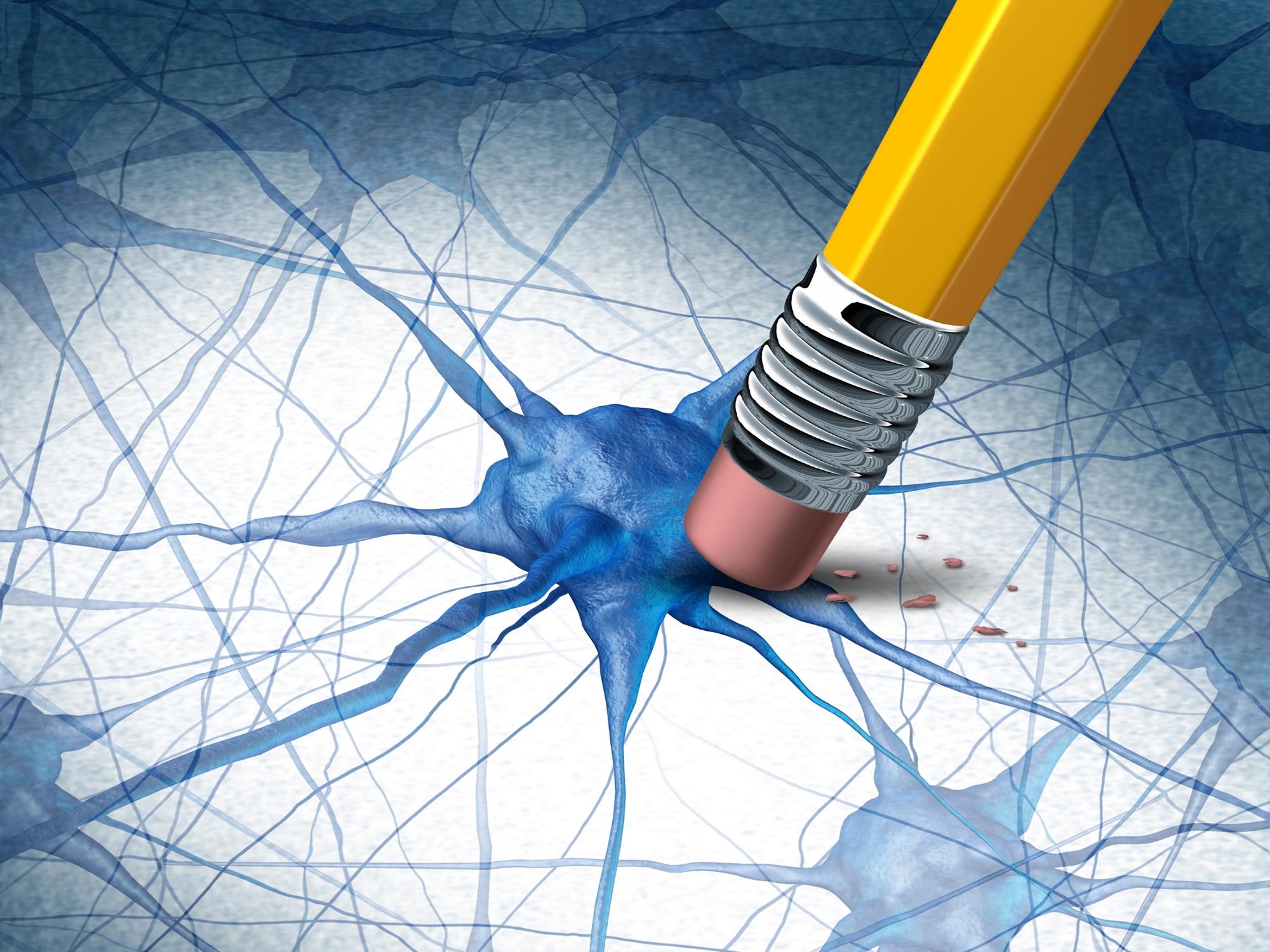
A study shows that rising levels of brain protein Aβ42, not the reduction of amyloid plaques, better explains the cognitive benefits of new Alzheimer’s drugs. This finding challenges the traditional focus on plaques in Alzheimer’s treatment.
A new study reveals that the rise in protein levels due to new Alzheimer’s drugs may explain the slowing of cognitive decline just as effectively as the reduction of amyloid plaques.
In a study that questions the effectiveness of newly approved monoclonal antibodies in reducing cognitive decline in Alzheimer’s patients by clearing amyloid, researchers from the University of Cincinnati discovered that an unintended rise in a critical brain protein’s levels correlates just as strongly with cognitive benefits.
Led by UC’s Alberto Espay, MD, the research was published in the journal Brain.
Study background
For decades, the prevailing theory in the field has stated that a protein made up of 42 amino acids called amyloid-beta 42 (Aβ42) hardens into clumps called amyloid plaques, and those plaques damage the brain, causing Alzheimer’s disease.
Espay and team have hypothesized that normal, soluble Aβ42 in the brain is crucial for neuron health and that the loss of Aβ42, rather than the buildup of plaques, drives Alzheimer’s. This includes published research that suggests dementia occurs not when plaque levels are high but when Aβ42 levels drop very low.
According to Espay’s research, the transformation of Aβ42 into plaques appears to be the brain’s normal response to biological, metabolic, or infectious stress.

“Most of us will accrue amyloid plaques in our brains as we age, and yet very few of us with plaques go on to develop dementia,” said Espay, professor of neurology in the UC College of Medicine and director and endowed chair of the James J. and Joan A. Gardner Family Center for Parkinson’s Disease and Movement Disorders at the UC Gardner Neuroscience Institute. “Yet the plaques remain the center of our attention in biomarker development and therapeutic strategies.”
Study details
Recently, several new monoclonal antibody medications designed to remove amyloid from the brain were approved after showing they lessened cognitive decline in clinical trials.
Espay and his colleagues noticed that these drugs unintentionally increased levels of Aβ42.
“Amyloid plaques don’t cause Alzheimer’s, but if the brain makes too much of it while defending against infections, toxins, or biological changes, it can’t produce enough Aβ42, causing its levels to drop below a critical threshold,” Espay explained. “That’s when dementia symptoms emerge.”
The team analyzed data from nearly 26,000 patients enrolled in 24 randomized clinical trials of these new antibody treatments, assessing cognitive impairment and differences in levels of Aβ42 before and after treatment. They found that higher levels of Aβ42 after treatment were independently associated with slower cognitive impairment and clinical decline.
“All stories have two sides — even the one we have told ourselves about how anti-amyloid treatments work: by lowering amyloid,” Espay said. “In fact, they also raise the levels of Aβ42. Even if this is unintended, it is why there may be a benefit. Our study shows that we can predict changes in cognitive outcomes in anti-amyloid trials at least as well by the increases in Aβ42 as by the decreases in amyloid.”
Espay said these findings fit well into his larger hypothesis about the root cause of Alzheimer’s, as increasing levels of Aβ42 appear to improve cognition.
“If the problem with Alzheimer’s is the loss of the normal protein, then increasing it should be beneficial, and this study showed that it is,” he said. “The story makes sense: Increasing Aβ42 levels to within the normal range is desirable.”
However, Espay believes these results also present a conundrum for clinicians because removing amyloid from the brain is toxic and may cause the brain to shrink faster after antibody treatment.
“Do we give patients an anti-protein treatment to increase their protein levels? I think the end, increasing Aβ42, doesn’t justify the means, decreasing amyloid,” Espay said. Therapies that directly increase Aβ42 levels without targeting amyloid are a focus of research for Espay and his group.
Reference: “Increases in amyloid-β42 slow cognitive and clinical decline in Alzheimer’s disease trials” by Jesus Abanto, Alok K Dwivedi, Bruno P Imbimbo and Alberto J Espay, 11 September 2024, Brain.
DOI: 10.1093/brain/awae216
A.J.E. has received grant support from the NIH and the Michael J Fox Foundation; personal compensation as a consultant/scientific advisory board member for Neuroderm, Amneal, Acadia, Avion Pharmaceuticals, Acorda, Kyowa Kirin, Sunovion, Supernus (formerly, USWorldMeds) and Herantis Pharma; personal honoraria for speakership for Avion, Amneal and Supernus; and publishing royalties from Lippincott Williams & Wilkins, Cambridge University Press and Springer. He cofounded REGAIN Therapeutics and is co-inventor of the patent ‘Compositions and methods for treatment and/or prophylaxis of proteinopathies’. B.I. is an employee atChiesi Farmaceutici. He is listed among the inventors of a number of Chiesi Farmaceutici’s patents of anti-Alzheimer drugs. The other authors report no competing interests.
Never miss a breakthrough: Join the SciTechDaily newsletter.
Follow us on Google and Google News.
1 Comment
This means that all the research into plaques is barking up the wrong tree. This is what happens when science focuses on one theory and ignores others. As a medical anthropologist researcher I have studies brain circulation relative to sleep position, and this is essential for brain function. It is a biomechanical issue, not a biochemical issue, which is why most of medicine ignores the impact of sleep position on brain circulation, but Space Medicine researchers study this since astronauts in zero gravity experience a shift of fluid to the head, causing increased brain pressure, reduced brain circulation, and many brain problems, including migraines, eye pressure (glaucoma), and more. They simulate zero gravity on Earth by having people lie flat.
When you elevate the head of the bed 10-30 degrees, it reduced brain pressure and increases circulation. NASA scientists say 30 degree elevation is optimal for heart and brain circulation. We have discovered in our own research that this eliminated migraines, and is already used medically for treating glaucoma, sleep apnea, stroke, and we believe the long-term outcome is dementia/Alzheimer’s.
See my article, Heads Up! The Way you are Sleeping can be Killing You! https://theculturedoctor.substack.com/p/heads-up-the-way-you-are-sleeping