
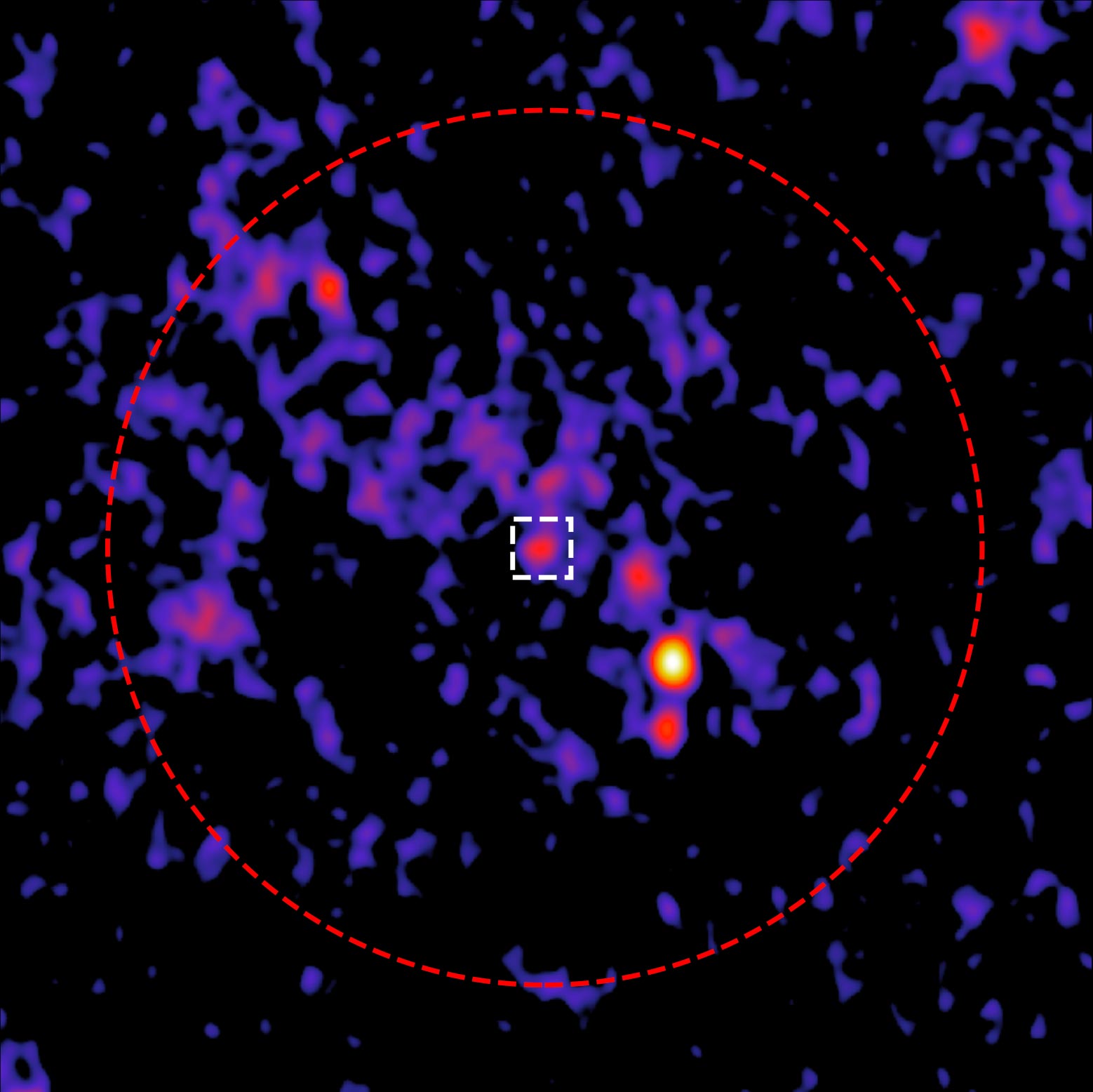
A global team of astronomers has created the most sensitive radio image ever of a globular cluster, an ancient ball of tightly-packed stars.
The image is of the second brightest globular cluster in the night sky—known as 47 Tucanae—and was produced by a team led by the Curtin University node of the International Centre for Radio Astronomy Research (ICRAR) in Western Australia.
The scientists also detected a previously undiscovered radio signal from the center of the cluster.
The research was published overnight in The Astrophysical Journal.
Astronomer Dr. Arash Bahramian, from ICRAR’s Curtin University node, says star clusters are an ancient relic of the early Universe.
“Globular clusters are very old, giant balls of stars that we see around the Milky Way,” he said. “They’re incredibly dense, with tens of thousands to millions of stars packed together in a sphere.
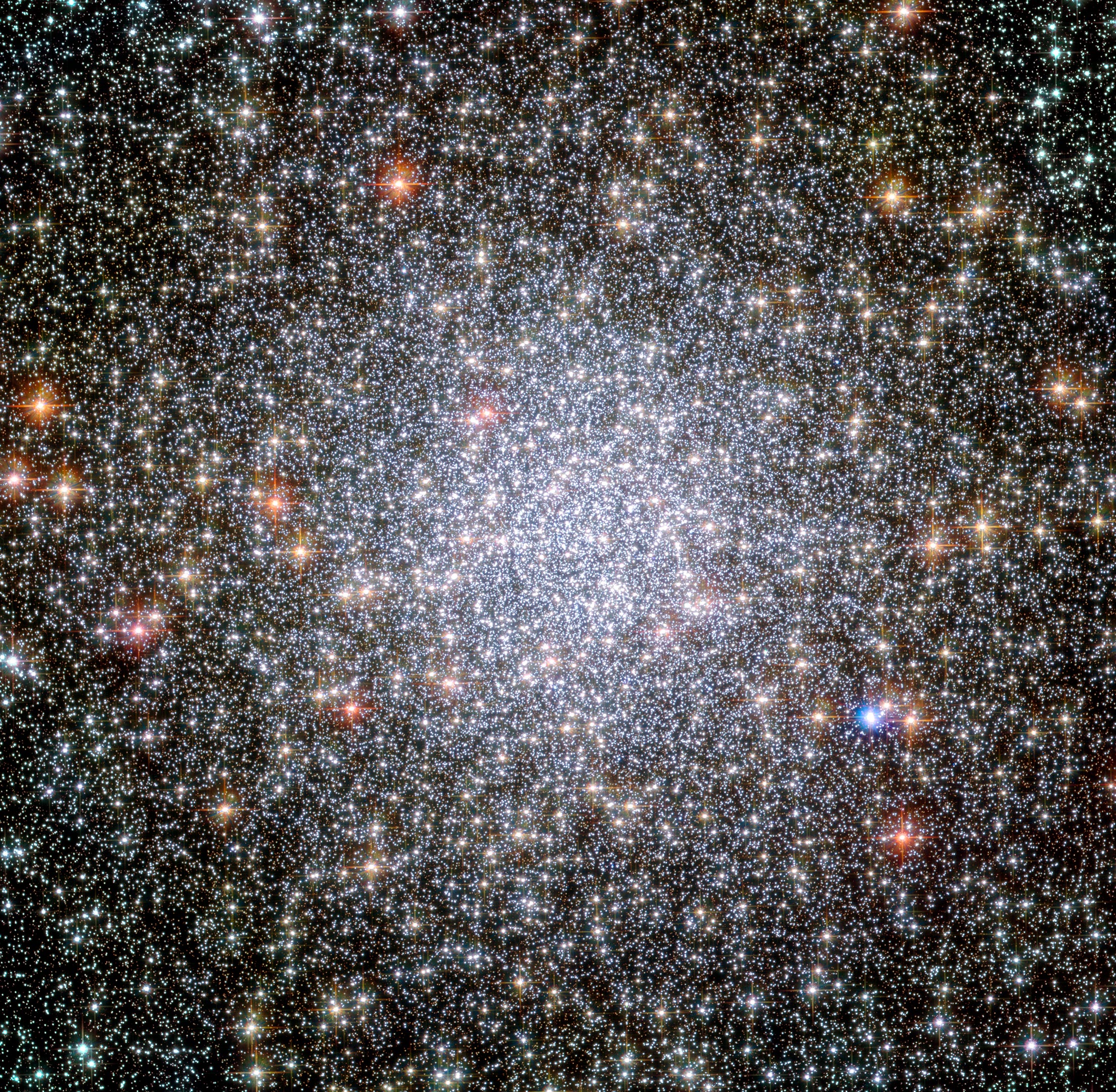
“Our image is of 47 Tucanae, one of the most massive globular clusters in the galaxy. It has over a million stars and a very bright, very dense core.”
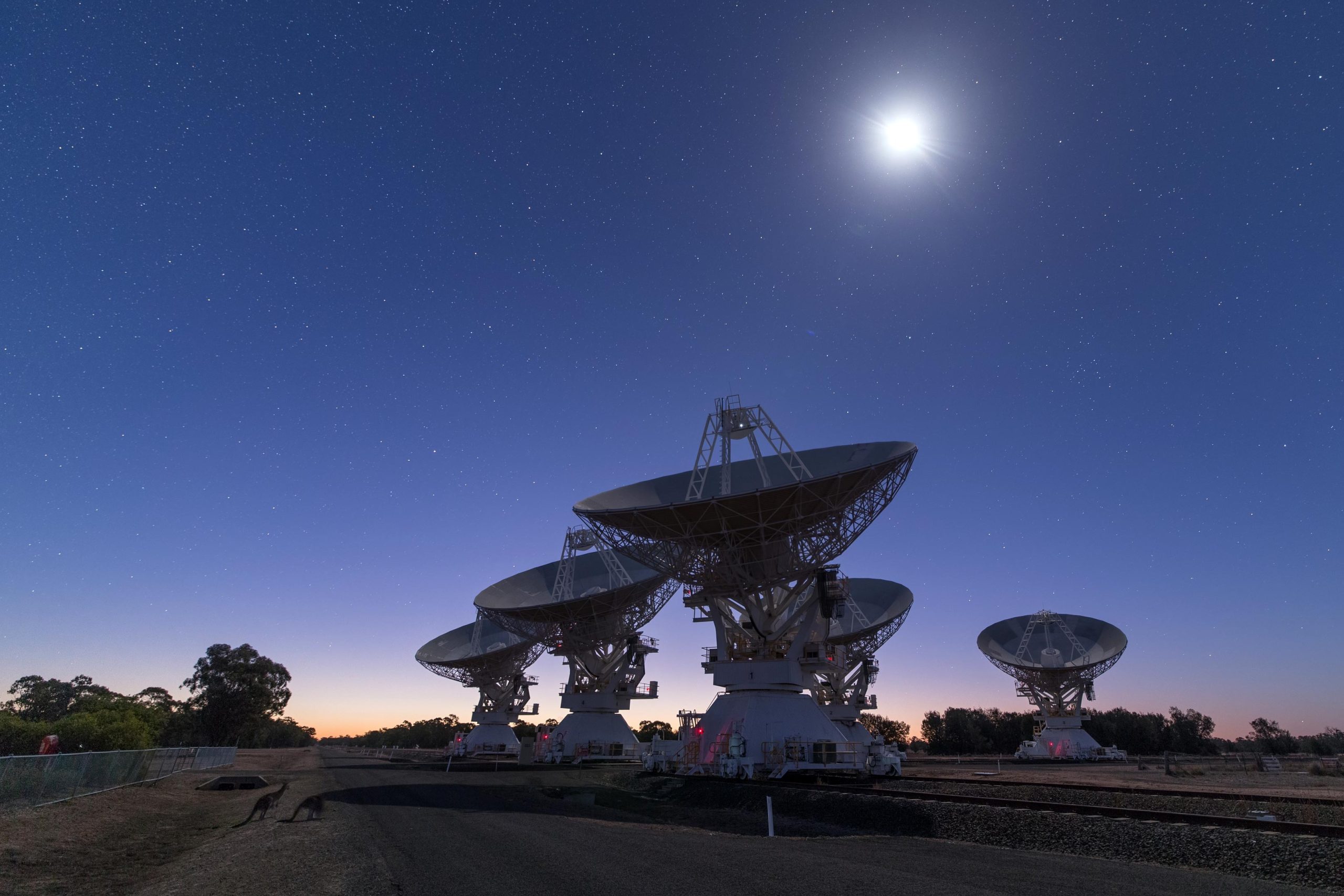
Dr. Bahramian said the ultra-sensitive image was created from more than 450 hours of observations on CSIRO’s Australia Telescope Compact Array (ATCA), in Gomeroi Country.
It is the deepest, most sensitive radio image ever compiled by any Australian radio telescope.
Dr. Bahramian said 47 Tucanae can be seen with the naked eye, and was first catalogued in the 1700s.
But he said imaging it in such great detail allowed astronomers to discover an incredibly faint radio signal at the center of the cluster that had not been detected before.
Lead author Dr. Alessandro Paduano, from ICRAR’s Curtin University node, said the detection of the signal was an exciting discovery and could be attributed to one of two possibilities.
Hear about what astronomers discovered inside 47 Tucanae — the second brightest globular cluster in the night sky. Credit: ICRAR
“The first is that 47 Tucanae could contain a black hole with a mass somewhere between the supermassive black holes found in the centers of galaxies and the stellar black holes created by collapsed stars,” he said.
“While intermediate-mass black holes are thought to exist in globular clusters, there hasn’t been a clear detection of one yet.
“If this signal turns out to be a black hole, it would be a highly-significant discovery and the first ever radio detection of one inside a cluster.”
The second possible source of the signal is a pulsar—a rotating neutron star that emits radio waves.
“A pulsar this close to a cluster center is also a scientifically interesting discovery, as it could be used to search for a central black hole that is yet to be detected,” Dr. Paduano said.
Co-author Dr. Tim Galvin, a research scientist with CSIRO, said the project once again demonstrated the ongoing importance of ATCA.
“This project has stretched our software to its limits, in terms of both data management and processing, and it has been really exciting to see the wealth of science that these techniques have enabled.”
“Alessandro’s research represents a culmination of years of research and technological advancements, and ATCA’s ultra-deep image of 47 Tucanae represents just the beginning of the discoveries that are yet to come.”
The ultra-sensitive image produced is what researchers can expect from the SKA radio telescopes, currently being built in Australia and South Africa by the SKA Observatory (SKAO).
Once complete, the SKA telescopes will be the two largest radio telescope arrays in the world, transforming our understanding of the Universe and tackling some of the most fundamental scientific questions of our time.
Dr. Bahramian said researchers are continually finding new and innovative ways to get the best out of the radio telescopes they use.
“We managed to achieve close to SKA-quality science with the current generation of radio telescopes, combining hundreds of hours of observations to reveal the faintest details,” he said.
“It gives us a glimpse of the exciting capabilities the next generation of radio telescopes will achieve when they come online.”
The technique used for the ultra-sensitive image could help future radio telescopes, such as the SKA, to detect some of the faintest objects in the Universe.
Reference: “Ultradeep ATCA Imaging of 47 Tucanae Reveals a Central Compact Radio Source” by Alessandro Paduano, Arash Bahramian, James C. A. Miller-Jones, Adela Kawka, Tim J. Galvin, Liliana Rivera Sandoval, Sebastian Kamann, Jay Strader, Laura Chomiuk, Craig O. Heinke, Thomas J. Maccarone and Stefan Dreizler, 15 January 2024, The Astrophysical Journal.
DOI: 10.3847/1538-4357/ad0e68
Never miss a breakthrough: Join the SciTechDaily newsletter.
Follow us on Google and Google News.