
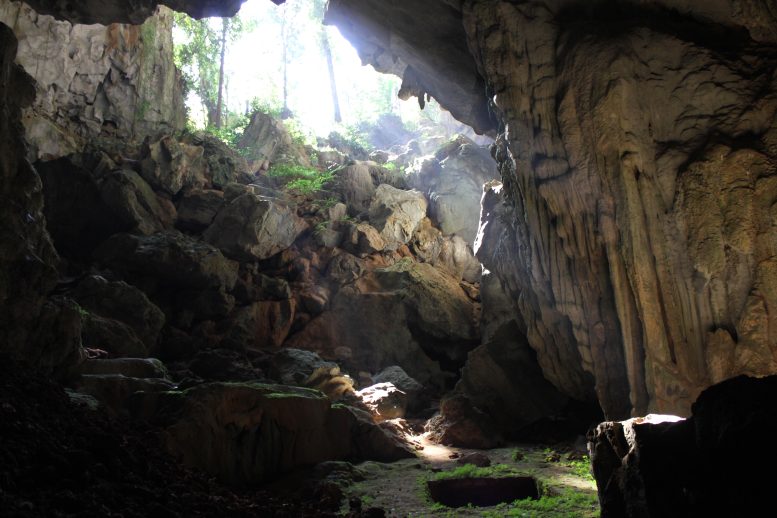
Tam Pà Ling, a cave located in the northern region of Laos, unveils new insights into the earliest human migrations from Africa all the way to Australia.
What links a fossil discovered in a northern Laotian cave to ancient stone tools from northern Australia? It’s us, Homo sapiens. As our forebears journeyed from Africa to Australia, they marked their path with evidence of their presence in the form of human fossils that accumulated over thousands of years deep in a cave.
Recent findings from the Tam Pà Ling cave in northern Laos have cast new light on this narrative. The investigation conducted by a multi-national team of researchers from Laos, France, America, and Australia, and subsequently published in Nature Communications, has conclusively established that modern humans ventured from Africa, traversed through Arabia, and reached Asia significantly earlier than was previously believed.
It also confirms that our ancestors didn’t just follow coastlines and islands. They traveled through forested regions, most likely along river valleys, too. Some then moved on through Southeast Asia to become Australia’s First People.
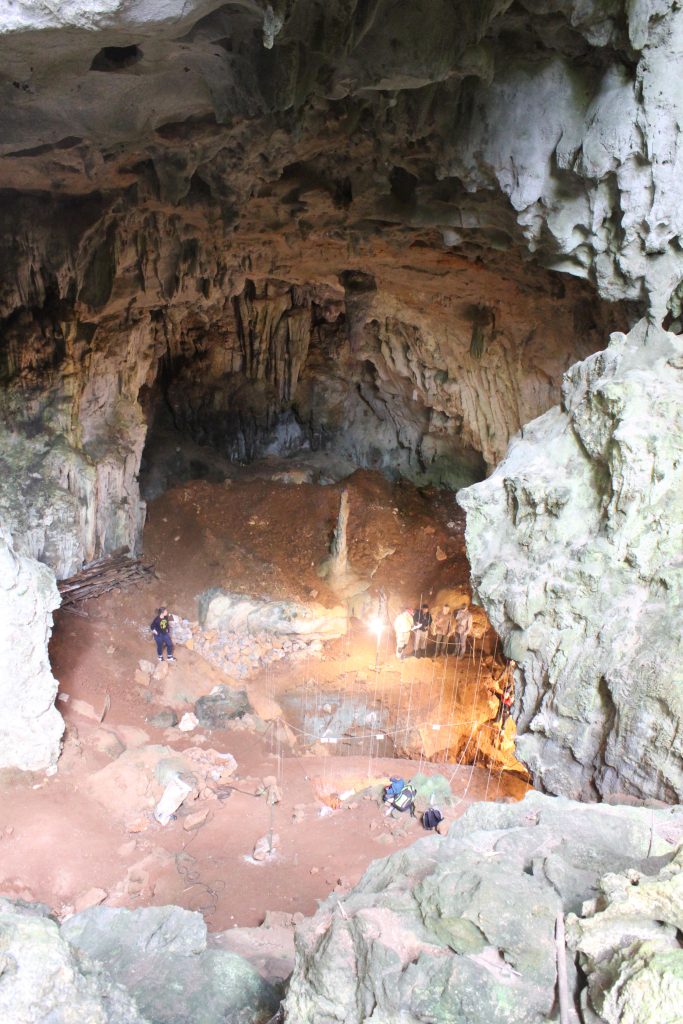
“Tam Pà Ling plays a key role in the story of modern human migration through Asia but its significance and value is only just being recognized,” says University of Copenhagen palaeoanthropologist Assistant Professor Fabrice Demeter, one of the paper’s lead authors.
Three Australian Universities contributed to the project. Macquarie University and Southern Cross University dated samples using multiple techniques. Flinders University showed that the sediment in the cave had been laid down in distinct layers over tens of thousands of years.
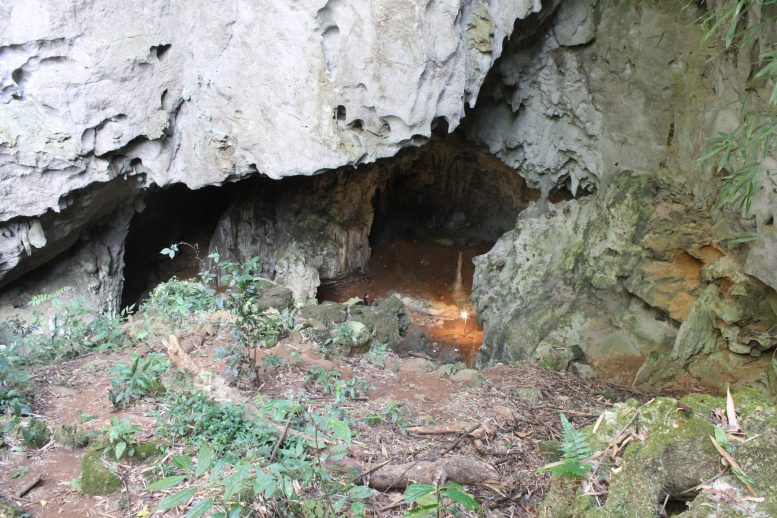
Since the first excavation and the discovery of a skull and mandible in 2009, the cave has been controversial. Evidence of our earliest journeys from Africa into Southeast Asia is usually dominated by island locations such as Sumatra, the Philippines, and Borneo.
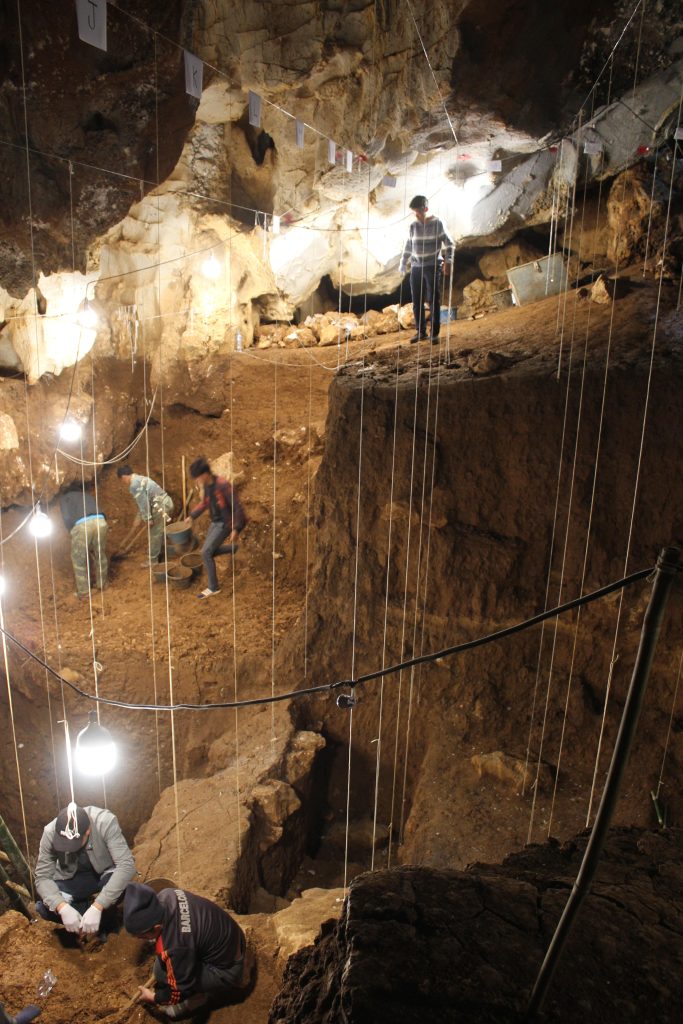
This was before Tam Pà Ling, an upland cave site more than 300 kilometers (190 miles) from the sea in northern Laos, started divulging its secrets. The skull and jawbone were identified as belonging to Homo sapiens who had migrated through the region. But when?
As is usual in questions of human dispersal, the debate comes down to timing. But this evidence was hard to date.
The human fossils cannot be directly dated as the site is a World Heritage area and the fossils are protected by Laotian law. There are very few animal bones or suitable cave decorations to date, and it is too old for radiocarbon dating. This placed a heavy burden on the luminescence dating of sediments to form the backbone of the timeline.
Innovative Dating Techniques
Luminescence dating relies on a light-sensitive signal that is reset to zero when exposed to light but builds up over time when shielded from light during burial. It was originally used to constrain the burial sediments that encased the fossils.
“Without luminescence dating this vital evidence would still have no timeline and the site would be overlooked in the accepted path of dispersal through the region,” says Macquarie University geochronologist Associate Professor Kira Westaway. “Luckily the technique is versatile and can be adapted for different challenges.”
These techniques returned a minimum age of 46,000 years – a chronology in line with the expected timing of Homo sapiens’ arrival in Southeast Asia. But the discovery didn’t end there.
From 2010 to 2023, annual excavations (delayed by three years of lockdowns) revealed increasingly more evidence that Homo sapiens had passed through en route to Australia. Seven pieces of a human skeleton were found at intervals through 4.5 meters (14.8 feet) of sediment, pushing the potential timeline far back into the realms of the earliest Homo sapiens migrations to this region.
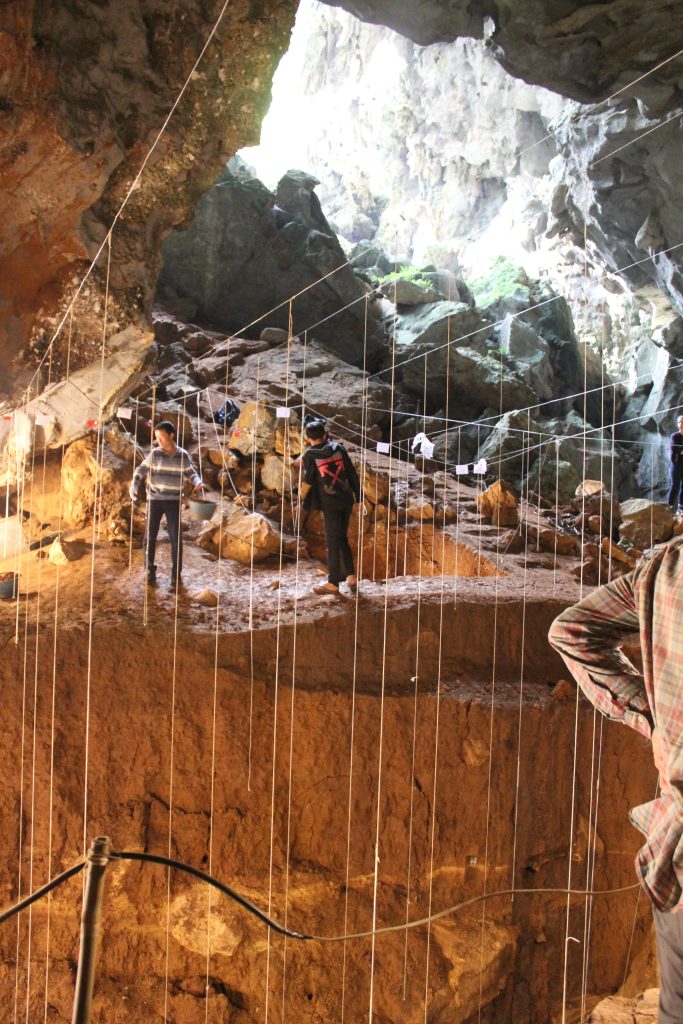
In this study, the team overcame these issues by creatively applying strategic dating techniques where possible, such as the uranium-series dating of a stalactite tip that had been buried in sediment, and the use of uranium-series dating coupled with electron-spin-resonance dating techniques to two rare but complete bovid teeth, unearthed at 6.5 meters (21.3 feet).
“Having direct dating of the fossil remains confirmed the age sequence obtained by luminescence, allowing us to propose a comprehensive and secure chronology for a Homo sapiens presence at Tam Pà Ling,” says Southern Cross University geochronologist Associate Professor Renaud Joannes-Boyau.
The team supported the dating evidence with a detailed analysis of the sediments to assess the origin of the fossils using micromorphology, a technique that examines sediments under a microscope to establish the integrity of the layers. This key component of the new chronology helped establish that there was a consistent accumulation of sedimentary layers over a long period.
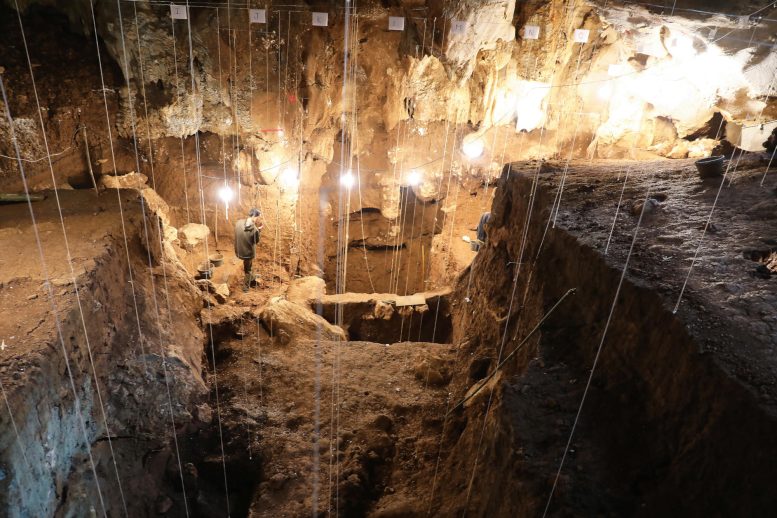
“Far from reflecting a rapid dump of sediments, the site represents a consistent and seasonally deposited stack of sediments,” explains Flinders University geoarchaeologist Associate Professor Mike Morley, who worked with Ph.D. students Vito Hernandez and Meghan McAllister-Hayward.
Evidence of a Much Earlier Human Arrival
The new chronology revealed there had been a human presence in this area for more than 56,000 years. Furthermore, the age of the lowest fossil at seven meters – a fragment of a leg bone – provides a timeline for modern human arrival in this region between 86,000 to 68,000 years ago. This pushes back the arrival time in mainland Southeast Asia by approximately 40,000 years. Although, according to genetics, these early migrations did not contribute significantly to our modern-day populations.
“This really is the decisive paper for the Tam Pà Ling evidence,” says Associate Professor Westaway. “Finally we have enough dating evidence to confidently say when Homo sapiens first arrived in this area, how long they were there, and what route they may have taken.”
Tam Pà Ling cave is very close to the recently discovered Cobra Cave, which was frequented by Denisovans approximately 70,000 years earlier. Despite the previous lack of evidence for early arrival in mainland Southeast Asia, this area might be a previously used dispersal route among our ancestors, long before Homo sapiens.
“We have much to learn from the caves and forests of Southeast Asia,” adds Associate Professor Westaway.
Reference: “Early presence of Homo sapiens in Southeast Asia by 86–68 kyr at Tam Pà Ling, Northern Laos” by Sarah E. Freidline, Kira E. Westaway, Renaud Joannes-Boyau, Philippe Duringer, Jean-Luc Ponche, Mike W. Morley, Vito C. Hernandez, Meghan S. McAllister-Hayward, Hugh McColl, Clément Zanolli, Philipp Gunz, Inga Bergmann, Phonephanh Sichanthongtip, Daovee Sihanam, Souliphane Boualaphane, Thonglith Luangkhoth, Viengkeo Souksavatdy, Anthony Dosseto, Quentin Boesch, Elise Patole-Edoumba, Françoise Aubaile, Françoise Crozier, Eric Suzzoni, Sébastien Frangeul, Nicolas Bourgon, Alexandra Zachwieja, Tyler E. Dunn, Anne-Marie Bacon, Jean-Jacques Hublin, Laura Shackelford and Fabrice Demeter, 13 June 2023, Nature Communications.
DOI: 10.1038/s41467-023-38715-y
Never miss a breakthrough: Join the SciTechDaily newsletter.
Follow us on Google and Google News.
1 Comment
Excellent insights helping structure the mapping encourages deeper analysis & evolution understanding