
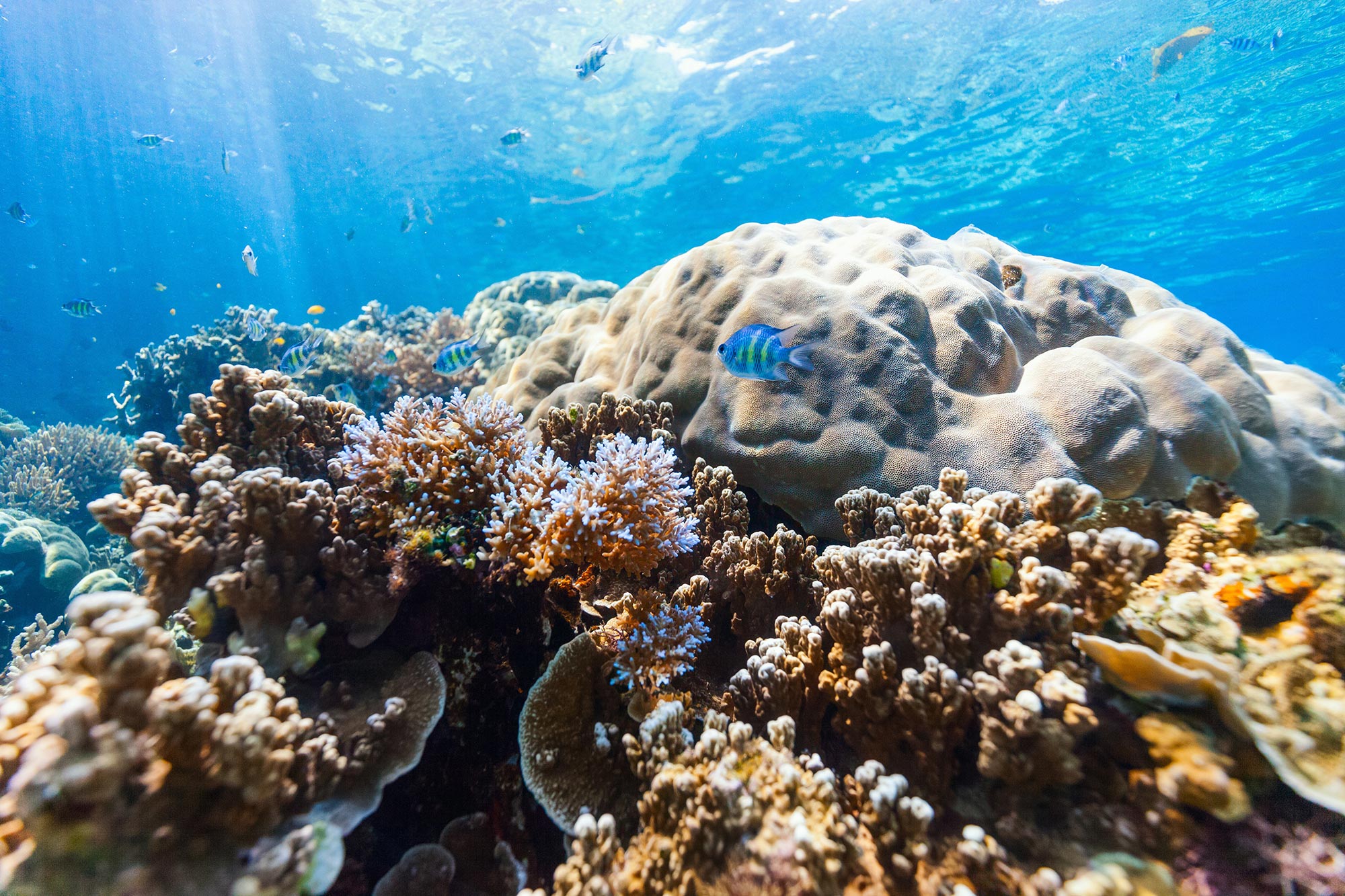
Research indicates that stromatoporoids, ancient reef-builders, withstood the Late Devonian extinction and prospered into the Carboniferous Period.
Will modern coral reefs go extinct? The answer is uncertain, but some of their ancient counterparts managed to dodge a bullet — for a while, at least.
Scientists from Osaka Metropolitan University have discovered that ancient reef-building organisms called stromatoporoids survived the Late Devonian mass extinction event and continued to thrive as major reef-builders long after their presumed extinction. These findings shed light on how life on Earth has responded to past environmental changes, offering valuable insights into the resilience and adaptability of marine ecosystems.
Corals are the most well-known reef builders today, but reefs have been built by a variety of organisms throughout Earth’s history. One such group was the stromatoporoids, sponge-like organisms that played a major role in reef-building during the Paleozoic, particularly in the Silurian and Devonian periods (roughly 444 to 359 million years ago).
“Stromatoporoids were thought to have vanished as reef-builders after the Late Devonian extinction,” said Yoichi Ezaki, a professor at Osaka Metropolitan University’s Graduate School of Science and lead author of the study.
The Late Devonian Mass Extinction and Its Aftermath
The Late Devonian extinction was one of five mass extinction events in Earth’s history. It significantly affected marine life, causing a decline in the diversity of reef-building organisms. During the Carboniferous (roughly 359 to 299 million years ago), which followed this devastating event, no stromatoporoid reef was known to exist…until now.
Scrutinizing fossils from Carboniferous rocks found in the Akiyoshi Limestone Group of southwest Japan, the research team discovered laminated skeletons with laminae, or layered, and pillar-like structures — typical features of stromatoporoids.
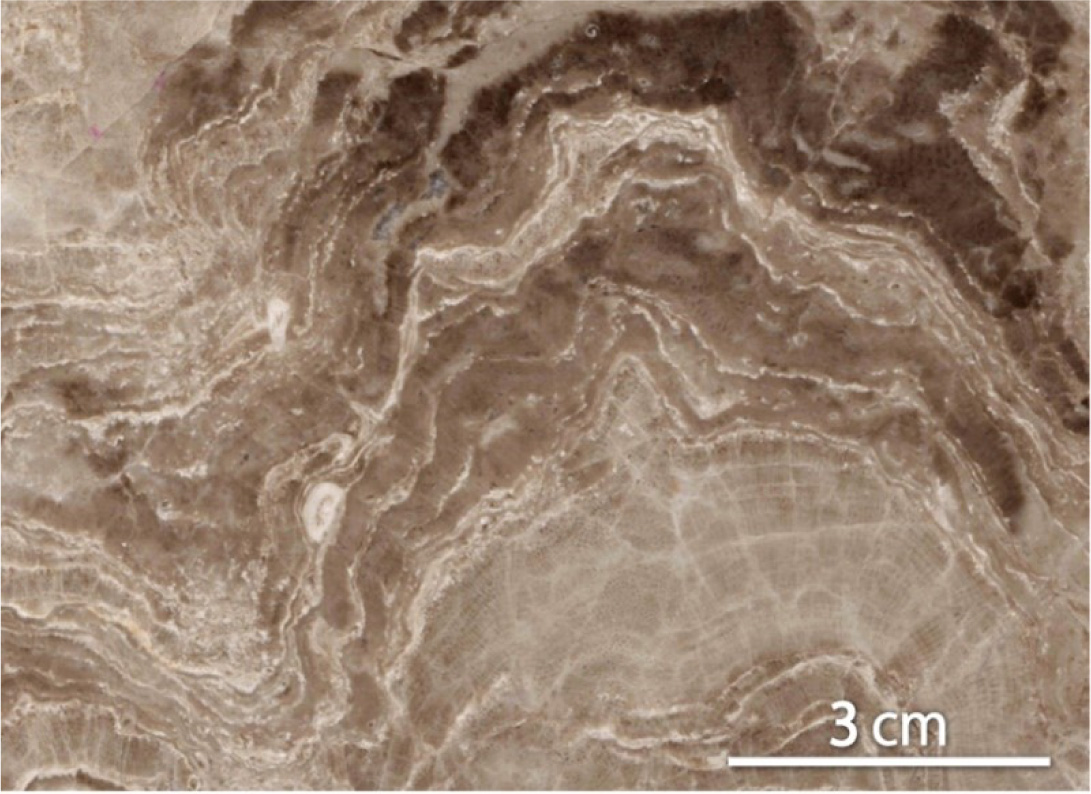
“Contrary to previous beliefs, our findings in Japan show stromatoporoids not only survived but continued to be instrumental in reef construction during the Carboniferous,” said Ezaki. “We feel sure this discovery will rewrite the content of textbooks.”
The Akiyoshi Limestone formed on a seamount in the Panthalassa Ocean through the Mississippian (early Carboniferous) to middle Permian periods. Stromatoporoids, alongside the organism Chaetetes, thrived on the warm shallow-water seamounts of the Panthalassa Ocean, benefiting from conditions such as enhanced ocean circulation, upwelling, and nutrient supply, culminating in elevated carbonate saturation due to ongoing global glaciation.
The Unique Environment of Akiyoshi Seamount
This suggests that isolated and unique oceanic environments like Akiyoshi may have allowed the survival of these resilient organisms.
“The isolated Akiyoshi seamount might have harbored a unique biological community, potentially forming a ‘Carboniferous Galápagos’ that offers a glimpse into the complex dynamics of ancient marine ecosystems,” said Ezaki.
Intensified global cooling and exposure above sea level eventually took their toll on the stromatoporoids. Still, the continued presence of these reef-building organisms in the late Carboniferous suggests that they adapted to new ecological niches in response to the changing climate.
The study’s findings highlight the potential resilience of certain reef-building organisms in distinctive environments, providing valuable lessons for today’s conservation efforts.
“Understanding how stromatoporoids and other organisms adapted to survive past climatic and environmental upheavals offers crucial insights into how modern reef ecosystems might handle current and future climate changes,” said Ezaki.
Reference: “Post-Devonian re-emergence and demise of stromatoporoids as major reef-builders on a Carboniferous Panthalassan seamount” by Yoichi Ezaki, Mitsuru Masui, Koichi Nagai, Gregory E. Webb, Koki Shimizu, Shota Sugama, Natsuko Adachi and Tetsuo Sugiyama, 13 August 2024, Geology.
DOI: 10.1130/G52420.1
Never miss a breakthrough: Join the SciTechDaily newsletter.
Follow us on Google and Google News.
1 Comment
Can? In structure means, are they able as if self determined.
More appropriate scientific language asks: will? Simply, will man’s ignorance and intentional destruction of his planet make no impact on them? Ask mankind!