
Close Menu
    Facebook X (Twitter) Instagram
    SciTechDaily
    • Biology
    • Chemistry
    • Earth
    • Health
    • Physics
    • Science
    • Space
    • Technology
    Facebook X (Twitter) Pinterest YouTube RSS
    SciTechDaily
    Home»Biology»Ancient Crocodile Reveals the Humble Beginnings of the Apex Predator
    Biology

    Ancient Crocodile Reveals the Humble Beginnings of the Apex Predator

    By Kimberleigh Tommy, University of WitwatersrandJune 18, 20181 Comment3 Mins Read
    Facebook Twitter Pinterest Telegram LinkedIn WhatsApp Email Reddit
    Share
    Facebook Twitter LinkedIn Pinterest Telegram Email Reddit
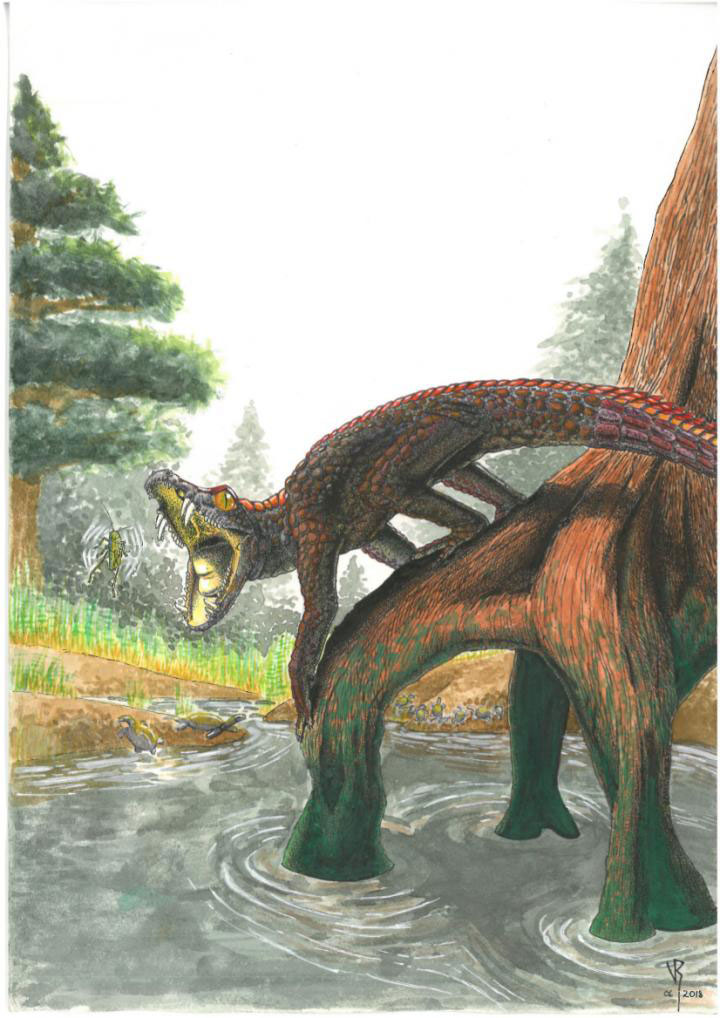
    Shartegosuchid
    This is a reconstruction of Shartegosuchus. Artist: Viktor Rademacher

    The mouth of today’s crocodilians inspires fear and awe, with their wide gape and the greatest known bite force in the vertebrate animal kingdom. However, this apex predator of today and its modus of attack (its mouth) had humble beginnings.

    The very earliest crocodilians were very different to the beasts we know well today, they were much smaller-bodied, slender, and had longer legs. It is speculated that they led a much different lifestyle to the crocodiles we all know and fear today.

    A new study by a team of international experts, led by University of Witwatersrand Ph.D. candidate Kathleen Dollman and Professor Jonah Choiniere published today in the American Museum Novitates, endeavored to further explore the mouth of one of the earliest occurring and least understand groups of crocodilians, the shartegosuchids.

    In 2010, Choiniere was a part of a field team working in the Late Jurassic (±160 mya) exposures in the western Gobi in Mongolia, when he found the fossil of a small snout of a shartegosuchid. This work was co-authored by researchers based at the American Museum of Natural History, the George Washington University, and the Institute for Vertebrate Palaeontology and Palaeoanthropology.

    Shartegosuchus Palate
    This is a digital reconstruction of the palate of the fossil. WITS University, Jonah Choiniere, Katheleen Dollman

    The snout was later CT scanned at the American Museum of Natural History, exposing an unusual, closed secondary palate. Crocodilians are one of only a few groups of animals that evolve a completely closed, bony secondary palate (along with turtles and mammals). A closed secondary palate has many biological implications for crocodilians, including breathing whilst underwater and reinforcing the skull to allow for their incredible bite force.

    This study showed that these early crocodilians, the shartegosuchids, are important because they evolved a completely closed secondary palate much earlier than previously thought. This is an interesting example of convergent evolution, whereby a similar feature evolves independently in two completely unrelated groups. The advent of a convergent evolutionary event allows scientists to test questions about why that feature evolved and even the function of that feature which in this case is the first step in understanding the purpose of a closed secondary palate in crocodilians.

    “I was surprised to find that there were many features in the palate and snout that were completely different between shartegosuchids and extant crocodilians,” says Dollman. Shartegosuchids have a thickened and sculptured palate together with a tall and short rostrum, whereas extant crocodilians have a smooth palate with a long and broad rostrum.
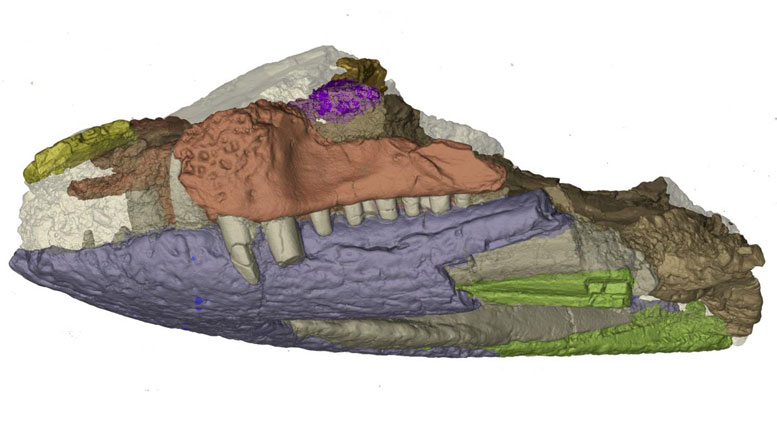
    Shartegosuchus Skull
    This is a digital model of the skull still enclosed in matrix. WITS University, Jonah Choiniere, Katheleen Dollman

    “We would expect to see the same palatal structures and snout shapes in both shartegosuchids and extant crocodiles if they were using it for similar functions and had evolved a closed palate for similar reasons,” says Dollman. “The observed differences tell us that shartegosuchids likely had predation practices to which there is no modern analog in crocodilians.”

    “It’s been nearly 10 years since we collected this fossil after driving 5 days across the Gobi Desert,” said Choiniere, “and I am delighted that it’s formed a part of Kathleen’s Ph.D.”

    Never miss a breakthrough: Join the SciTechDaily newsletter.
    Follow us on Google and Google News.

    Crocodiles Evolutionary Biology Paleontology Popular University of The Witwatersrand
    Share. Facebook Twitter Pinterest LinkedIn Email Reddit

    Related Articles

    New Species of Humongous Prehistoric Crocodile “River Boss” Discovered in Australia

    Ancient DNA Reveals New Spot in the Tree of Life for Extinct “Horned” Crocodile

    New Insight Into the Evolution of Sight From 54 Million Year-Old Fossil

    Dinosaur Egg Color Had a Single Evolutionary Origin

    Newly Discovered Dinosaur (Mansourasaurus shahinae) Links Africa and Europe

    Permian Ecosystems Tell Us A Lot About Modern Earth

    Pentecopterus – A Giant Sea Scorpion from the Prehistoric Seas

    Discovery of ‘Bird-Dinosaur’ Eosinopteryx Challenges Bird Evolution Theory

    Pegomastax Africanus, A Miniature Dinosaur That Thrived in Southern Africa

    1 Comment

    1. here on October 19, 2018 4:15 pm

      I read this piece of writing completely concerning the resemblance of newest and previous technologies, it’s amazing
      article.

      Reply
    Leave A Reply Cancel Reply

    • Facebook
    • Twitter
    • Pinterest
    • YouTube

    Don't Miss a Discovery

    Subscribe for the Latest in Science & Tech!

    Trending News

    The Universe Is Expanding Too Fast and Scientists Can’t Explain Why

    “Like Liquid Metal”: Scientists Create Strange Shape-Shifting Material

    Early Warning Signals of Esophageal Cancer May Be Hiding in Plain Sight

    Common Blood Pressure Drug Shows Surprising Power Against Deadly Antibiotic-Resistant Superbug

    Scientists Uncover Dangerous Connection Between Serotonin and Heart Valve Disease

    Scientists Discover a “Protector” Protein That Could Help Reverse Hair Loss

    Bone-Strengthening Discovery Could Reverse Osteoporosis

    Scientists Uncover Hidden Trigger Behind Stem Cell Aging

    Follow SciTechDaily
    • Facebook
    • Twitter
    • YouTube
    • Pinterest
    • Newsletter
    • RSS
    SciTech News
    • Biology News
    • Chemistry News
    • Earth News
    • Health News
    • Physics News
    • Science News
    • Space News
    • Technology News
    Recent Posts
    • Why Popular Diabetes Drugs Like Ozempic Don’t Work for Everyone: The “Genetic Glitch”
    • Scientists Create Improved Insulin Cells That Reverse Diabetes in Mice
    • Scientists Stunned After Finding Plant Thought Extinct for 60 Years
    • A Common Diabetes Drug May Hold the Key to Stopping HIV From Coming Back
    • Ancient “Syphilis-Like” Disease in Vietnam Challenges Key Scientific Assumptions
    Copyright © 1998 - 2026 SciTechDaily. All Rights Reserved.
    • Science News
    • About
    • Contact
    • Editorial Board
    • Privacy Policy
    • Terms of Use

    Type above and press Enter to search. Press Esc to cancel.