
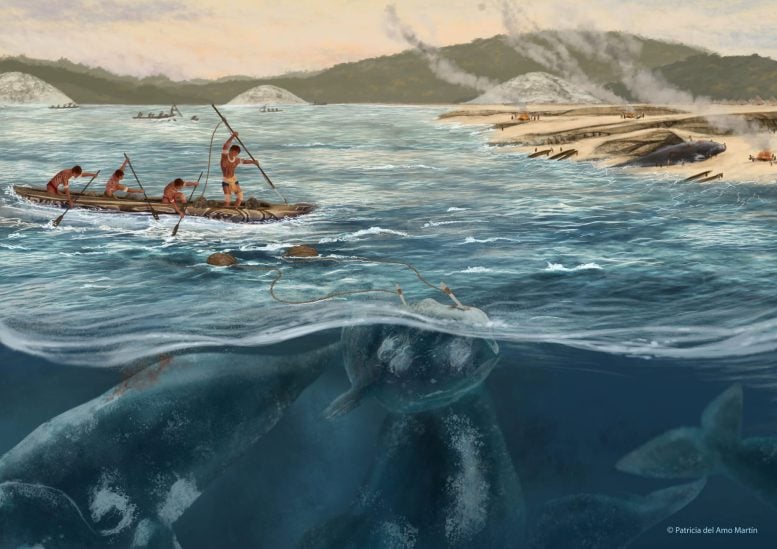
Ancient Brazilian communities hunted whales earlier than previously thought, using advanced technologies. The discovery reshapes views of early maritime societies and provides new ecological insights.
Whaling dates back much deeper in history than previously recognized. A new study by the Institute of Environmental Science and Technology at the Universitat Autònoma de Barcelona (ICTA-UAB) and the university’s Department of Prehistory shows that Indigenous groups in southern Brazil were hunting large whales 5,000 years ago, about 1,000 years before similar practices are documented in Arctic and North Pacific cultures.
Published in Nature Communications, the research focuses on communities around Babitonga Bay (Santa Catarina) that built sambaquis, large shell mounds created by coastal societies during the Holocene.
These groups developed specialized methods for hunting whales much earlier than earlier archaeological interpretations suggested. The findings challenge long-held assumptions that large-scale whaling began in Northern Hemisphere societies between 3,500 and 2,500 years ago.
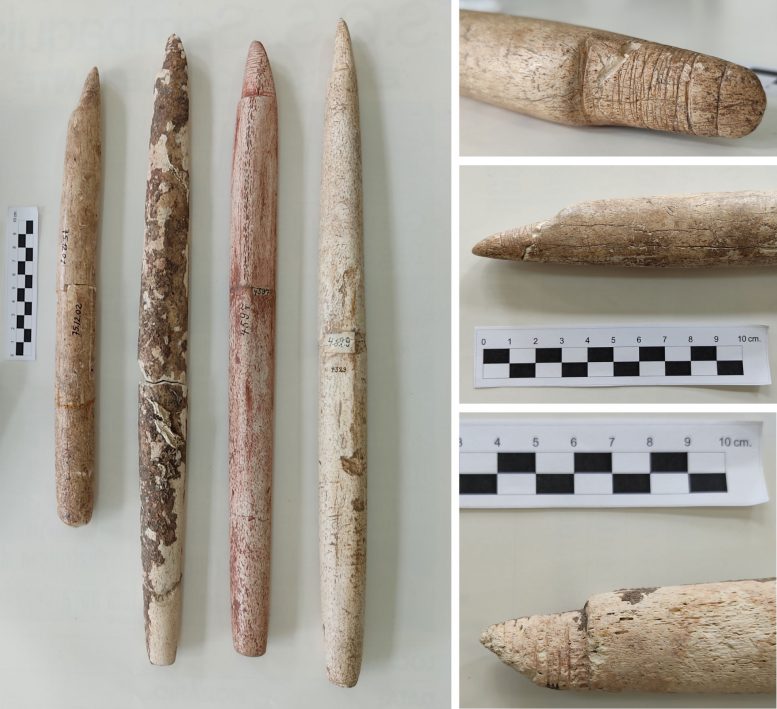
The study, led by ICTA-UAB researchers Krista McGrath and André Colonese with an international team, examined hundreds of whale bones and bone tools recovered from sambaqui sites in Babitonga Bay. These materials are now preserved at the Museu Arqueológico de Sambaqui de Joinville in Brazil. Since many original sites have disappeared, the collection offers a rare and valuable record that would otherwise be lost.
Advanced Tools and Scientific Analysis of Cetacean Remains
Researchers used a combination of zooarcheology, typological study, and advanced molecular techniques (ZooMS) to analyze the remains. They identified species including southern right whales, humpback whales, blue whales, sei whales, sperm whales, and dolphins. Many of the bones show cut marks linked to butchering.
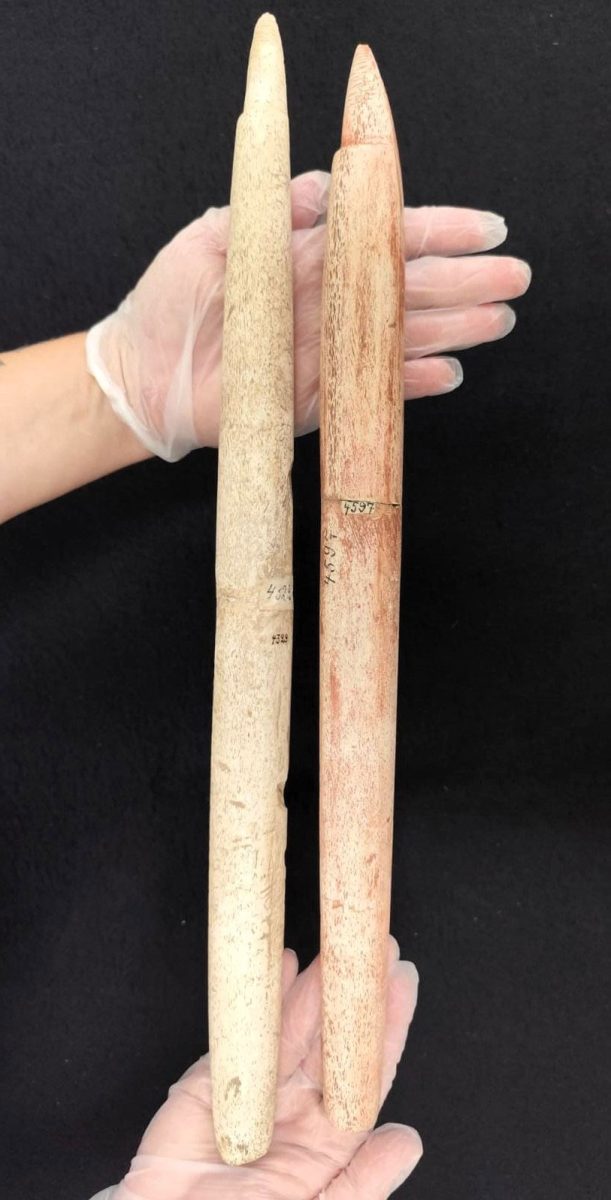
The team also documented large whalebone harpoons, among the biggest found in South America. Together, this evidence, including whale remains found in burial contexts and the presence of coastal species, strongly supports active hunting rather than reliance on stranded animals.
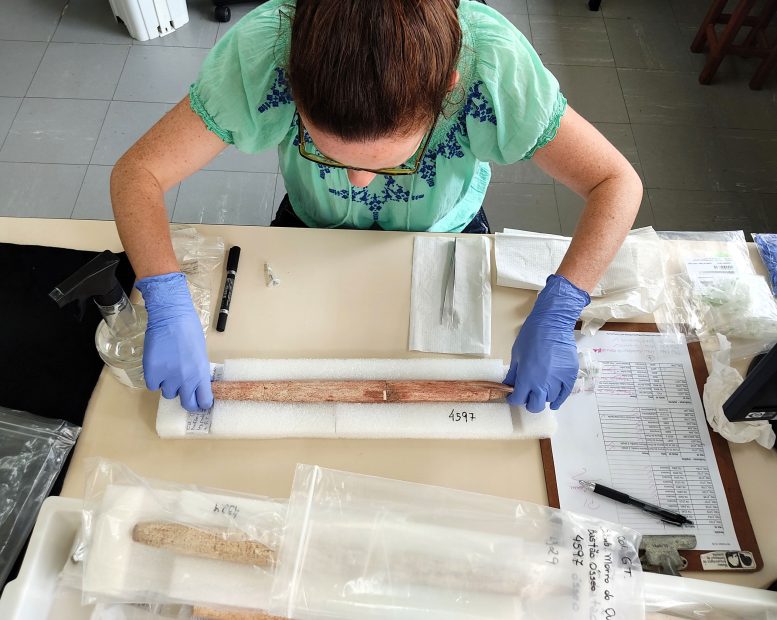
“The data reveals that these communities had the knowledge, tools, and specialized strategies to hunt large whales thousands of years earlier than we had previously assumed,” says Krista McGrath, lead author of the study.
The findings also offer insight into past ecosystems. The large number of humpback whale remains suggests that these whales once ranged much farther south than their current main breeding grounds off Brazil. “The recent increase in sightings in Southern Brazil may therefore reflect a historical recolonization process, with implications for conservation. Reconstructing whale distributions before the impact of industrial whaling is essential to understanding their recovery dynamics,” says Marta Cremer, co-author of the paper.
Rethinking Sambaqui Societies and Maritime Culture
In addition to redefining the timeline of whale hunting, the study provides a more in-depth look at the economies, technologies, and daily life of postglacial societies along South America’s Atlantic coast. According to André Colonese, senior author of the study, “This research opens a new perspective on the social organization of the Sambaqui peoples. It represents a paradigm shift – we can now view these groups not only as shellfish collectors and fishers, but also as whalers.”
Dione Bandeira, a Brazilian archaeologist with more than 20 years of experience studying sambaquis, adds that “the results reveal a practice that made a significant contribution to the long-term and dense presence of these societies along the Brazilian coast.”
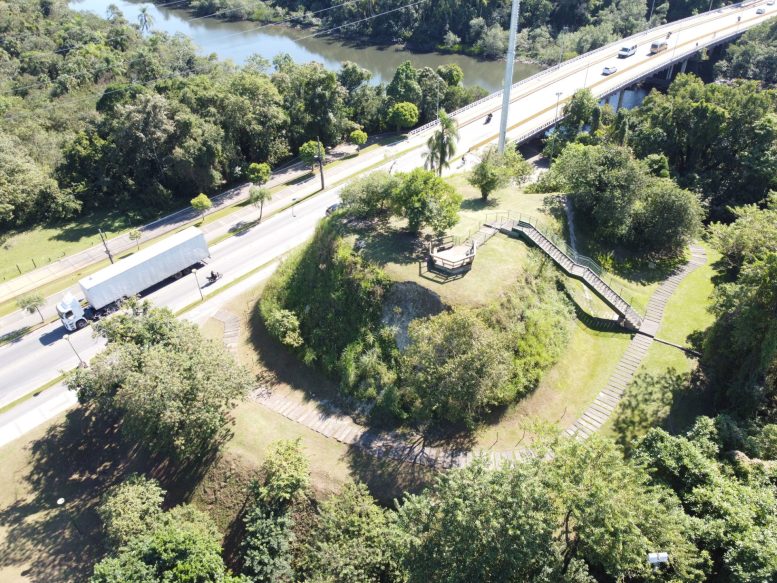
The Sambaqui peoples incorporated marine resources into their cultural systems and built a complex maritime way of life. Their society relied on specialized tools, coordinated group efforts, and rituals connected to hunting large marine animals. This Indigenous history, not recorded in written form, has been preserved through museum collections and ongoing efforts to protect remaining sambaqui sites from the effects of urban growth in Brazil.
Ana Paula, director of the Museu Arqueológico de Sambaqui de Joinville, notes that “the collections safeguarded at the Sambaqui Archaeological Museum in Joinville, especially the Guilherme Tibúrtius Collection, highlight the richness and vast potential of information on ancestral peoples that can still be explored in depth.”
Reference: “Molecular and zooarchaeological identification of 5000 year old whale-bone harpoons in coastal Brazil” by Krista McGrath, Tatiane Andaluzia Kuss da Silveira Montes, Thiago Fossile, Dione da Rocha Bandeira, Fernanda Mara Borba, Marta J. Cremer, Laura G. van der Sluis, Thomas Higham, Ana Paula Klahold Rosa, Maria Saña and André Carlo Colonese, 9 January 2026, Nature Communications.
DOI: 10.1038/s41467-025-67530-w
Never miss a breakthrough: Join the SciTechDaily newsletter.
Follow us on Google and Google News.