
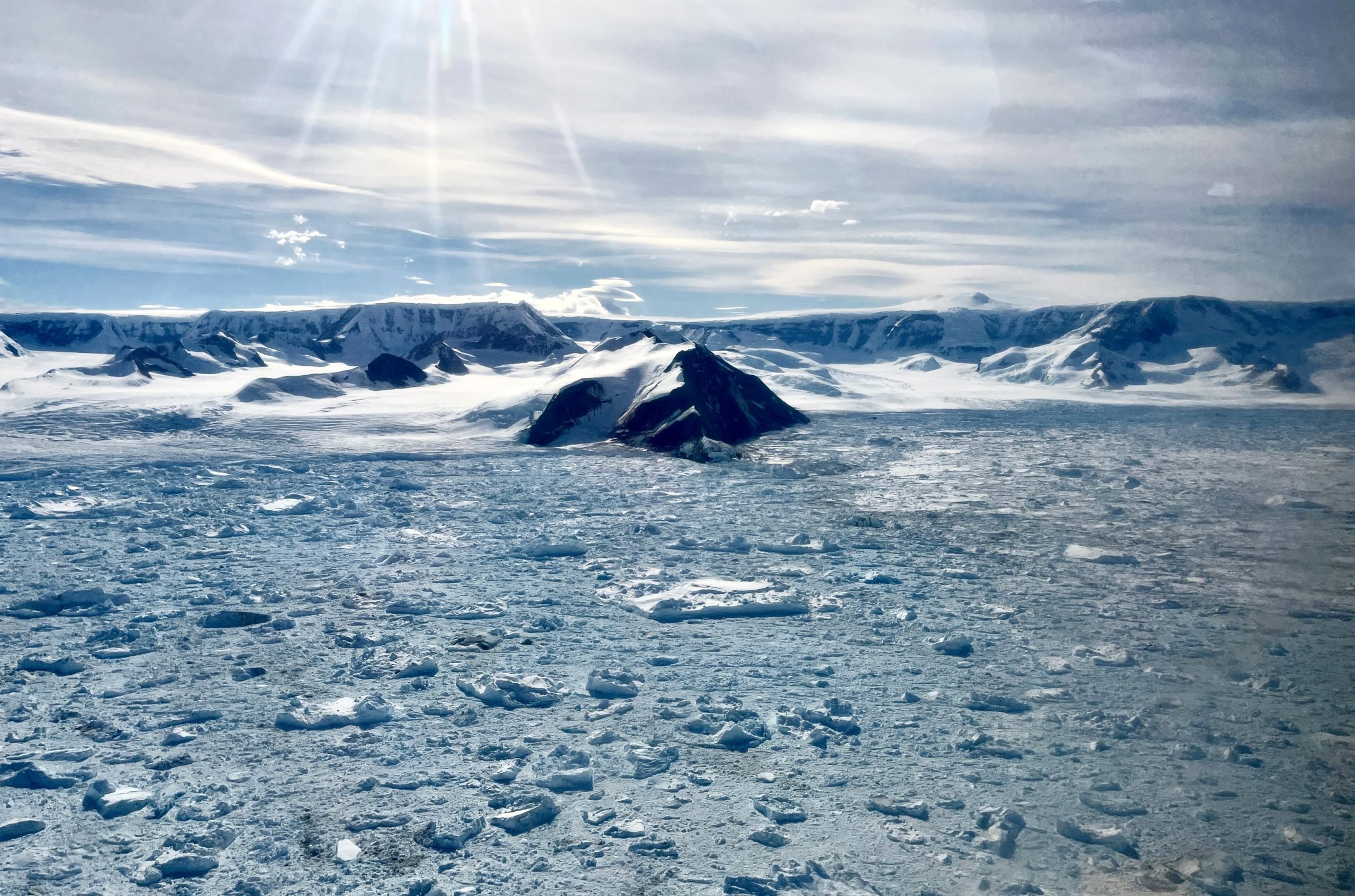
Antarctica’s Hektoria Glacier collapsed at record speed, revealing how quickly ice loss could drive sea level rise.
A glacier on the eastern side of the Antarctic Peninsula has undergone the fastest ice retreat ever documented in modern times, according to a major study co-authored by Swansea University researchers.
Published in Nature Geoscience, the study reports that Hektoria Glacier lost nearly half its total length—around eight kilometers of ice—over just two months in 2023, a rate comparable to the rapid retreats that occurred at the close of the last ice age.
Role of bedrock and glacier shape in rapid ice loss
The research, led by the University of Colorado Boulder (CU Boulder) and including Swansea glaciologist Professor Adrian Luckman, found that the glacier’s retreat was accelerated by the underlying landscape.
Hektoria Glacier sat atop an ice plain, a flat expanse of bedrock located below sea level. Once the retreat began, this formation caused large portions of ice to detach rapidly, triggering a chain reaction of collapse.
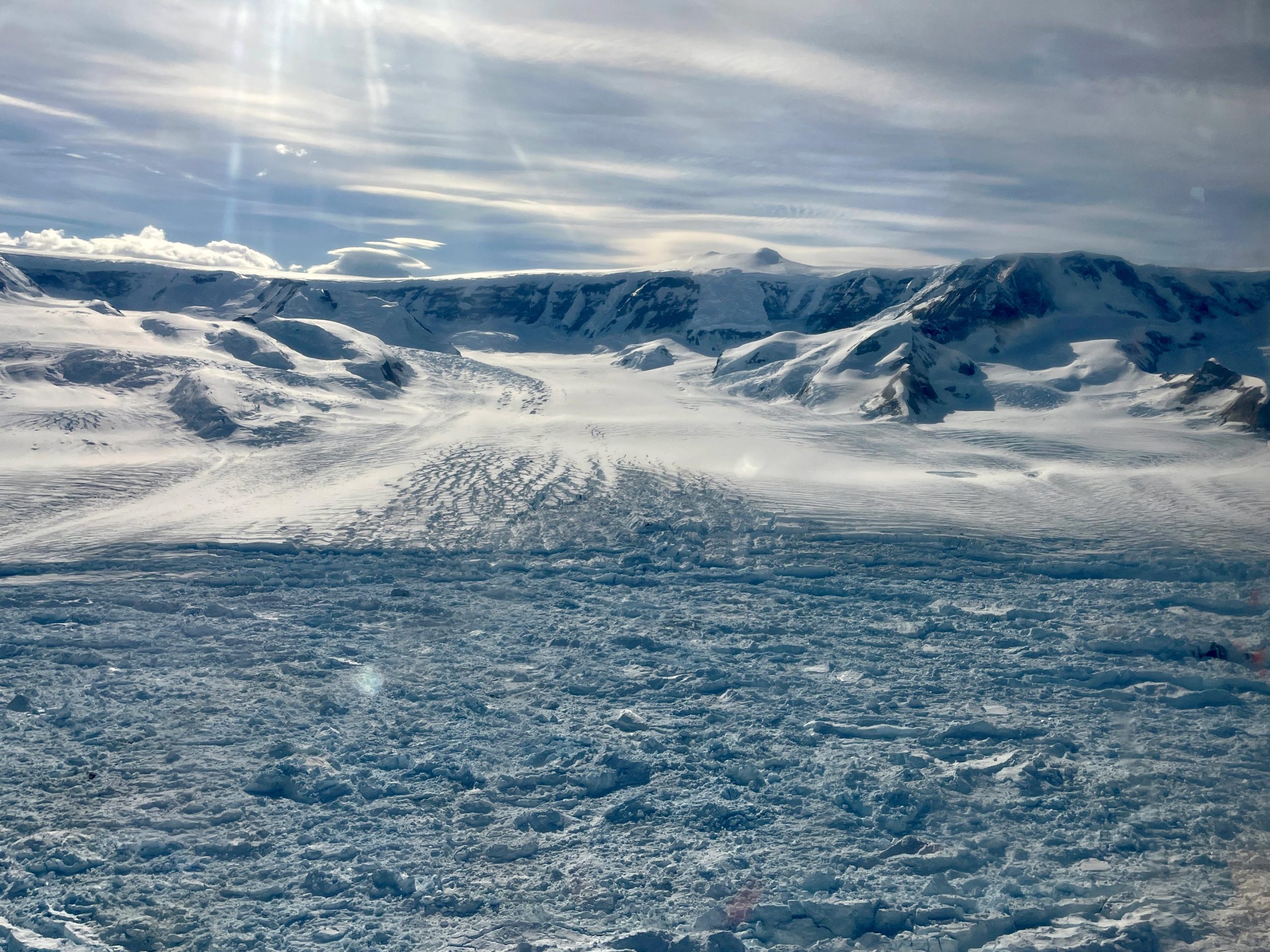
The exceptional pace and magnitude of Hektoria’s ice loss may help scientists pinpoint other glaciers at risk of similar instability and guide future monitoring efforts.
Although Hektoria is relatively small by Antarctic standards—spanning about 115 square miles, just under the size of the city of Swansea—its sudden retreat serves as a serious warning. If glaciers of greater size experience comparable events, the impact on global sea level rise could be significant.
Expert insights on unprecedented retreat
Professor Adrian Luckman, co-author of the study, said: “Glaciers don’t usually retreat this fast. The circumstances may be a little particular, but this scale of ice loss shows what may happen elsewhere in Antarctica, where glaciers are lightly grounded and sea ice loses its grip.
“Although the paleo record indicates some very rapid retreats in the past, the pace of retreat of Hektoria Glacier and its neighbors is unprecedented in the observational record.
“This is the latest chapter in a sequence of events which started with the collapse of the Larsen B Ice Shelf 23 years ago, marking a landscape-changing event that offers insights into the potential future rates of glacier retreat elsewhere in Antarctica.”
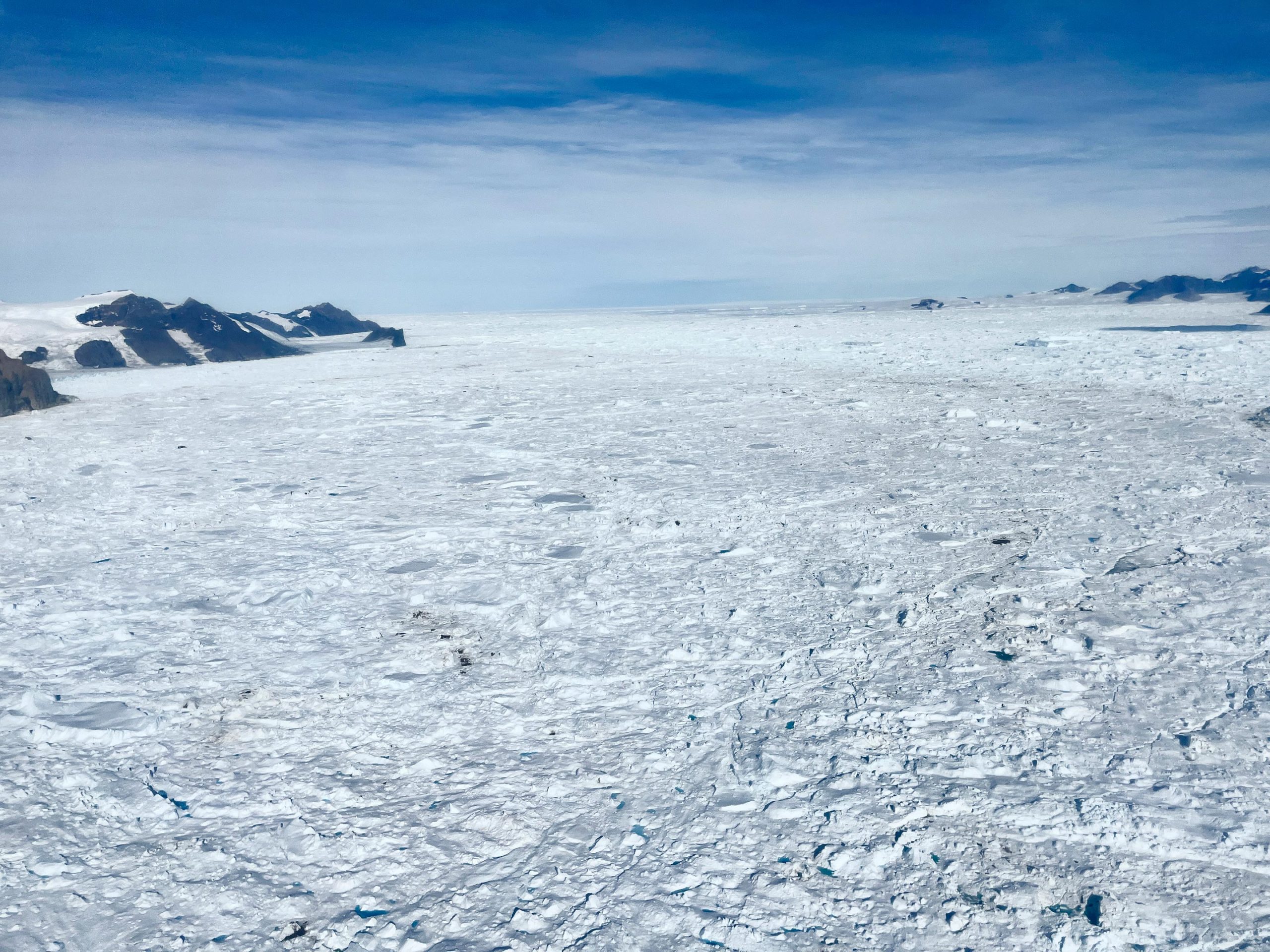
Tracking the glacier’s movement using satellites and seismic data
Using satellite imagery and seismic data, the team tracked the glacier’s collapse in detail. They identified multiple grounding lines—points where the glacier shifts from resting on bedrock to floating on seawater—revealing the presence of an ice plain and underscoring Hektoria’s vulnerability to ocean-driven retreat.
Seismic instruments also recorded glacier earthquakes—small tremors triggered by sudden ice movement—during the retreat, evidence that the ice was grounded and that its loss directly contributed to global sea level rise.
Dr. Ted Scambos, a Senior Research Scientist at CU Boulder’s Earth Science and Observation Center, said: “This kind of lightning-fast retreat really changes what’s possible for other, larger glaciers on the continent. If the same conditions are set up in some of the other areas, it could greatly speed up sea level rise from the continent.”
The study highlights the urgent need for continued monitoring and international collaboration to better understand changes in Earth’s frozen regions.
Reference: “Record grounded glacier retreat caused by an ice plain calving process” by Naomi Ochwat, Ted Scambos, Robert S. Anderson, J. Paul Winberry, Adrian Luckman, Etienne Berthier, Maud Bernat and Yulia K. Antropova, 3 November 2025, Nature Geoscience.
DOI: 10.1038/s41561-025-01802-4
Funding: NASA
Never miss a breakthrough: Join the SciTechDaily newsletter.
Follow us on Google and Google News.
12 Comments
More fear mongering. They always neglect to mention how much new ice accumulates in Antarctica every year and they never tell you the “net” – firstly they can’t even calculate it accurately, meaning that the ice loss figures (also inaccurately calculated) are meaningless! But such truths are not important … what’s important is that you are scared of CO2.
What’s your motivation for trying to sabotage humanity? The fossil fuel industry is a mortal danger to every person on Earth. If you want to identify with it there could be consequences.
When are you going to apologize for your tirade and challenge to debate and then running away?
Are three sentences a “tirade”? I have no idea what tirade you refer to. Perhaps speakers of English use words differently from speakers of Trumpistannian?
OK, rob. You are right. The crude, insulting remarks he wrote, where he challenged me to debate him, and then slunked off into the ether without debating or even responding, probably were too terse to qualify as a “tirade” or even a ‘diatribe;’ although what he said and how he said it certainly rises to the level of the spirit of such an “outburst, often expressing strong criticism or denunciation about a particular subject. [which] It typically involves passionate and vehement language.”
Please tell me the minimum number of words necessary to constitute an “outburst,” and because I don’t consider myself fluent in “Trumpistannian,” what distinguishes it from other English dialects? And how is it that an avowed liberal apparently speaks “Trumpistannian” well enough to immediately recognize it?
How many cubic kilometers of ice accumulate per year in Antarctica? Pray, don’t be shy; tell us.
Off the top of my head I don’t know the answer to your question. I’m not sure that anyone does. However, considering your antagonistic behavior and common habit of ignoring difficult questions, I doubt that you would even have the courtesy to acknowledge my effort were I to spend the time. So, don’t wait up for an answer to a question that you probably couldn’t verify.
In reqard to tirades; if it were an earlier tirade then I am not aware of it, or if I did encounter it I have forgotten it. So in that event you have my apology. Trump produces classic tirades as did Hitler; they are generally long, loud and abusive. Castro might be said to have done the same.
As for my question about how many b cubic kilometres of Ice accumulate in Antarctica. so , I don’t know and TAJ failed to come up with any sort of number so it could be fair to consider that TAJ s making an unsupported assertion and of the sort which I am sure you would object to were I to claim as anunsupported assertion that anthropogenic global warming is going to raise sea-level by 1 metre by 2035. It probably won’t and some people would claim that is is a conspiracy to keep academics in a job; I think we agree on the fatuity of that alleged 1m rise in sea-level by 2035 and also on what some people might claim about academics and their jobs.
i think we agree .
This isn’t really “news.” It was first published here on November 6th at https://scitechdaily.com/scientists-shocked-as-antarctic-glacier-collapses-in-record-time/
I think that a couple of key points made here are, “Glaciers don’t USUALLY retreat this fast.” and “Although the paleo record indicates some VERY RAPID retreats in the past, the pace of retreat of Hektoria Glacier and its neighbors is unprecedented in the observational record.” Also, it was remarked that “This kind of lightning-fast retreat really changes what’s possible for other, larger glaciers on the continent. IF the same conditions are set up in some of the other areas, it could greatly speed up sea level rise from the continent.” The assertion presents no evidence that larger glaciers behave like small ones and begs the question of whether size adds stability to glaciers. The article also states, “IF glaciers of greater size experience comparable events, the impact on global sea level rise could be significant.” Not if the bulk of the ice is floating shelf ice as appears to be the case for Hektoria.
Also, see my comments at the original November 6th posting.
IF is indeed supposition if not speculation. That is fair comment.
Someone once invented the telescope. They probably asked themselves, “IF I construct a tube with two convex lenses in it, one at each end, I might be able to see craters on the moon and IF there are similar moonlike features around Jupiter I might be able to see them through this tube with convex lenses?”
“Oh dear; the inquisition is knocking on my front door; is it be because I used the non-scientific words “If” and “might”? ”
Science progresses through use of “ifs” and “buts” , not to mention “might bes” and “could bes”.
“Ifs” and “buts” have their place in the inductive reasoning process that leads to hypotheses, such as you described above. However, my objections are usually focused on researchers offering up ‘lawyer words’ as their conclusions to a study that should be presented with numeric estimates and 2-sigma uncertainties, but are invariably missing.
Geologists are famous for arm waving to support thinly supported hypotheses. And, indeed, T. C. Chamberlain, in his seminal work ‘The Method of Multiple Working Hypotheses,’ encourages such thinking. However, he goes on to suggest that after the wild conjectures are examined more carefully, those that are impossible, or even improbable, should be rejected and one should then focus on the remaining hypotheses that can be tested with falsifiable null-hypotheses. That last step is the one that goes beyond the ifs, mights, and coulds. It seems that those who don’t understand the Scientific Method are the ones quick to confuse untenable hypotheses with tenable hypotheses.
I couldn’f agree more about geologists and their arm-waving.There might be less copper and gold in the world without it. That said, geologists who continue arm waving about apparently (as it appears to the shareholders, that is) good data but ignore completely what the evidence in outcrop tells them to the contrary will waste a lot of money drilling trying to find said copper and gold. As you explain in more philosophical language.
I note that ‘could’ etc can be deemed lawyers’ language, but that is language and is useful to scientists as it expresses a mode of thought. I see the term “lawyers’ language” as being used denigratorially, if such an adverb exists, albeit it does now.
Cheers! Beer is good for the soul if not for the liver.