
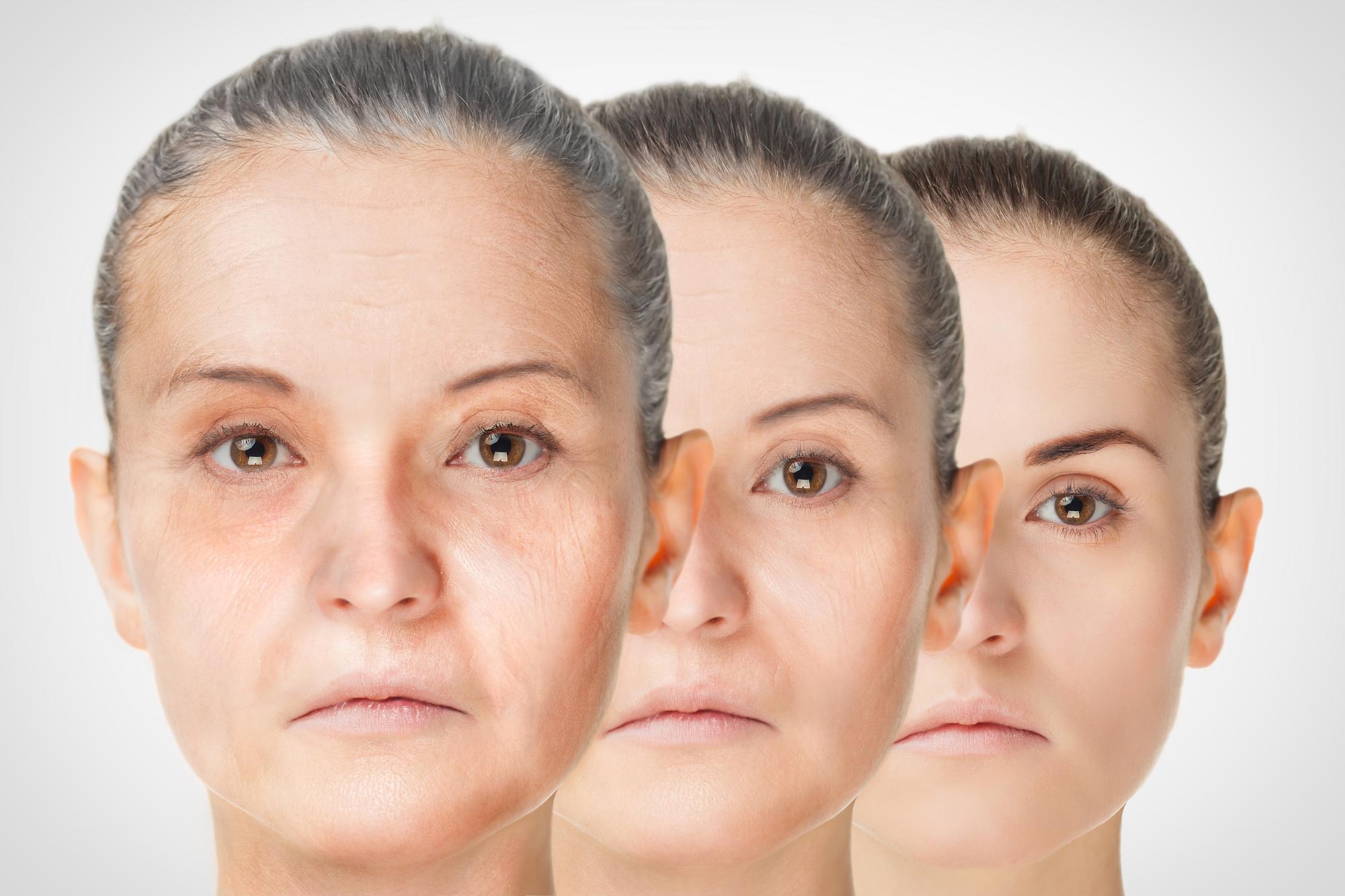
A study from Nagoya University found that luteolin, an antioxidant in vegetables, helps prevent hair graying by preserving endothelin expression and melanocyte activity.
Graying hair is a common sign of aging, often seen as unavoidable. However, recent research from Nagoya University in Japan, led by Masashi Kato and Takumi Kagawa, suggests that an antioxidant may help slow this process. The study identifies luteolin, a naturally occurring antioxidant found in vegetables such as celery, broccoli, carrots, onions, and peppers, as a potential agent for preventing hair graying. These findings could lead to new applications in hair care aimed at maintaining natural hair color.
The researcher’s study focused on three antioxidants—luteolin, hesperetin, and diosmetin—to assess their anti-graying effects in mice that were bred to go gray like humans. The difference was startling, the mice that received luteolin retained their black fur, even as their cage mates’ fur turned gray, regardless of whether the luteolin was given externally or internally.
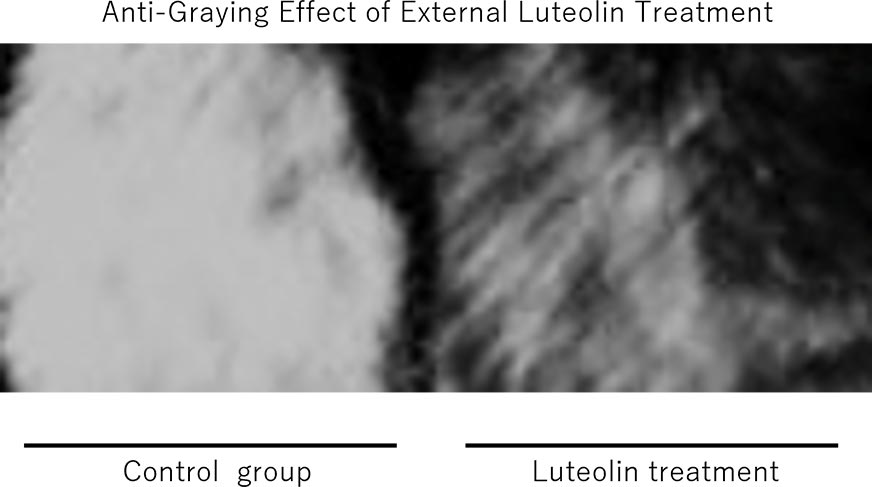
“This result was surprising,” Professor Kato said. “While we expected that antioxidants may also have anti-graying effects, only luteolin, not hesperetin or diosmetin, demonstrated significant effects. This finding suggests that luteolin may have a unique medicinal effect that prevents graying.”
How Luteolin Works: The Role of Endothelins
Luteolin’s anti-graying effects are closely linked to its influence on endothelins—proteins that play a crucial role in cellular communication. In the study, luteolin treatments preserved the expression of endothelins and their receptor. This preservation supports healthy signaling pathways, preventing the decline in melanocyte activity that typically accompanies graying.
“Interestingly, luteolin had limited effects on hair cycles, indicating that its primary impact is on pigmentation rather than hair growth or shedding,” Professor Kato said. “This targeted action makes luteolin a particularly intriguing candidate for addressing age-related hair graying.”
The similarities between the hair-graying processes in the model mice and humans offer encouraging prospects for translating these findings into human applications. As well as vegetables, luteolin is already available as a supplement for topical and oral use, making it a viable candidate for further development as an anti-graying treatment. As research progresses, this antioxidant could become a key ingredient in hair care regimens, helping individuals preserve their natural hair color as they age.
Building on these promising results, Dr. Kagawa envisions broader applications for luteolin in age-related research. “It would be interesting to investigate whether luteolin’s anti-aging effects could also be applicable to other age-related changes, including balding.”
Reference: “Anti-Graying Effects of External and Internal Treatments with Luteolin on Hair in Model Mice” by Machiko Iida, Takumi Kagawa, Ichiro Yajima, Akihito Harusato, Akira Tazaki, Delgama A. S. M. Nishadhi, Nobuhiko Taguchi and Masashi Kato, 16 December 2024, Antioxidants.
DOI: 10.3390/antiox13121549
Never miss a breakthrough: Join the SciTechDaily newsletter.
Follow us on Google and Google News.
6 Comments
Middle in article mentions stops greying by limited effect on hair growth. But at end mentions to investigate effect of compound on hair growth. So some contradictions?
“As well as vegetables, luteolin is already available as a supplement for topical and oral use”
Has anyone here found this supplement for sale online and/or used it? Thanks.
I had a head of grey hair 2 to 3 years ago and took 1 supplement and almost my whole head is back to its natural color. It corresponds to your article. I’m pretty sure no one knows this except me or I’d see it on the internet. Am willing to work with someone on this.
Hello,
Did you mean luteolin?
When saying “1 supplement”.
Yes i would like to know which Supplement you are talking about.
It doesn’t affect hair growth… only pigmentation. That is not a contradiction.