
Close Menu
    Facebook X (Twitter) Instagram
    SciTechDaily
    • Biology
    • Chemistry
    • Earth
    • Health
    • Physics
    • Science
    • Space
    • Technology
    Facebook X (Twitter) Pinterest YouTube RSS
    SciTechDaily
    Home»Science»Archaeologists Discover First Direct Evidence of Drug Use in Ancient Europe
    Science

    Archaeologists Discover First Direct Evidence of Drug Use in Ancient Europe

    By Scientific ReportsApril 8, 2023No Comments3 Mins Read
    Facebook Twitter Pinterest Telegram LinkedIn WhatsApp Email Reddit
    Share
    Facebook Twitter LinkedIn Pinterest Telegram Email Reddit
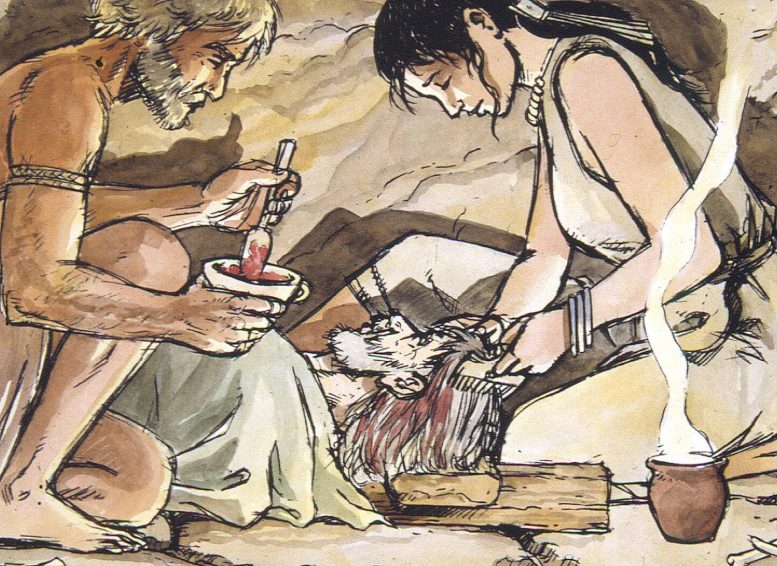
    Dyeing Scene in the Funerary Chamber
    Dyeing scene in the funerary chamber. Credit: Oriol Garcia i Quera, ASOME-Universitat Autònoma de Barcelona

    Hair from a 3,000-year-old burial site in Menorca contained plant-based hallucinogens, marking the first direct evidence of ancient European drug use in rituals.

    A study examining human hair strands from a burial location in Menorca, Spain, reveals that early human societies utilized plant-based hallucinogenic substances, according to a new paper in Scientific Reports. This discovery marks the first direct proof of ancient drug consumption in Europe, potentially employed in ritualistic ceremonies.

    Prior indications of prehistoric drug use in Europe have relied on indirect evidence, including the identification of opium alkaloids in Bronze Age vessels, the discovery of drug plant remains in ceremonial settings, and the depiction of such plants in art.
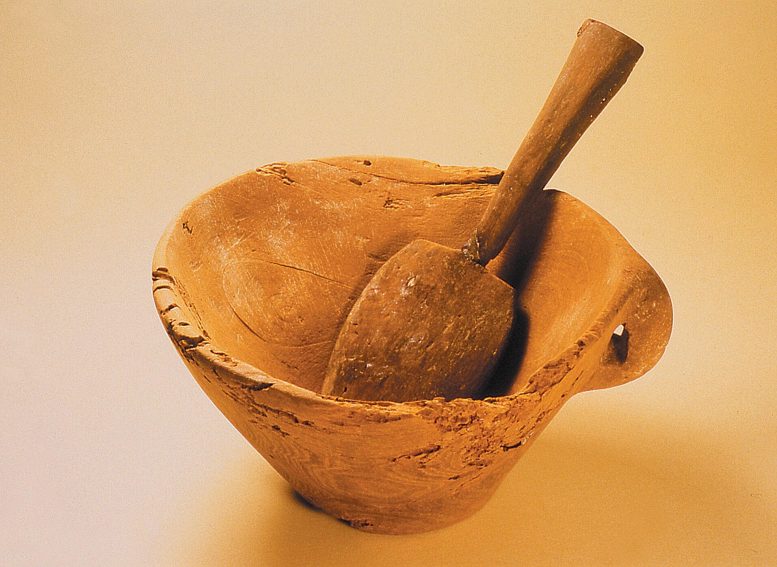
    Wooden Bowl and Spoon Found in the Hoard With the Human Hair Containers
    Wooden bowl and spoon found in the hoard with the human hair containers. Credit: Peter Witte, ASOME-Universitat Autònoma de Barcelona

    Elisa Guerra-Doce and colleagues examined strands of hair from the Es Càrritx cave in Menorca, which was first occupied around 3,600 years ago, and contained a chamber used as a funeral space until around 2,800 years ago. Previous research suggests that around 210 individuals were interred in this chamber. However, strands of hair from only certain individuals were dyed red, placed in wooden and horn containers decorated with concentric circles, and removed to a separate sealed chamber further back in the cave. These hair strands date to approximately 3,000 years ago.
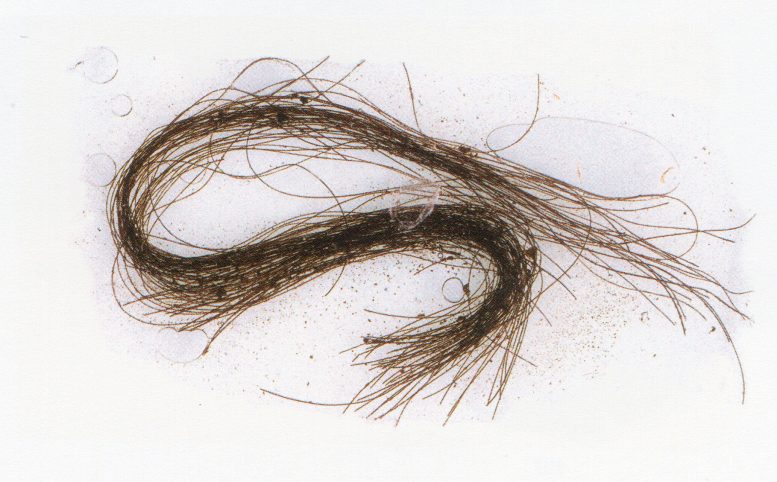
    Ancient Hair Strand
    Detail of a hair strand. Credit: ASOME-Universitat Autònoma de Barcelona

    The authors used Ultra-High Performance Liquid Chromatography and High Resolution Mass Spectroscopy to test for the presence of the alkaloids atropine, scopolamine, and ephedrine. Atropine and scopolamine are naturally found in the nightshade plant family, and can induce delirium, hallucinations, and altered sensory perception. Ephedrine is a stimulant derived from certain species of shrubs and pines, which can increase excitement, alertness, and physical activity. The authors detected scopolamine, ephedrine, and atropine in three replicated hair samples.

    The authors suggest that the presence of these alkaloids may have been due to the consumption of some nightshade plants, such as mandrake (Mandragora autumnalis), henbane (Hyoscyamus albus), or thorn apple (Datura stramonium), and joint pine (Ephedra fragilis). The authors suggest that these drug plants may have been used as part of ritual ceremonies performed by a shaman. The concentric circles on the wooden containers may have depicted eyes and could have been a metaphor for inner vision related to a drug-induced altered state of consciousness. Due to cultural changes around 2,800 years ago, the authors speculate that the wooden containers were sealed in the cave chamber in order to preserve these ancient traditions.

    Reference: “Direct evidence of the use of multiple drugs in Bronze Age Menorca (Western Mediterranean) from human hair analysis” by E. Guerra-Doce, C. Rihuete-Herrada, R. Micó, R. Risch, V. Lull and H. M. Niemeyer, 6 April 2023, Scientific Reports.
    DOI: 10.1038/s41598-023-31064-2

    Never miss a breakthrough: Join the SciTechDaily newsletter.
    Follow us on Google and Google News.

    Archaeology Drugs Springer
    Share. Facebook Twitter Pinterest LinkedIn Email Reddit

    Related Articles

    Scientists Discover Mysterious Ancient Human Brain Turned to Glass by Mount Vesuvius

    How Homo Erectus Mastered Desert Survival Over a Million Years Ago

    New Technique Predicts How Hydrogels Transform

    Reproductive Cycle Put Dinosaurs at a Disadvantage

    Million-Year-Old Ash in South African Cave Yields Evidence of Cooking

    Exposing 8,000 Years of Civilization With Satellites

    Humans Implicated in Africa’s Deforestation 3,000 Years Ago

    Earliest Drug-Resistant Tuberculosis Strains Were First Detected in Italy

    Archaeologists Inch Closer to Understanding Stonehenge

    Leave A Reply Cancel Reply

    • Facebook
    • Twitter
    • Pinterest
    • YouTube

    Don't Miss a Discovery

    Subscribe for the Latest in Science & Tech!

    Trending News

    Scientists Uncover Potential Brain Risks of Popular Fish Oil Supplements

    Scientists Discover a Surprising Way To Make Bread Healthier and More Nutritious

    After 60 Years, Scientists Uncover Unexpected Brain Effects of Popular Diabetes Drug Metformin

    New Research Uncovers Hidden Side Effects of Popular Weight-Loss Drugs

    Scientists Rethink Extreme Warming After Surprising Ocean Discovery

    Landmark Study Links Never Marrying to Significantly Higher Cancer Risk

    Researchers Discover Unknown Beetle Species Just Steps From Their Lab

    Largest-Ever Study Finds Medicinal Cannabis Ineffective for Anxiety, Depression, PTSD

    Follow SciTechDaily
    • Facebook
    • Twitter
    • YouTube
    • Pinterest
    • Newsletter
    • RSS
    SciTech News
    • Biology News
    • Chemistry News
    • Earth News
    • Health News
    • Physics News
    • Science News
    • Space News
    • Technology News
    Recent Posts
    • Not Just Alzheimer’s: Scientists Uncover Clues to a Second, Overlooked Disorder
    • Scientists Uncover Dangerous Connection Between Serotonin and Heart Valve Disease
    • Scientists Discover a “Protector” Protein That Could Help Reverse Hair Loss
    • Powerful Lasers Reveal How Matter Becomes Plasma in Trillionths of a Second
    • A Simpler Path to Super-Resolution: Scientists Reinvent Microscopy
    Copyright © 1998 - 2026 SciTechDaily. All Rights Reserved.
    • Science News
    • About
    • Contact
    • Editorial Board
    • Privacy Policy
    • Terms of Use

    Type above and press Enter to search. Press Esc to cancel.