
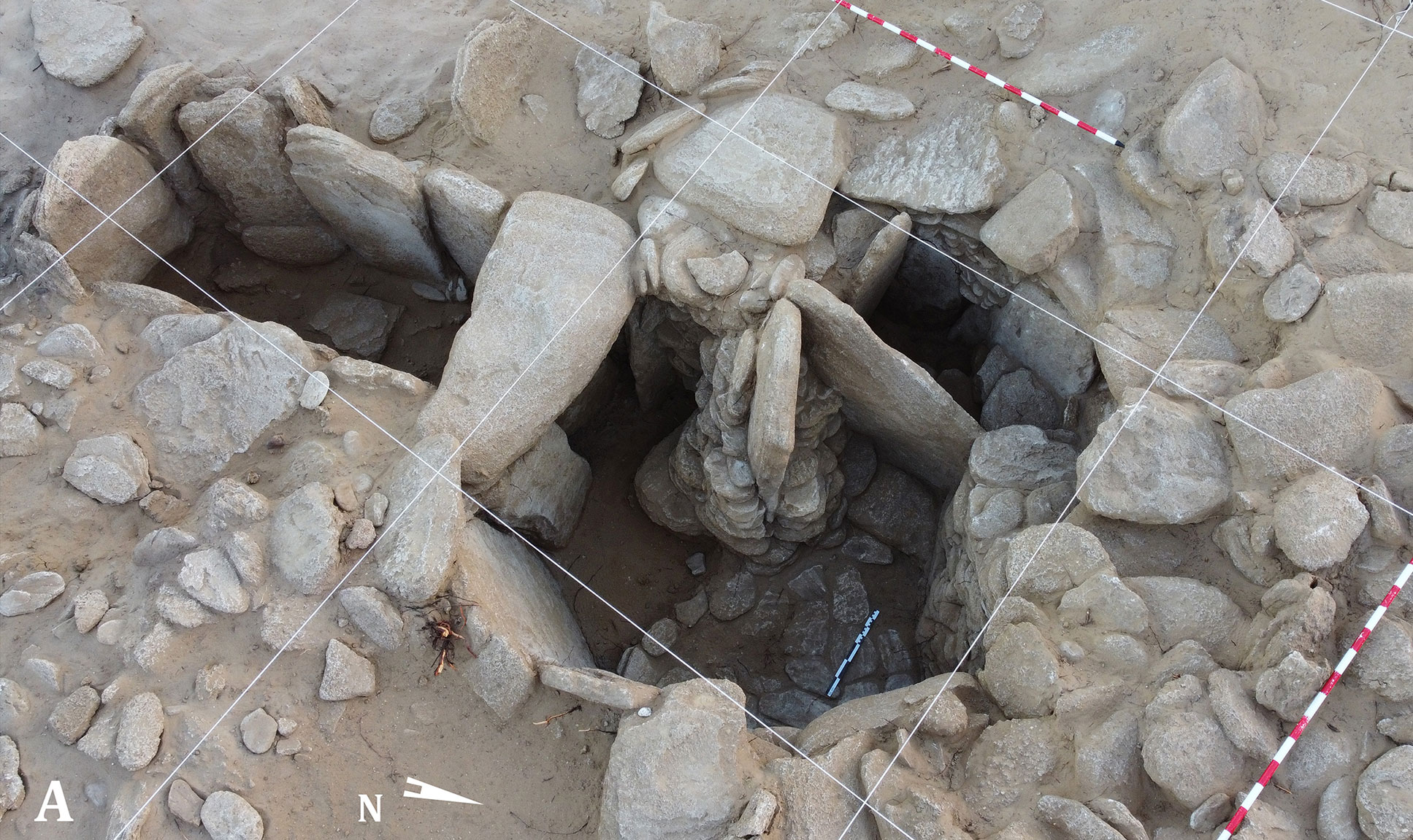
A burial ground on Spain’s southern coast suggests ancient communities may have continued building massive shared tombs during the Bronze Age, rather than simply reusing older monuments.
A 3,800-year-old burial mystery on Spain’s southern coast is challenging what archaeologists thought they knew about prehistoric burial traditions.
At a time when communities across the Iberian Peninsula were abandoning massive communal tombs in favor of smaller, individual graves, people near the Strait of Gibraltar appear to have continued burying their dead together. Even more puzzling, the stone monuments they used may have been newly constructed rather than inherited from earlier generations.
The discovery comes from the Trafalgar necropolis, where archaeologists investigated two collective tombs containing the remains of multiple individuals.
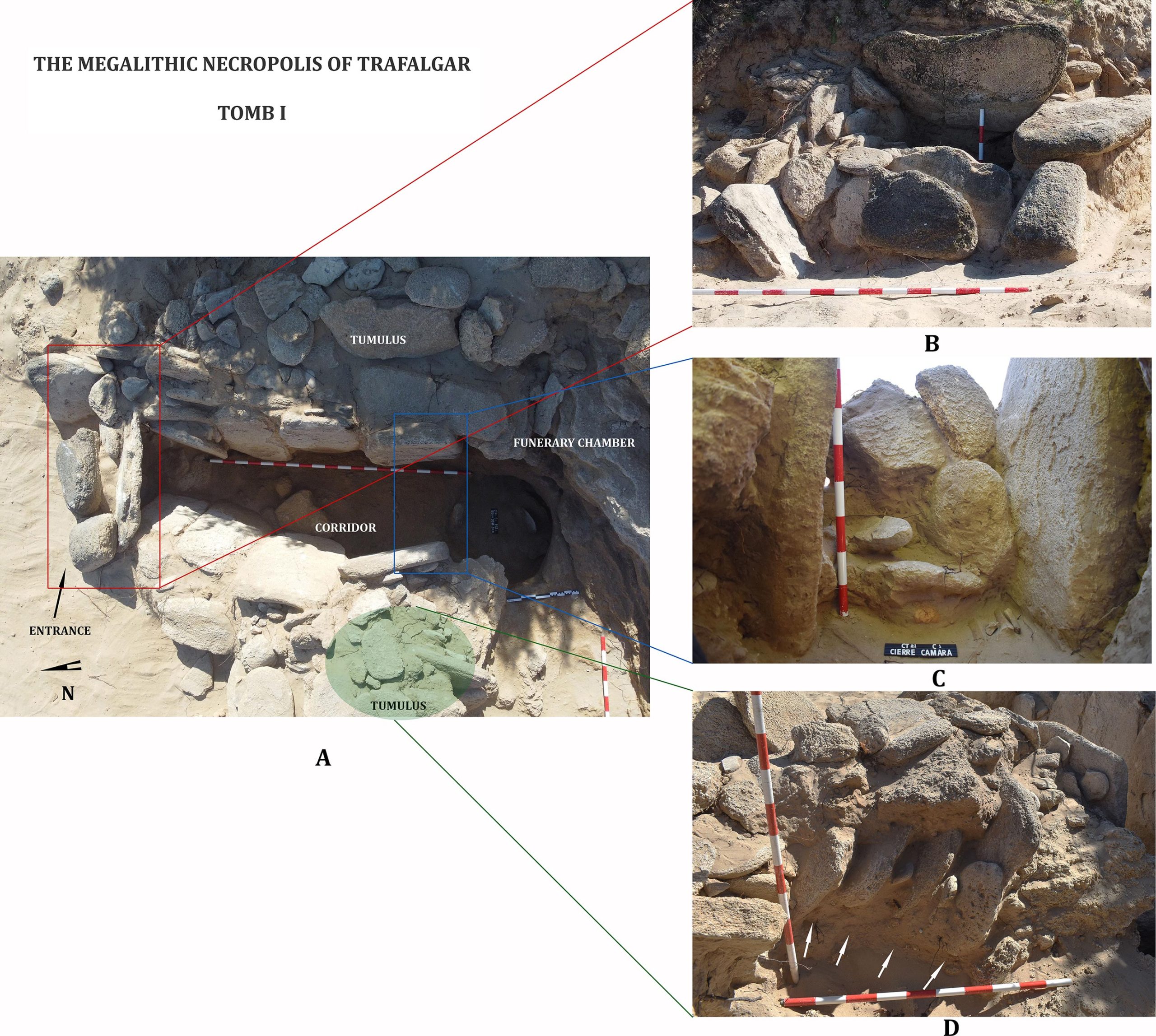
Radiocarbon dating of 16 individuals places the use of these tombs between 1875 and 1625 BC, making them among the latest known examples of collective megalithic burial in Iberia.
But the age of the human remains is only part of the mystery. Archaeologists also found no evidence of earlier occupation at the site, raising the possibility that the monuments themselves were constructed during the Bronze Age, when such building traditions were thought to be fading.
The study, published November 11, 2026, in the open-access journal PLOS One, was conducted by Eduardo Vijande-Vila of the University of Cádiz in Spain and colleagues.
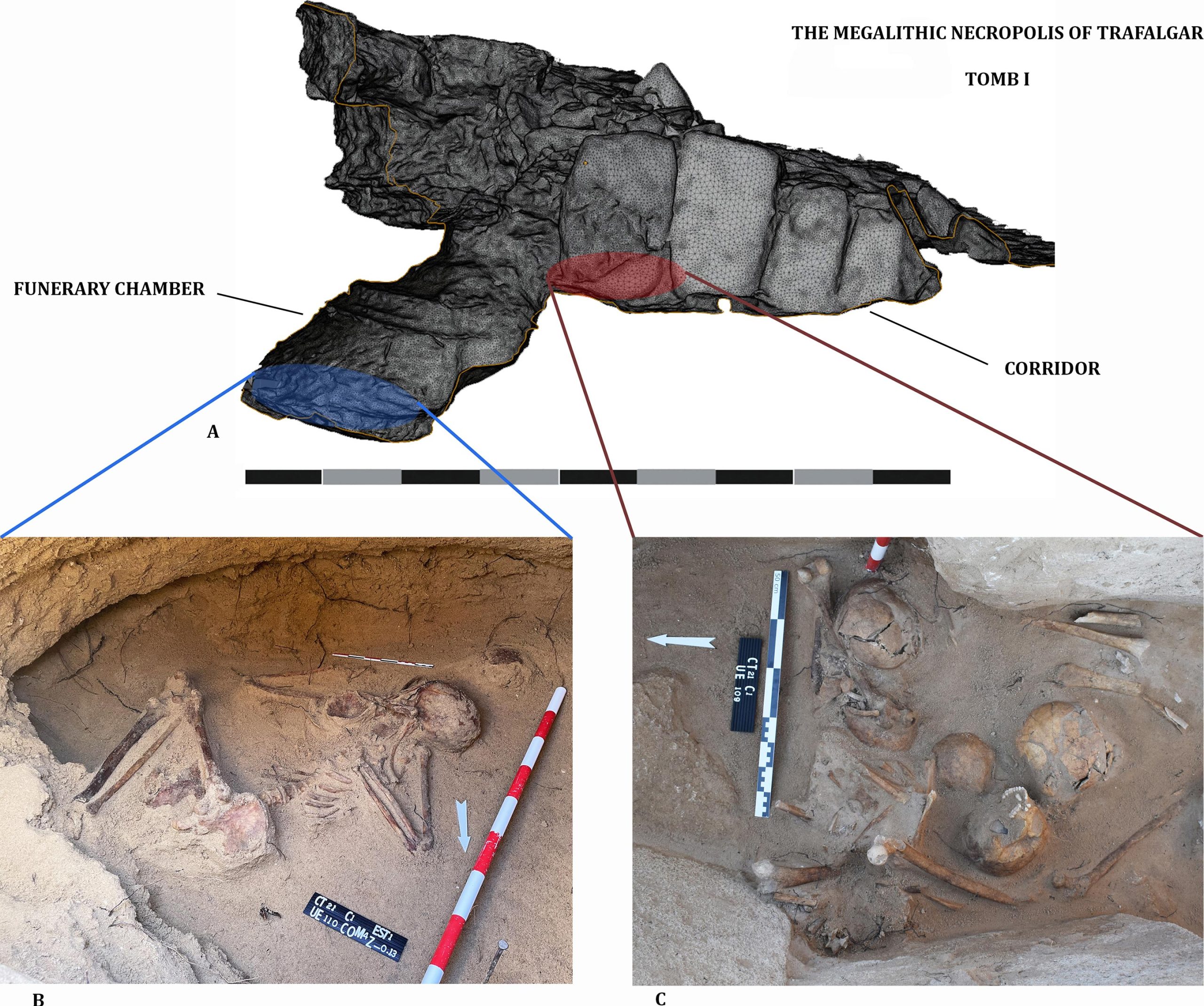
Were these ancient tombs built during the Bronze Age?
Determining when a tomb was used is not the same as establishing when it was built. Elsewhere in Iberia, Bronze Age communities sometimes buried their dead inside monuments dating back to the Copper Age, making it difficult to distinguish new construction from the reuse of older structures.
Trafalgar may represent an important exception. The absence of evidence for an earlier burial ground suggests the cemetery could have been established in the early second millennium BC. However, additional dating methods are needed to determine when the monuments were originally constructed.
The authors explain, “The Trafalgar megalithic necropolis has revealed a highly significant finding. During the Bronze Age, an entirely new funerary space was constructed in a landscape dominated by the sea. We propose this hypothesis based on the absence of archaeological evidence for earlier occupation in the surrounding area. Until now, the evidence available for this period has primarily pointed to the reuse of megalithic monuments built during the Copper Age. This discovery offers a new perspective on funerary practices during this period and would demonstrate that new monumental burial spaces continued to be constructed.”
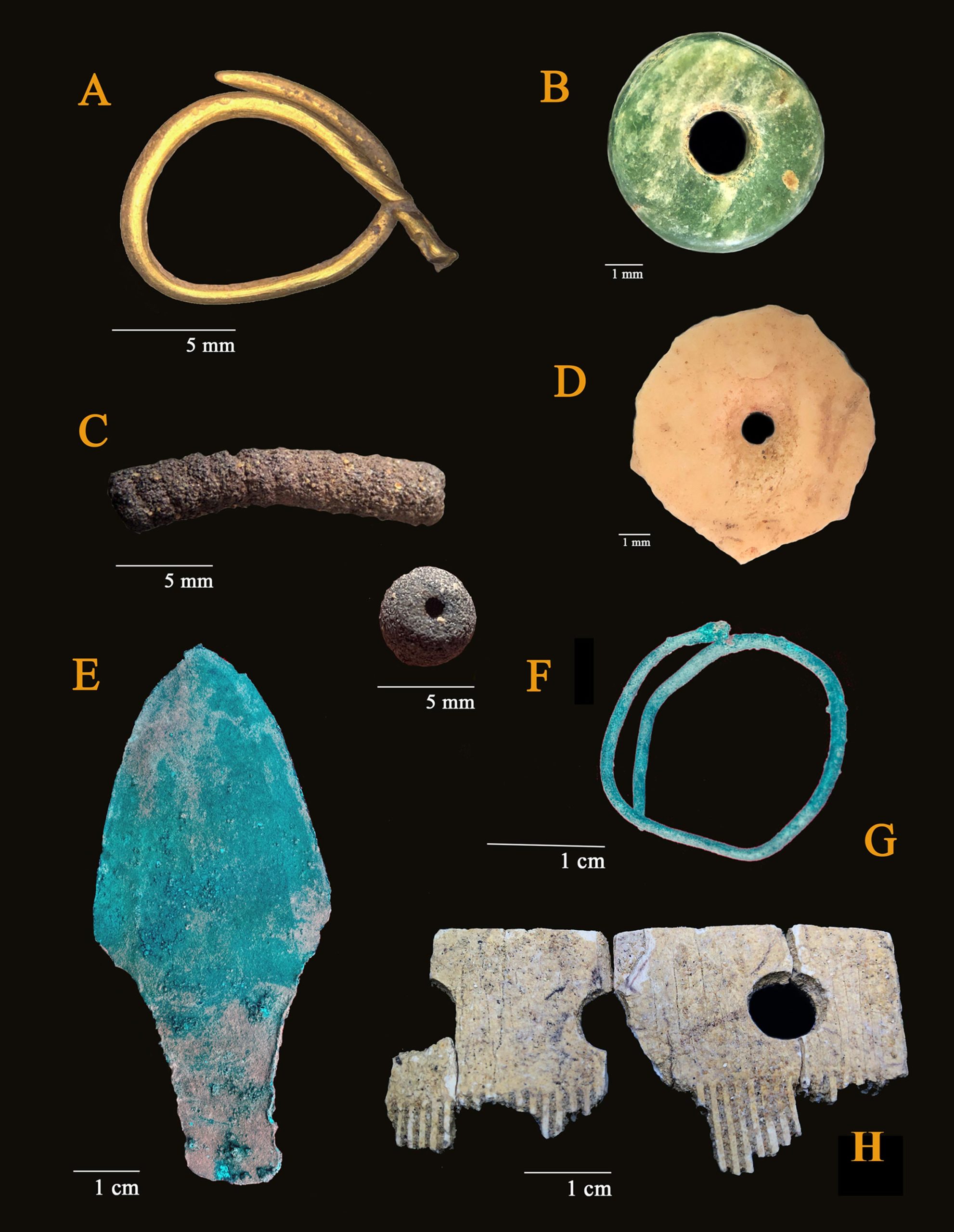
The excavations also uncovered grave goods, including gold and copper earrings, silver beads, and an ivory comb, offering additional clues about the people buried at the site.
If further research confirms that the monuments were newly built during the Bronze Age, Trafalgar would provide rare evidence that monumental communal burial traditions survived longer than previously recognized.
Researchers believe additional tombs may remain undiscovered, potentially offering further insight into ancient Iberian burial traditions. However, strong coastal winds and shifting sands threaten to bury the site beneath the dunes again, making continued preservation essential for future excavations.
Reference: “The last builders of megaliths in the South of the Iberian peninsula? The Bronze Age necropolis of Trafalgar (Barbate, Cádiz, Spain)” by Eduardo Vijande-Vila, Serafín Becerra-Martín, Berta Morell-Rovira, Marta Díaz-Zorita Bonilla, Eduardo Molina-Piernas, Alejandro Muñoz-Muñoz, Adolfo Moreno-Márquez, Pablo González-Fernández, Salvador Domínguez-Bella, María Leticia Gómez-Sánchez, Diego Salvador Fernández-Sánchez, José Luis Ramírez-Amador, José María Corona-Borrego, María Carmona-Gil, Jesús Corrales Díaz and Juan Jesús Cantillo-Duarte, 11 November 2026, PLOS ONE.
DOI: 10.1371/journal.pone.0359220
This research was supported by the European Regional Development Fund (ERDF), the Regional Government of Andalusia, the European Union’s Complementary Marine Sciences Plan (MEDUSA project), and CEIMAR’s 2021 and 2022 Young Researchers Research Projects programs.
Never miss a breakthrough: Join the SciTechDaily newsletter.
Follow us on Google and Google News.