
Close Menu
    Facebook X (Twitter) Instagram
    SciTechDaily
    • Biology
    • Chemistry
    • Earth
    • Health
    • Physics
    • Science
    • Space
    • Technology
    Facebook X (Twitter) Pinterest YouTube RSS
    SciTechDaily
    Home»Space»Are There Anti-Stars (Made of Antimatter) Around Us?
    Space

    Are There Anti-Stars (Made of Antimatter) Around Us?

    By IRAPJuly 10, 2022No Comments4 Mins Read
    Facebook Twitter Pinterest Telegram LinkedIn WhatsApp Email Reddit
    Share
    Facebook Twitter LinkedIn Pinterest Telegram Email Reddit
    Fermi Catalog Candidates
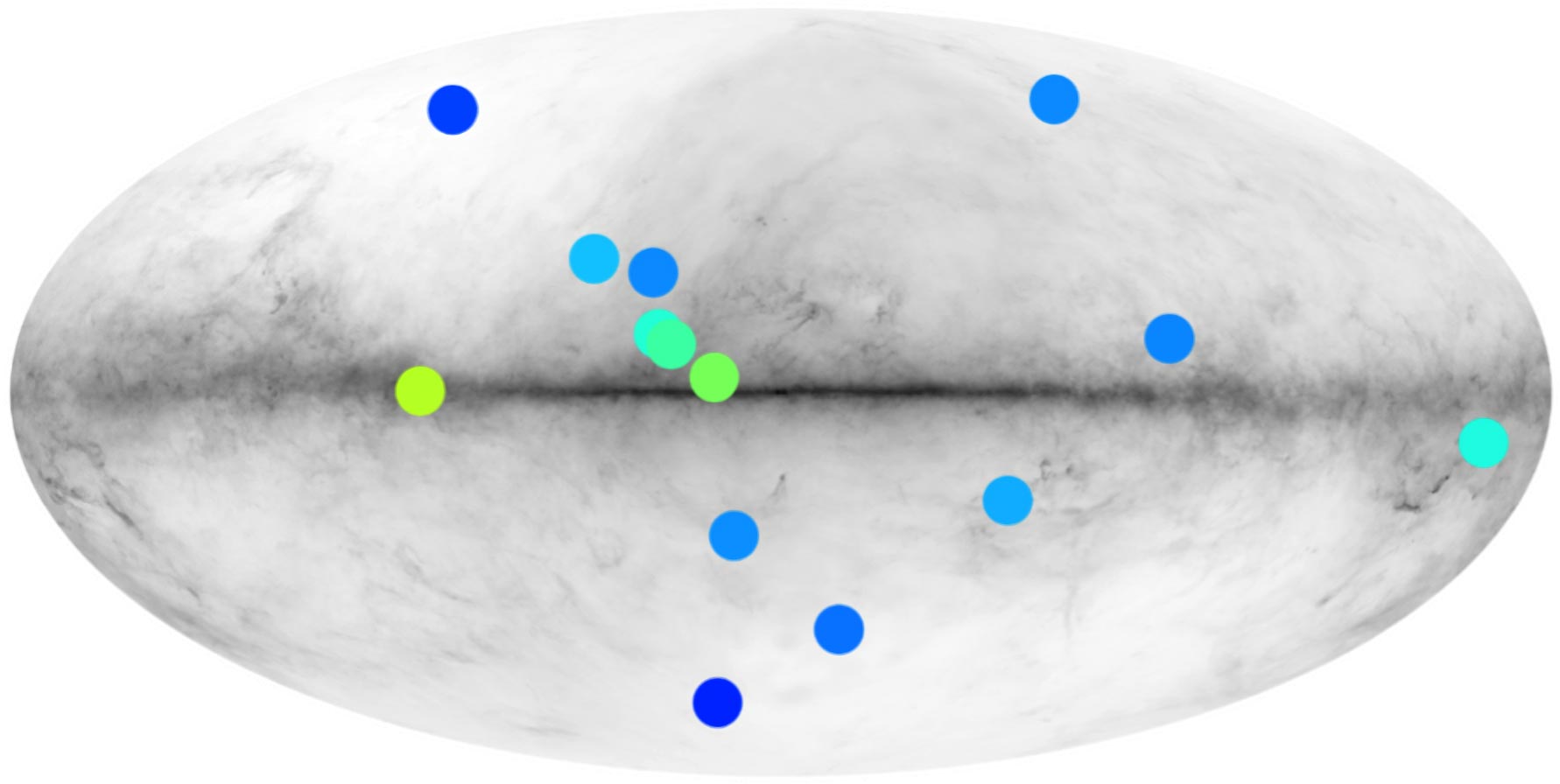
    Position in the sky of the different candidates of the Fermi catalog. The background map shows the minimum brightness of an anti-star for it to be observed by Fermi. The clear parts represent the parts of the sky where the observations are the easiest. Credit: IRAP

    Are there anti-stars around us? Answer from the Fermi Gamma-ray Space Telescope.

    What if some of the antimatter that was thought to have disappeared was lurking around us in the form of anti-stars? Scientists from the Institute for Research in Astrophysics and Planetology (IRAP – CNRS/CNES/UT3 Paul Sabatier) are using the Fermi gamma-ray space telescope to put the most constraining limits ever on this hypothesis.

    What is antimatter? Although it is often associated with the world of science fiction, antimatter does indeed exist. It is observed in outer space and in physics laboratories. It is a state symmetrical to the ordinary matter we know. According to the laws of physics known to date, the Universe should contain equal amounts of matter and antimatter. However, today antimatter is only found at the trace level, and research suggests that the entire Cosmos is devoid of it. This is presently regarded as one of the greatest mysteries of the Universe.

    Possible Antimatter Stars Near Us?

    Nonetheless, the Alpha Magnetic Spectrometer (AMS) particle detector on board the International Space Station (ISS) recently appears to indicate that there could be more antimatter around us than we thought. This might be hiding in the vicinity of our solar system in the form of unlikely objects: stars made of antimatter, or anti-stars.[1] The existence of such objects would have serious consequences on our understanding of the Universe, but how do we test this bold hypothesis?
    Fermi Large Area Telescope
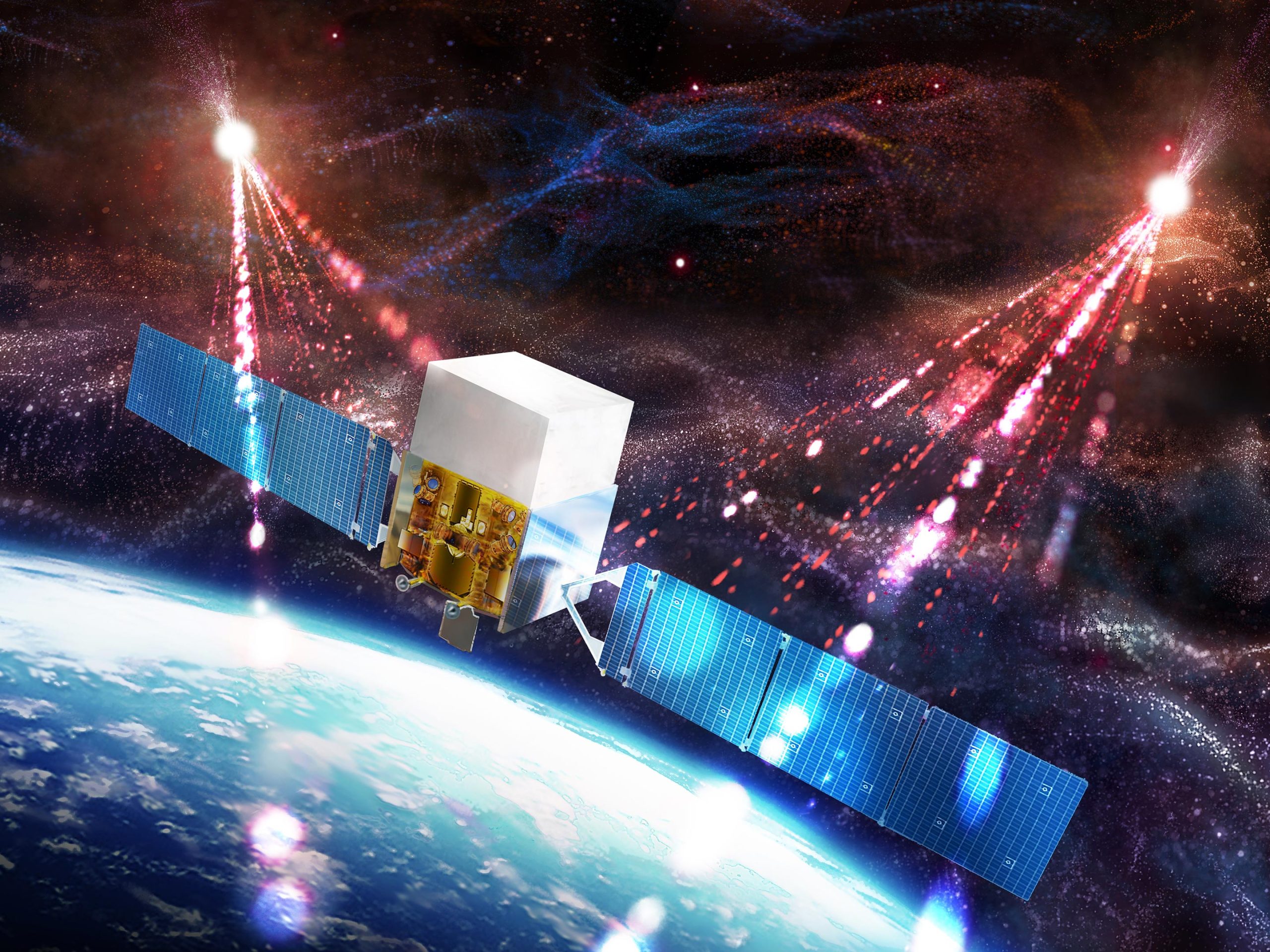
    The Fermi Gamma-ray Space Telescope observes the cosmos using the highest-energy form of light, providing an important window into the most extreme phenomena of the universe, from gamma-ray bursts and black-hole jets to pulsars, supernova remnants, and the origin of cosmic rays. Credit: © Daniëlle Futselaar/MPIfR (artsource.nl)

    Testing the Antistar Hypothesis: Gamma Rays as Key Evidence

    It is known that the collision between antimatter and matter produces gamma rays, the most energetic form of radiation. This is why, in a paper published in the journal Physical Review D, IRAP researchers used ten years of data from the Fermi gamma-ray space telescope to estimate the maximum number of anti-stars in our Galaxy.[2]

    They were able to isolate fourteen candidates whose emission properties are comparable to those expected for antistars in the catalog of gamma-ray sources found by Fermi. However, the nature of these sources is still unconfirmed. It is much more likely that they are actually pulsars, black holes, or other types of well-established gamma-ray emitters.

    The IRAP team then estimated the maximum number of anti-stars that could exist in our Galaxy, resulting in the strongest constraints ever. By imagining that they are distributed like ordinary stars, mostly in the galactic disk, they were able to establish that there is at most one antistar for every 300,000 ordinary stars.

    Nevertheless, they also showed that old anti-stars, whose origin would go back to the beginnings of the Universe, could more easily hide from gamma-ray telescopes in the halo around the Galaxy.

    References:

    1. “Where do the AMS-02 antihelium events come from?” by Vivian Poulin, Pierre Salati, Ilias Cholis, Marc Kamionkowski and Joseph Silk, 28 January 2019, Physical Review D.
      DOI: 10.1103/PhysRevD.99.023016
    2. “Constraints on the antistar fraction in the Solar System neighborhood from the 10-year Fermi Large Area Telescope gamma-ray source catalog” by Simon Dupourqué, Luigi Tibaldo and Peter von Ballmoos, 20 April 2021, Physical Review D.
      DOI: 10.1103/PhysRevD.103.083016

    Never miss a breakthrough: Join the SciTechDaily newsletter.
    Follow us on Google and Google News.

    Antimatter Astronomy Astrophysics Fermi Gamma-ray Space Telescope
    Share. Facebook Twitter Pinterest LinkedIn Email Reddit

    Related Articles

    Mysterious Cosmic “Spider” Found To Be Source of Powerful Gamma-Rays

    Black Holes Have Tantrums, and Scientists Have Finally Captured the Gamma Rays From Such Ultra-Fast Outflows

    Astronomers Discover Surprising Cause of a “Fizzled” Gamma-Ray Burst

    NASA’s Fermi Spots a Weird Pulse of High-Energy Radiation Racing Toward Earth

    World’s Most Powerful Telescopes Unite in Unprecedented Observations of Famous Black Hole

    NASA Spacecraft Unmask High-Energy Blast That Swept Through the Solar System – Magnetar Eruption in Nearby Galaxy

    Ghostly Particle Traced Back to a Shredded Star, Revealing a Gigantic Cosmic Particle Accelerator

    True Identity of Mysterious High-Energy Gamma-Ray Source Revealed

    A Star Dying Soon After the Beginning of the Universe Could Be Disrupting Mobile Phone Reception Today

    Leave A Reply Cancel Reply

    • Facebook
    • Twitter
    • Pinterest
    • YouTube

    Don't Miss a Discovery

    Subscribe for the Latest in Science & Tech!

    Trending News

    Scientists Discover How Coffee Impacts Memory, Mood, and Gut Health

    Why Did the Neanderthals Disappear? Scientists Reveal Humans Had a Hidden Advantage

    Physicists Propose Strange Experiment Where Time Goes Quantum

    Magnesium Magic: New Drug Melts Fat Even on a High-Fat, High-Sugar Diet

    Weight-Loss Drugs Like Ozempic May Come With an Unexpected Cost

    Mezcal “Worm” in a Bottle Mystery: DNA Testing Reveals a Surprise

    New Research Reveals That Your Morning Coffee Activates an Ancient Longevity Switch

    This Is What Makes You Irresistible to Mosquitoes

    Follow SciTechDaily
    • Facebook
    • Twitter
    • YouTube
    • Pinterest
    • Newsletter
    • RSS
    SciTech News
    • Biology News
    • Chemistry News
    • Earth News
    • Health News
    • Physics News
    • Science News
    • Space News
    • Technology News
    Recent Posts
    • Harvard Scientists Reveal Secret Structure Behind How You Smell
    • Scientists Just Discovered the Hidden Trick That Keeps Your Cells Alive
    • This Simple Movement Could Be Secretly Cleaning Your Brain
    • Male Birth Control Breakthrough: Scientists Find Way To Turn Sperm Production Off and Back On
    • A Common Vitamin Could Hold the Key to Treating Fatty Liver Disease
    Copyright © 1998 - 2026 SciTechDaily. All Rights Reserved.
    • Science News
    • About
    • Contact
    • Editorial Board
    • Privacy Policy
    • Terms of Use

    Type above and press Enter to search. Press Esc to cancel.