
Close Menu
    Facebook X (Twitter) Instagram
    SciTechDaily
    • Biology
    • Chemistry
    • Earth
    • Health
    • Physics
    • Science
    • Space
    • Technology
    Facebook X (Twitter) Pinterest YouTube RSS
    SciTechDaily
    Home»Space»ARTEMIS Mission Reveals Origins of Moon’s ‘Sunburn’
    Space

    ARTEMIS Mission Reveals Origins of Moon’s ‘Sunburn’

    By Sarah Frazier, NASA's Goddard Space Flight CenterFebruary 27, 2019No Comments3 Mins Read
    Facebook Twitter Pinterest Telegram LinkedIn WhatsApp Email Reddit
    Share
    Facebook Twitter LinkedIn Pinterest Telegram Email Reddit
    Mission Reveals Origins of Moon's Sunburn
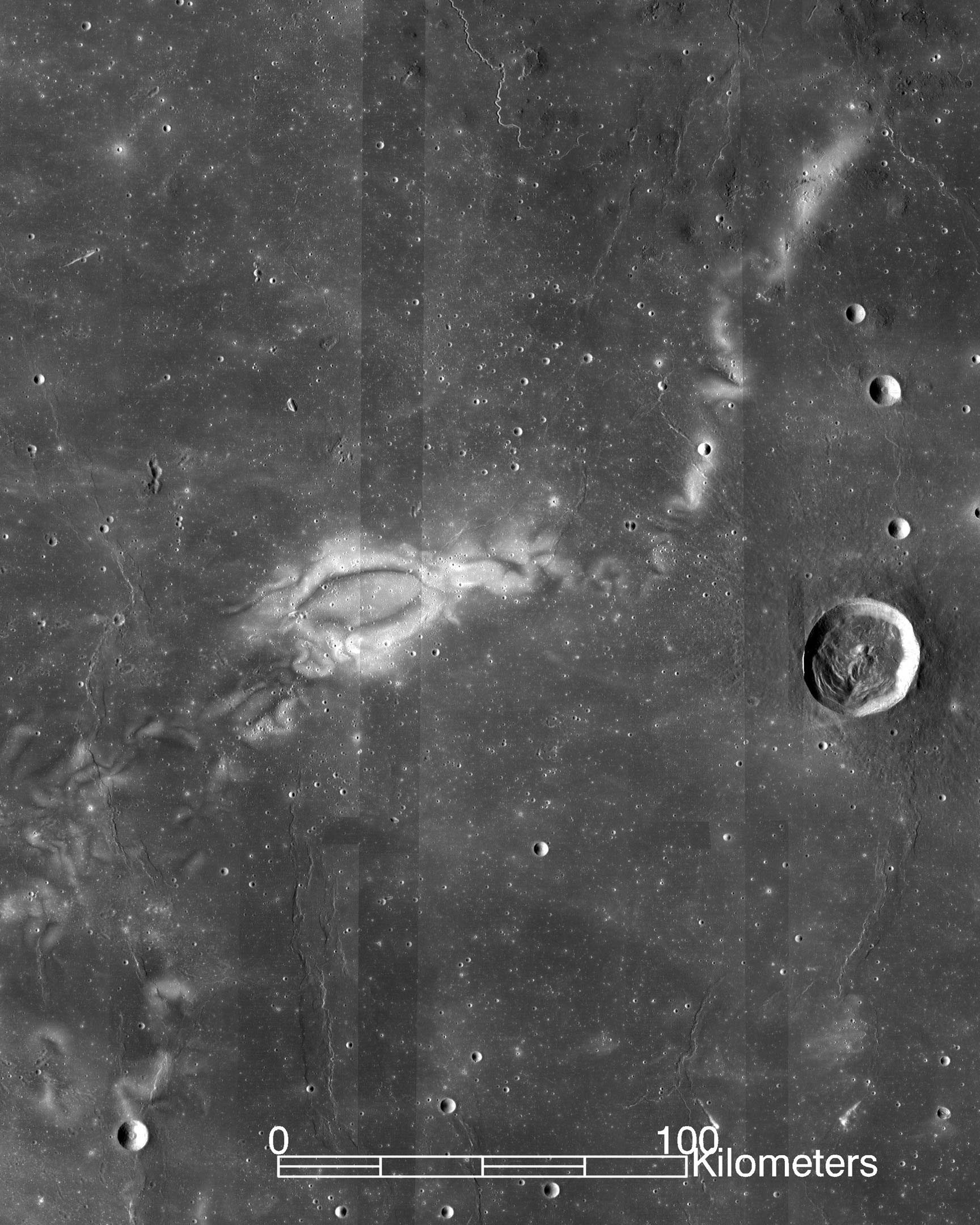
    Research using data from NASA’s ARTEMIS mission suggests that lunar swirls, like the Reiner Gamma lunar swirl imaged here by NASA’s Lunar Reconnaissance Orbiter, could be the result of solar wind interactions with the Moon’s isolated pockets of magnetic field. Credit: NASA LRO WAC science team

    Every object, planet, or person traveling through space has to contend with the Sun’s damaging radiation — and the Moon has the scars to prove it.

    Research using data from NASA’s ARTEMIS mission — short for Acceleration, Reconnection, Turbulence, and Electrodynamics of the Moon’s Interaction with the Sun — suggests how the solar wind and the Moon’s crustal magnetic fields work together to give the Moon a distinctive pattern of darker and lighter swirls.

    The Sun releases a continuous outflow of particles and radiation called the solar wind. The solar wind washes over the planets, moons and other bodies in our solar system, filling a bubble of space — called the heliosphere — that extends far past the orbit of Pluto.


    Research using data from NASA’s ARTEMIS mission suggests how the solar wind and the Moon’s crustal magnetic fields work together to give the Moon a distinctive pattern of darker and lighter swirls. Credit: NASA’s Goddard Space Flight Center

    Here on Earth, we’re largely protected from the damaging effects of the solar wind: Because the solar wind is magnetized, Earth’s natural magnetic field deflects the solar wind particles around our planet so that only a small fraction of them reach our planet’s atmosphere.

    But unlike Earth, the Moon has no global magnetic field. However, magnetized rocks near the lunar surface do create small, localized spots of magnetic field that extend anywhere from hundreds of yards to hundreds of miles. This is the kind of information that needs to be well understood to better protect astronauts on the Moon from the effects of radiation. The magnetic field bubbles by themselves aren’t robust enough to protect humans from that harsh radiation environment, but studying their structure could help develop techniques to protect our future explorers.

    “The magnetic fields in some regions are locally acting as this magnetic sunscreen,” said Andrew Poppe, a scientist at the University of California, Berkeley, who researches the Moon’s crustal magnetic fields using data from NASA’s ARTEMIS mission along with simulations of the Moon’s magnetic environment.

    These small bubbles of magnetic “sunscreen” can also deflect solar wind particles — but on a much smaller scale than Earth’s magnetic field. While they aren’t enough to protect astronauts by themselves, they do have a fundamental effect on the Moon’s appearance. Under these miniature magnetic umbrellas, the material that makes up the Moon’s surface, called regolith, is shielded from the Sun’s particles. As those particles flow toward the Moon, they are deflected to the areas just around the magnetic bubbles, where chemical reactions with the regolith darken the surface. This creates the distinctive swirls of darker and lighter material that are so prominent they can be seen from Earth — one more piece of the puzzle to help us understand the neighbor NASA plans to re-visit within the next decade.

    References:

    • “ARTEMIS observations of the solar wind proton scattering function from lunar crustal magnetic anomalies” by A. R. Poppe, J. S. Halekas, C. Lue and S. Fatemi, 10 April 2017, AGU.
      DOI: 10.1002/2017JE005313
    • “Solar wind interaction with the Reiner Gamma crustal magnetic anomaly: Connecting source magnetization to surface weathering” by Andrew R.Poppe, Shahab Fatemi, Ian Garrick-Bethell, Doug Hemingway, Mats Holmström, 4 November 2015, ScienceDirect.
      DOI: 10.1016/j.icarus.2015.11.005

    Never miss a breakthrough: Join the SciTechDaily newsletter.
    Follow us on Google and Google News.

    ARTEMIS Mission Astronomy Moon
    Share. Facebook Twitter Pinterest LinkedIn Email Reddit

    Related Articles

    See the Far Side of the Moon: Incredibly Detailed Pictures From Artemis I Orion Close Lunar Flyby

    Fly Your Name Around the Moon on NASA’s Artemis I

    Fly Your Name for Free Around the Moon on NASA’s Artemis I Mission

    Artemis 1 Moon Mission: Getting Ready to Rocket

    NASA Lunar Crater Radio Telescope: Illuminating the Cosmic Dark Ages

    Don’t Miss the Next Full Moon – A Pink “Supermoon”

    NASA Selects SpaceX Starship to Land Next Americans on Moon

    Don’t Miss the Next Full Moon: The Worm Moon (and, by Some Definitions, a Supermoon)

    Innovative Propulsion System Gets Ready to Study Moon Orbit for NASA’s Artemis Program

    Leave A Reply Cancel Reply

    • Facebook
    • Twitter
    • Pinterest
    • YouTube

    Don't Miss a Discovery

    Subscribe for the Latest in Science & Tech!

    Trending News

    Scientists Warn That This Common Pet Fish Can Wreck Entire Ecosystems

    Scientists Make Breakthrough in Turning Plastic Trash Into Clean Fuel Using Sunlight

    This Popular Supplement May Interfere With Cancer Treatment, Scientists Warn

    Scientists Finally Solved One of Water’s Biggest Mysteries

    Could This New Weight-Loss Pill Disrupt the Entire Market? Here’s What You Should Know About Orforglipron

    Earth’s Crust Is Tearing Open in Africa, and It Could Form a New Ocean

    Breakthrough Bowel Cancer Trial Leaves Patients Cancer-Free for Nearly 3 Years

    Natural Compound Shows Powerful Potential Against Rheumatoid Arthritis

    Follow SciTechDaily
    • Facebook
    • Twitter
    • YouTube
    • Pinterest
    • Newsletter
    • RSS
    SciTech News
    • Biology News
    • Chemistry News
    • Earth News
    • Health News
    • Physics News
    • Science News
    • Space News
    • Technology News
    Recent Posts
    • Ancient Roman Ship Coating Reveals Secrets Hidden for 2,200 Years
    • Enormous Prehistoric Insects Puzzle Scientists
    • College Student Identifies Bizarre New Carnivorous Dinosaur Three Times Older Than T. rex
    • The Most Effective Knee Arthritis Treatments Aren’t What You Expect
    • Scientists Develop Bioengineered Chewing Gum That Could Help Fight Oral Cancer
    Copyright © 1998 - 2026 SciTechDaily. All Rights Reserved.
    • Science News
    • About
    • Contact
    • Editorial Board
    • Privacy Policy
    • Terms of Use

    Type above and press Enter to search. Press Esc to cancel.