
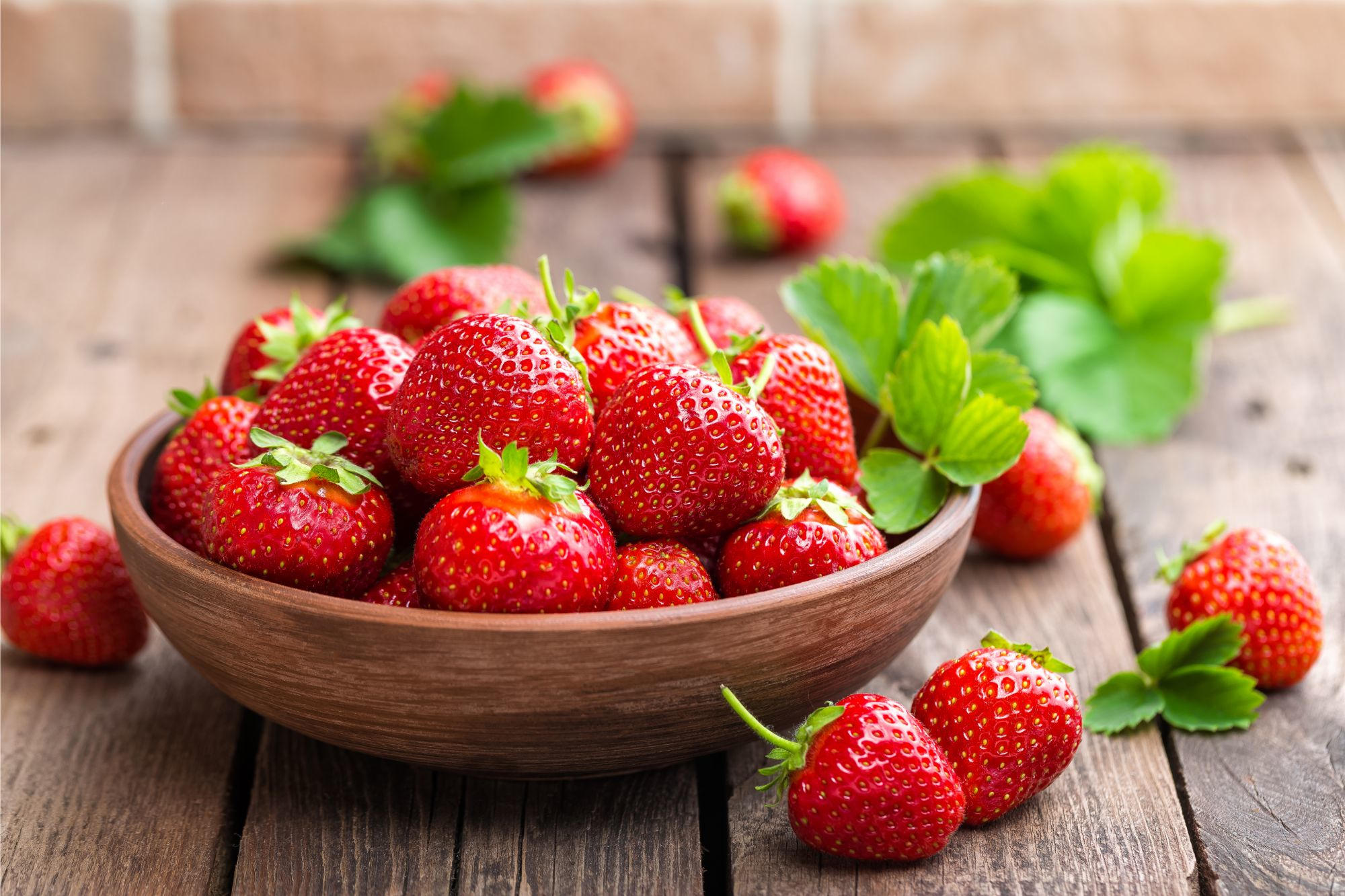
The study examined the effect of rising temperatures on California’s crops.
According to research from the University of Waterloo, rising temperatures due to climate change could lead to a reduction in strawberry supply and higher prices.
Using a new method of analysis, the researchers found that a rise in temperature of 3 degrees Fahrenheit could reduce strawberry yields by up to 40 percent. Strawberries are one of the most lucrative commodities for the economies of California and the United States. The 2022 market for strawberries alone was worth more than US$3 billion.
“This research shows how climate change can directly impact the foods we love, emphasizing the importance of sustainable farming practices to maintain a stable food supply for everyone,” said Dr. Poornima Unnikrishnan, a postdoctoral fellow in the Department of Systems Design Engineering at Waterloo.
Sustainable Farming Practices to Combat Heat Stress
Sustainable farming practices could include optimizing irrigation to ensure adequate water supply during heatwaves, using drip irrigation and scheduling operations to avoid peak periods of hot weather as well as using shading plants and installing shade structures to mitigate heat stress.
The research team included Unnikrishnan, Dr. Kumaraswamy Ponnambalam, who is also from Systems Design Engineering at Waterloo, and Dr. Fakhri Karray, from the Mohamed bin Zayed University of Artificial Intelligence in Abu Dhabi. They started their analysis with strawberries because of their popularity and notoriously short shelf life. They say these results suggest potential implications for the availability of all produce imported from California.
The researchers used a model that predicts the probability of yield loss by linking air temperature anomalies and strawberry yield. This process allowed for the measurement of greater variability over time and the most accurate findings to date.
“We hope the better understanding of the influence of rising temperatures on crop yield will help in the development of sustainable agriculture responses from the government and farmers,” Ponnambalam said. “There is an urgent need for farmers to adopt new strategies to cope with global warming.”
Reference: “Influence of Regional Temperature Anomalies on Strawberry Yield: A Study Using Multivariate Copula Analysis” by Poornima Unnikrishnan, Kumaraswamy Ponnambalam and Fakhri Karray, 22 April 2024, Sustainability.
DOI: 10.3390/su16093523
Never miss a breakthrough: Join the SciTechDaily newsletter.
Follow us on Google and Google News.
4 Comments
From the linked article: “While different crop models and AI models were able to predict the non-extreme yield and price of strawberry and other crops with reasonable accuracy, the accurate prediction of extreme (both maximum and minimum) yield and price is found to be difficult.”
Perhaps that is because the wrong metrics are chosen to use for correlation. Anomalies are derived from the mid-range values of the diurnal high and low temperatures. An increase in the nighttime lows moves the mid-range just as much as daytime highs, but it is well known that Winter and night lows are increasing more rapidly than the highs. The case for increased heat waves, at least for the USA, where California is located, is not strong. https://wattsupwiththat.com/2019/09/06/the-gestalt-of-heat-waves/
Absent concern about frosts, which is the case in the Salinas Valley of California, an arithmetic average of daytime hourly temperatures, when the strawberry plants are growing, would probably produce superior predictions.
The apparent impetus for this study was a concern over the future California strawberry yield with a claimed global warming. One should take note that the linked article says the following:
“…, the temperature anomaly does not show any predominant trend (Figure 1c). It can be inferred that the yield and the temperature anomaly data are approximate stationary processes during the time period of 2011–2019.”
Wrong! The future of all farming is indoor, vertical farms, hundreds of stories tall, where vegetables and fruits are grown hydroponically without soil or regards for external weather.
Here’s one story:
https://www.nytimes.com/2022/04/06/business/vertical-farms-food.html
And yes, this will take more energy but once fusion power comes to market, we will have all the cheap, unlimited energy we could want.
Maybe, maybe not….
However the idea that they could be grown at higher latitudes appears to have escaped the scientists notice.