
Close Menu
    Facebook X (Twitter) Instagram
    SciTechDaily
    • Biology
    • Chemistry
    • Earth
    • Health
    • Physics
    • Science
    • Space
    • Technology
    Facebook X (Twitter) Pinterest YouTube RSS
    SciTechDaily
    Home»Space»Astronauts Grow Radishes in Second Advanced Plant Habitat Experiment in Space
    Space

    Astronauts Grow Radishes in Second Advanced Plant Habitat Experiment in Space

    By NASANovember 30, 20202 Comments2 Mins Read
    Facebook Twitter Pinterest Telegram LinkedIn WhatsApp Email Reddit
    Share
    Facebook Twitter LinkedIn Pinterest Telegram Email Reddit
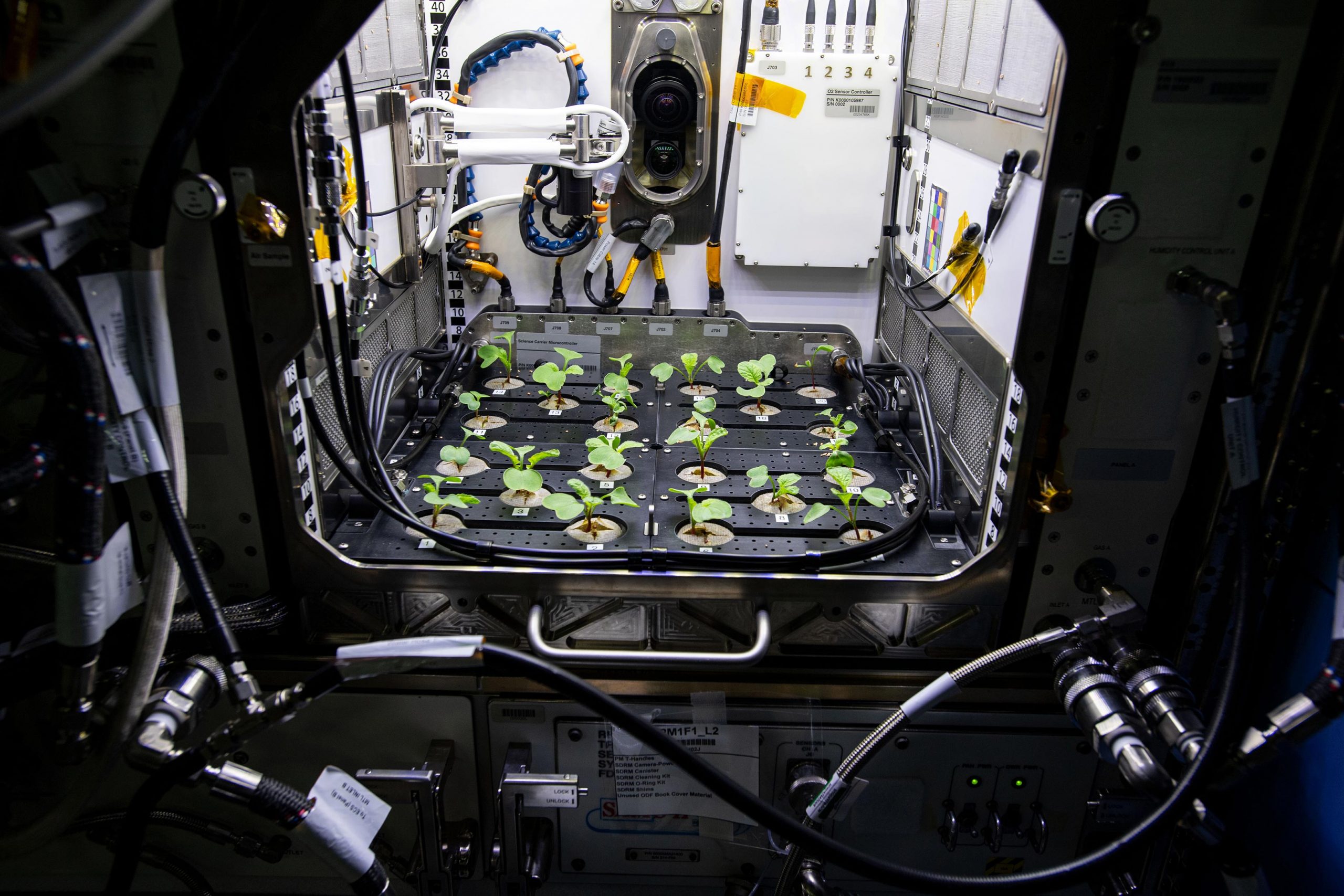
    Plant Habitat-02 (PH-02)
    Plant Habitat-02 (PH-02) photographed on November 11, 2020, by NASA astronaut Kate Rubins aboard the ISS. Credit: NASA/Kate Rubins

    Earlier this month, NASA astronaut Kate Rubins photographed the first major milestone of the Plant Habitat-02 (PH-02) experiment aboard the International Space Station. The investigation studies the growth of radishes in a microgravity environment. NASA chose the radish because it’s a model plant: both nutritious and edible, having a short cultivation time, and being genetically similar to Arabidopsis, a plant frequently studied in microgravity.

    Growing inside its Advanced Plant Habitat for 27 days, the plants require little maintenance from the crew. The growth chamber contains LED lights, a porous clay material, and a controlled system for releasing fertilizer to deliver water, nutrients, and oxygen to the plant’s roots. Cameras and more than 180 sensors in the chamber allow researchers at NASA’s Kennedy Space Center in Florida to monitor plant growth as well as regulate conditions such as water distribution, moisture levels, and temperature.


    As we prepare to send humans back to the Moon and on to Mars, the need for astronauts to grow fresh food in space is greater than ever. Plant Habitat-02, or PH-02, is an experiment that launched on Northrop Grumman’s 14th resupply mission to the International Space Station. Credit: NASA’s Kennedy Space Center

    The crew aboard the orbiting laboratory is slated to harvest the radishes later this month. Samples will then be returned to Earth for researchers to better examine how well the radishes grew.

    With plans to explore the Moon and someday Mars, NASA is gaining a better understanding of how to grow fresh produce in space for the crew on long-duration missions farther from home. As part of the Artemis program, NASA plans to establish sustainable exploration on and around the Moon by the end of the decade, and will be able to send crew supplies from Earth. Future astronauts bound for Mars will travel for about two years before returning to Earth and will have to carry all the supplies they need for the duration of the mission. Learning how to grow food closer to home aboard the space station will help determine which plants thrive the best in microgravity and offer the best variety and nutritional balance for a Martian menu.

    Never miss a breakthrough: Join the SciTechDaily newsletter.
    Follow us on Google and Google News.

    Astronaut International Space Station
    Share. Facebook Twitter Pinterest LinkedIn Email Reddit

    Related Articles

    NASA Selects Astronauts to Fly on SpaceX Crew-2 Mission

    NASA to Broadcast Final Spacewalks to Upgrade Space Station Power System

    NASA Astronauts Complete Battery Upgrade Spacewalk – See the Stunning Images

    NASA SpaceX Crew Dragon Astronauts Get Used to Space Station

    NASA Astronauts Robert Behnken and Douglas Hurley Join Expedition 63 on ISS

    SpaceX Reaches for Milestone in Spaceflight – A Private Company Launches Astronauts Into Orbit at Low Cost

    Landmark NASA SpaceX Commercial Crew Test Flight Coverage Schedule

    NASA Astronauts Meir, Morgan, Crewmate Skripochka Return to Earth From Space Station

    Japanese Astronaut Plays A One-Man Game Of Baseball In Space

    2 Comments

    1. stephen schaffer on November 30, 2020 8:36 am

      Radishes? Even I can grow radishes? That’s as silly as announcing someone cloned a sheep – they all look alike to begin with! Plant something difficult next like orchids.

      Reply
    2. Jow Milosch on December 1, 2020 2:55 am

      They need to grow coakroaches, you can live on them.

      Reply
    Leave A Reply Cancel Reply

    • Facebook
    • Twitter
    • Pinterest
    • YouTube

    Don't Miss a Discovery

    Subscribe for the Latest in Science & Tech!

    Trending News

    New Study Reveals Why Ozempic Works Better for Some People Than Others

    Climate Change Is Altering a Key Greenhouse Gas in a Way Scientists Didn’t Expect

    New Study Suggests Gravitational Waves May Have Created Dark Matter

    Scientists Discover Why the Brain Gets Stuck in Schizophrenia

    Scientists Engineer “Tumor-Eating” Bacteria That Devour Cancer From Within

    Even “Failed” Diets May Deliver Long-Term Health Gains, Study Finds

    NIH Scientists Discover Powerful New Opioid That Relieves Pain Without Dangerous Side Effects

    Collapsing Plasma May Hold the Key to Cosmic Magnetism

    Follow SciTechDaily
    • Facebook
    • Twitter
    • YouTube
    • Pinterest
    • Newsletter
    • RSS
    SciTech News
    • Biology News
    • Chemistry News
    • Earth News
    • Health News
    • Physics News
    • Science News
    • Space News
    • Technology News
    Recent Posts
    • The Surprising Reason You Might Want To Sleep Without a Pillow
    • Household Cats Could Hold the Secret to Fighting Breast Cancer
    • Scientists Say This Natural Hormone Reverses Obesity by Targeting the Brain
    • This 15,000-Year-Old Discovery Changes What We Know About Early Human Creativity
    • 35-Million-Year-Old Mystery: Strange Arachnid Discovered Preserved in Amber
    Copyright © 1998 - 2026 SciTechDaily. All Rights Reserved.
    • Science News
    • About
    • Contact
    • Editorial Board
    • Privacy Policy
    • Terms of Use

    Type above and press Enter to search. Press Esc to cancel.