
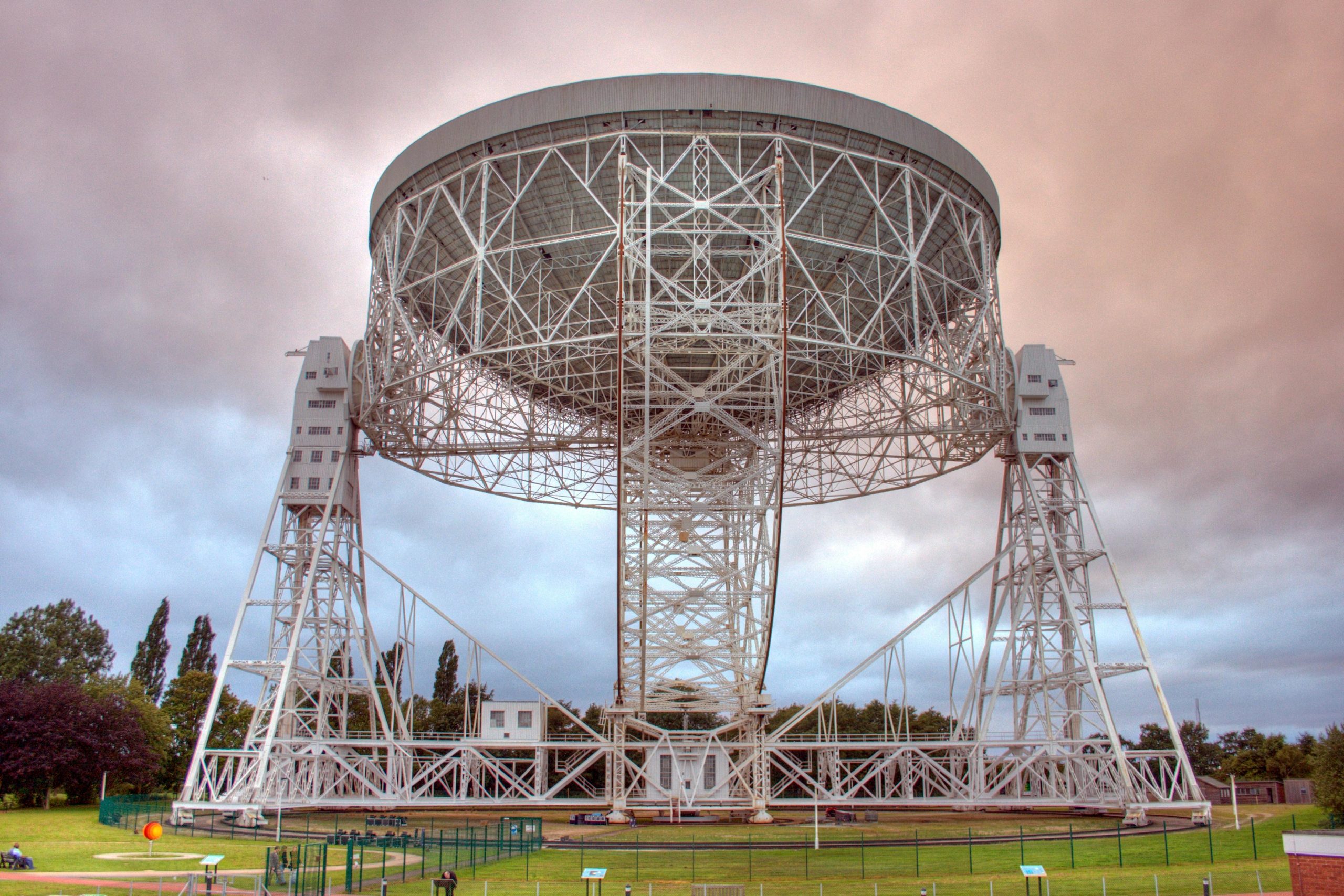
An investigation into one of the current great mysteries of astronomy has come to the fore thanks to a four-year observing campaign conducted at the Jodrell Bank Observatory.
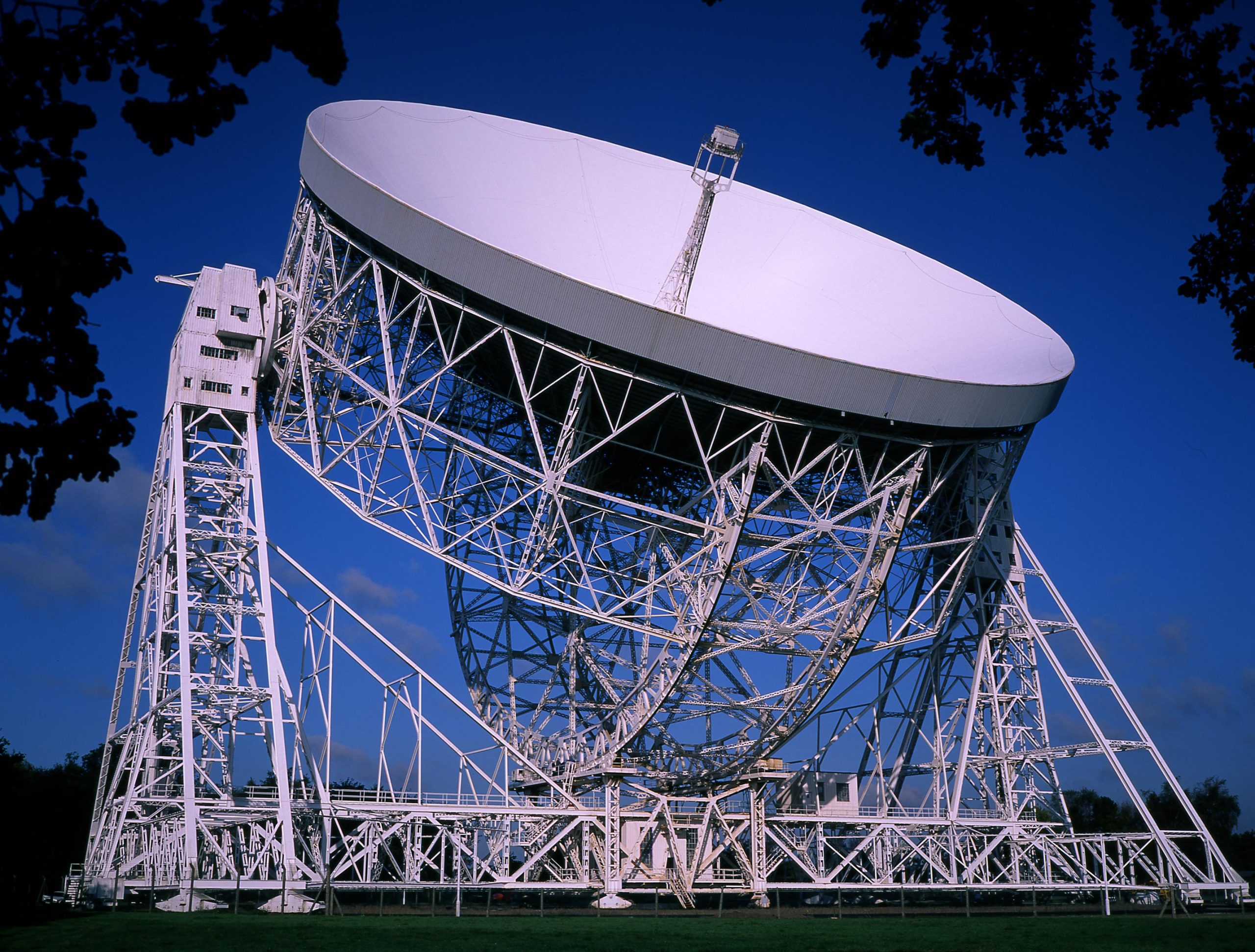
Using the long-term monitoring capabilities of the iconic Lovell Telescope, an international team led by Jodrell Bank astronomers has been studying an object known as a repeating Fast Radio Burst (FRB), which emits very short duration bright radio pulses.
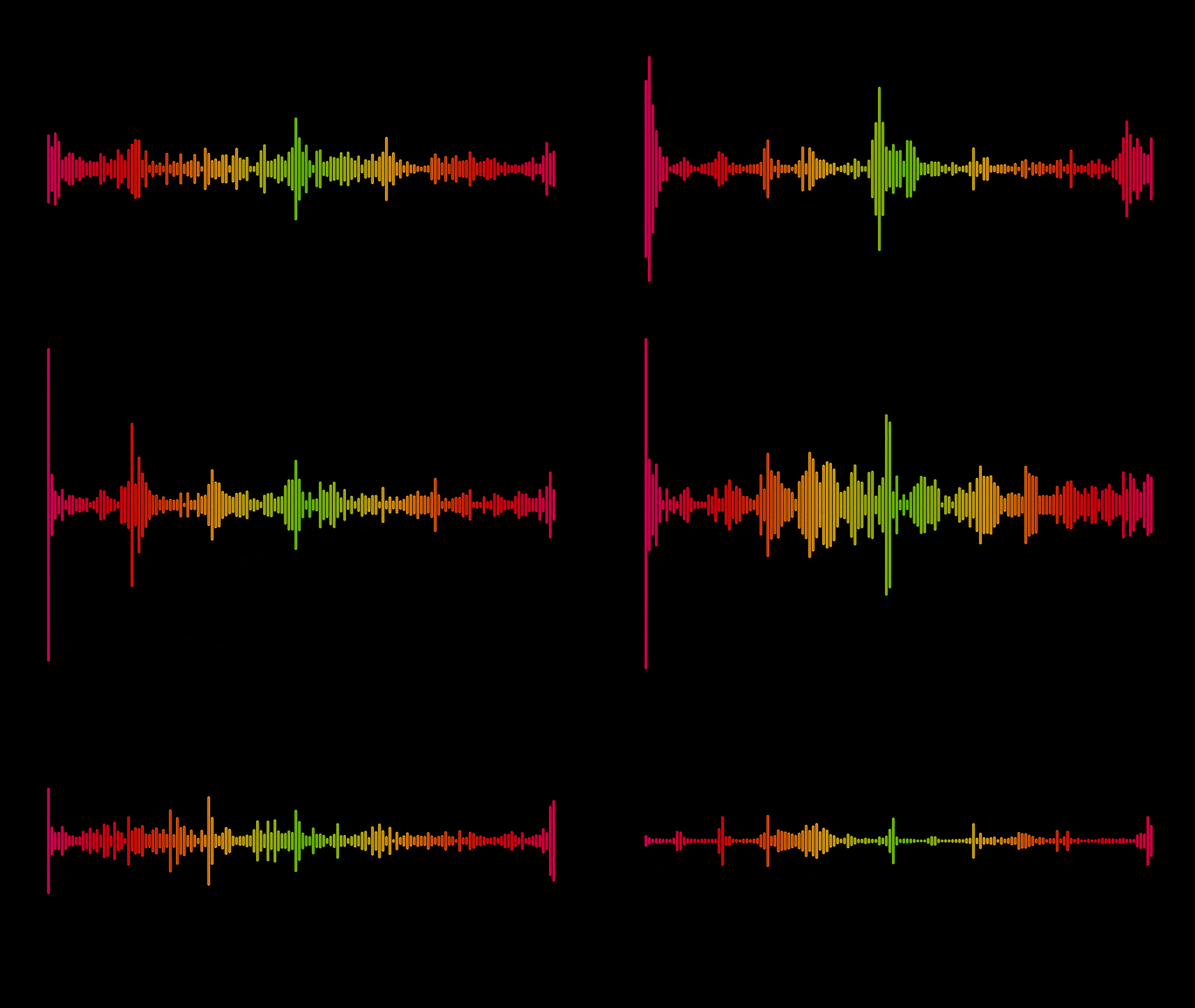
Using the 32 bursts discovered during the campaign, in conjunction with data from previously published observations, the team has discovered that emission from the FRB known as 121102 follows a cyclic pattern, with radio bursts observed in a window lasting approximately 90 days followed by a silent period of 67 days. The same behavior then repeats every 157 days.
This discovery provides an important clue to identifying the origin of these enigmatic fast radio bursts. The presence of a regular sequence in the burst activity could imply that the powerful bursts are linked to the orbital motion of a massive star, a neutron star or a black hole.
Dr. Kaustubh Rajwade of The University of Manchester, who led the new research, said: “This is an exciting result as it is only the second system where we believe we see this modulation in burst activity. Detecting a periodicity provides an important constraint on the origin of the bursts and the activity cycles could argue against a precessing neutron star.”
Repeating FRBs could be explained by the precession, like a wobbling top, of the magnetic axis of a highly magnetized neutron star but with current data scientists believe it may be hard to explain a 157-day precession period given the large magnetic fields expected in these stars.
The existence of FRBs was only discovered as recently as 2007 and they were initially thought to be one-off events related to a cataclysmic event such as an exploding star. This picture partly changed once FRB 121102, originally discovered with the Arecibo radio telescope on November 2, 2012, was seen to repeat in 2016. However, until now, no one recognized that these bursts were in fact organized in a regular pattern.
Professor Benjamin Stappers, who leads the MeerTRAP project to hunt for FRBs using the MeerKAT telescope in South Africa said: “This result relied on the regular monitoring possible with the Lovell Telescope, and non-detections were just as important as the detections.”
In a new paper published in Monthly Notices of the Royal Astronomical Society, the team confirm that FRB 121102 is only the second repeating source of FRBs to display such periodic activity. To their surprise, the timescale for this cycle is almost 10 times longer than the 16-day periodicity exhibited by the first repeating source, FRB 180916.J10158+56, which was recently discovered by the CHIME telescope in Canada.
“This exciting discovery highlights how little we know about the origin of FRBs,” says Duncan Lorimer who serves as Associate Dean for Research at West Virginia University and, along with PhD student Devansh Agarwal, helped develop the data analysis technique that led to the discovery. “Further observations of a larger number of FRBs will be needed in order to obtain a clearer picture about these periodic sources and elucidate their origin,” he added.
Reference: “Possible periodic activity in the repeating FRB 121102” by K M Rajwade, M B Mickaliger, B W Stappers, V Morello, D Agarwal, C G Bassa, R P Breton, M Caleb, A Karastergiou, E F Keane and D R Lorimer, 19 May 2020, Monthly Notices of the Royal Astronomical Society.
DOI: 10.1093/mnras/staa1237
Never miss a breakthrough: Join the SciTechDaily newsletter.
Follow us on Google and Google News.
2 Comments
Pity – I had just grokked that magnetars were a viable model, up until now that is.
Back to “we don’t have much of a clue”!
Ah, I now realize that Rajwade is only against a non-orbiting magnetar model. One orbiting a black hole (say, since it would have larger mass) would still fit.