
Close Menu
    Facebook X (Twitter) Instagram
    SciTechDaily
    • Biology
    • Chemistry
    • Earth
    • Health
    • Physics
    • Science
    • Space
    • Technology
    Facebook X (Twitter) Pinterest YouTube RSS
    SciTechDaily
    Home»Technology»Atoms Under Pressure: The Dawn of Ultra-Efficient Computing Memory
    Technology

    Atoms Under Pressure: The Dawn of Ultra-Efficient Computing Memory

    By University of RochesterDecember 5, 2023No Comments3 Mins Read
    Facebook Twitter Pinterest Telegram LinkedIn WhatsApp Email Reddit
    Share
    Facebook Twitter LinkedIn Pinterest Telegram Email Reddit
    Phase-Change Memristor
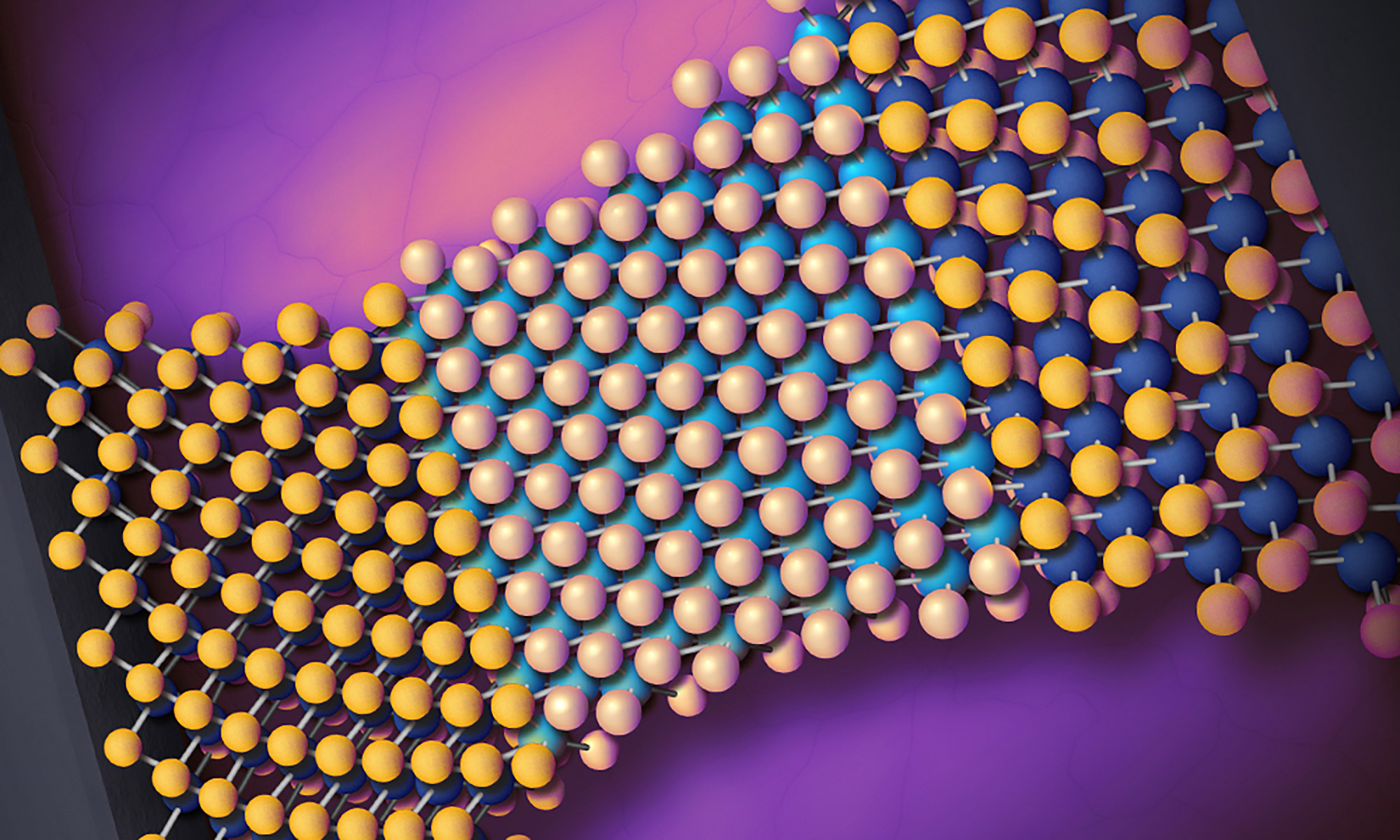
    Artist’s rendering of a 2D material strategically strained to lie precariously between two different crystal phases. Assistant Professor Stephen Wu from the University of Rochester is using such materials to create hybrid phase-change memristors that offer fast, low-power, and high-density computing memory. Credit: University of Rochester illustration / Michael Osadciw

    Researchers develop hybrid phase-change memristors that offer fast, low-power, and high-density computing memory.

    By strategically straining materials that are as thin as a single layer of atoms, University of Rochester scientists have developed a new form of computing memory that is at once fast, dense, and low-power. The researchers outline their new hybrid resistive switches in a study published in Nature Electronics.

    Hybrid Resistive Switches

    Developed in the lab of Stephen M. Wu, an assistant professor of electrical and computer engineering and of physics, the approach marries the best qualities of two existing forms of resistive switches used for memory: memristors and phase-change materials. Both forms have been explored for their advantages over today’s most prevalent forms of memory, including dynamic random access memory (DRAM) and flash memory, but have their drawbacks.

    Wu says that memristors, which operate by applying voltage to a thin filament between two electrodes, tend to suffer from a relative lack of reliability compared to other forms of memory. Meanwhile, phase-change materials, which involve selectively melting a material into either an amorphous state or a crystalline state, require too much power.

    Breakthrough in Memory Technology

    “We’ve combined the idea of a memristor and a phase-change device in a way that can go beyond the limitations of either device,” says Wu. “We’re making a two-terminal memristor device, which drives one type of crystal to another type of crystal phase. Those two crystal phases have different resistance that you can then store as memory.”

    The key is leveraging 2D materials that can be strained to the point where they lie precariously between two different crystal phases and can be nudged in either direction with relatively little power.

    Engineering and Collaborative Efforts

    “We engineered it by essentially just stretching the material in one direction and compressing it in another,” says Wu. “By doing that, you enhance the performance by orders of magnitude. I see a path where this could end up in home computers as a form of memory that’s ultra-fast and ultra-efficient. That could have big implications for computing in general.”

    Wu and his team of graduate students conducted the experimental work and partnered with researchers from Rochester’s Department of Mechanical Engineering, including assistant professors Hesam Askari and Sobhit Singh, to identify where and how to strain the material. According to Wu, the biggest hurdle remaining to making the phase-change memristors is continuing to improve their overall reliability—but he is nonetheless encouraged by the team’s progress to date.

    Reference: “Strain engineering of vertical molybdenum ditelluride phase-change memristors” by Wenhui Hou, Ahmad Azizimanesh, Aditya Dey, Yufeng Yang, Wuxiucheng Wang, Chen Shao, Hui Wu, Hesam Askari, Sobhit Singh and Stephen M. Wu, 23 November 2023, Nature Electronics.
    DOI: 10.1038/s41928-023-01071-2

    Never miss a breakthrough: Join the SciTechDaily newsletter.
    Follow us on Google and Google News.

    Electrical Engineering Electronics University of Rochester
    Share. Facebook Twitter Pinterest LinkedIn Email Reddit

    Related Articles

    High Efficiency, Low Cost: New “All in One” Microcomb Lasers Could Transform Consumer Electronics

    Quantum Films Pave the Way for High-Speed Terahertz Electronics

    Bridging Realms: Unveiling the Future of Electronics at Terahertz Speeds

    Revolutionizing Computing: Inside Princeton’s Trailblazing AI Chip Technology

    Approaching 1,000 km on a Single Charge – Scientists Discover Secret Ingredient That Can Boost EV Range

    Soaring Beyond GPS: How Quantum Photonic Chips Can Revolutionize Drone Navigation

    Unique New Material Could Generate More Computing Power and Memory Storage While Using Significantly Less Energy

    Ultrafast Computers Are Coming: Laser Bursts Drive Fastest-Ever Logic Gates

    Innovative New Magneto-Electric Transistor Could Cut 5% From World’s Digital Energy Budget

    Leave A Reply Cancel Reply

    • Facebook
    • Twitter
    • Pinterest
    • YouTube

    Don't Miss a Discovery

    Subscribe for the Latest in Science & Tech!

    Trending News

    Scientists Discover How Coffee Impacts Memory, Mood, and Gut Health

    Why Did the Neanderthals Disappear? Scientists Reveal Humans Had a Hidden Advantage

    Physicists Propose Strange Experiment Where Time Goes Quantum

    Magnesium Magic: New Drug Melts Fat Even on a High-Fat, High-Sugar Diet

    Weight-Loss Drugs Like Ozempic May Come With an Unexpected Cost

    Mezcal “Worm” in a Bottle Mystery: DNA Testing Reveals a Surprise

    New Research Reveals That Your Morning Coffee Activates an Ancient Longevity Switch

    This Is What Makes You Irresistible to Mosquitoes

    Follow SciTechDaily
    • Facebook
    • Twitter
    • YouTube
    • Pinterest
    • Newsletter
    • RSS
    SciTech News
    • Biology News
    • Chemistry News
    • Earth News
    • Health News
    • Physics News
    • Science News
    • Space News
    • Technology News
    Recent Posts
    • Scientists Just Captured Killer T Cells in Action Inside Tumors
    • Alaska’s Sky Explodes With Swirling Clouds and a Hidden Polar Storm
    • Warming Oceans Could Trigger a Dangerous Methane Surge
    • Harvard Scientists Reveal Secret Structure Behind How You Smell
    • Scientists Just Discovered the Hidden Trick That Keeps Your Cells Alive
    Copyright © 1998 - 2026 SciTechDaily. All Rights Reserved.
    • Science News
    • About
    • Contact
    • Editorial Board
    • Privacy Policy
    • Terms of Use

    Type above and press Enter to search. Press Esc to cancel.