
Close Menu
    Facebook X (Twitter) Instagram
    SciTechDaily
    • Biology
    • Chemistry
    • Earth
    • Health
    • Physics
    • Science
    • Space
    • Technology
    Facebook X (Twitter) Pinterest YouTube RSS
    SciTechDaily
    Home»Earth»The Heat Is On: Thermal Anomalies Detected in Ethiopia’s “Gateway to Hell”
    Earth

    The Heat Is On: Thermal Anomalies Detected in Ethiopia’s “Gateway to Hell”

    By Lindsey Doermann, NASA Earth ObservatoryDecember 5, 2023No Comments2 Mins Read
    Facebook Twitter Pinterest Telegram LinkedIn WhatsApp Email Reddit
    Share
    Facebook Twitter LinkedIn Pinterest Telegram Email Reddit
    Erta Ale Volcano in Ethiopia, November 2023 Annotated
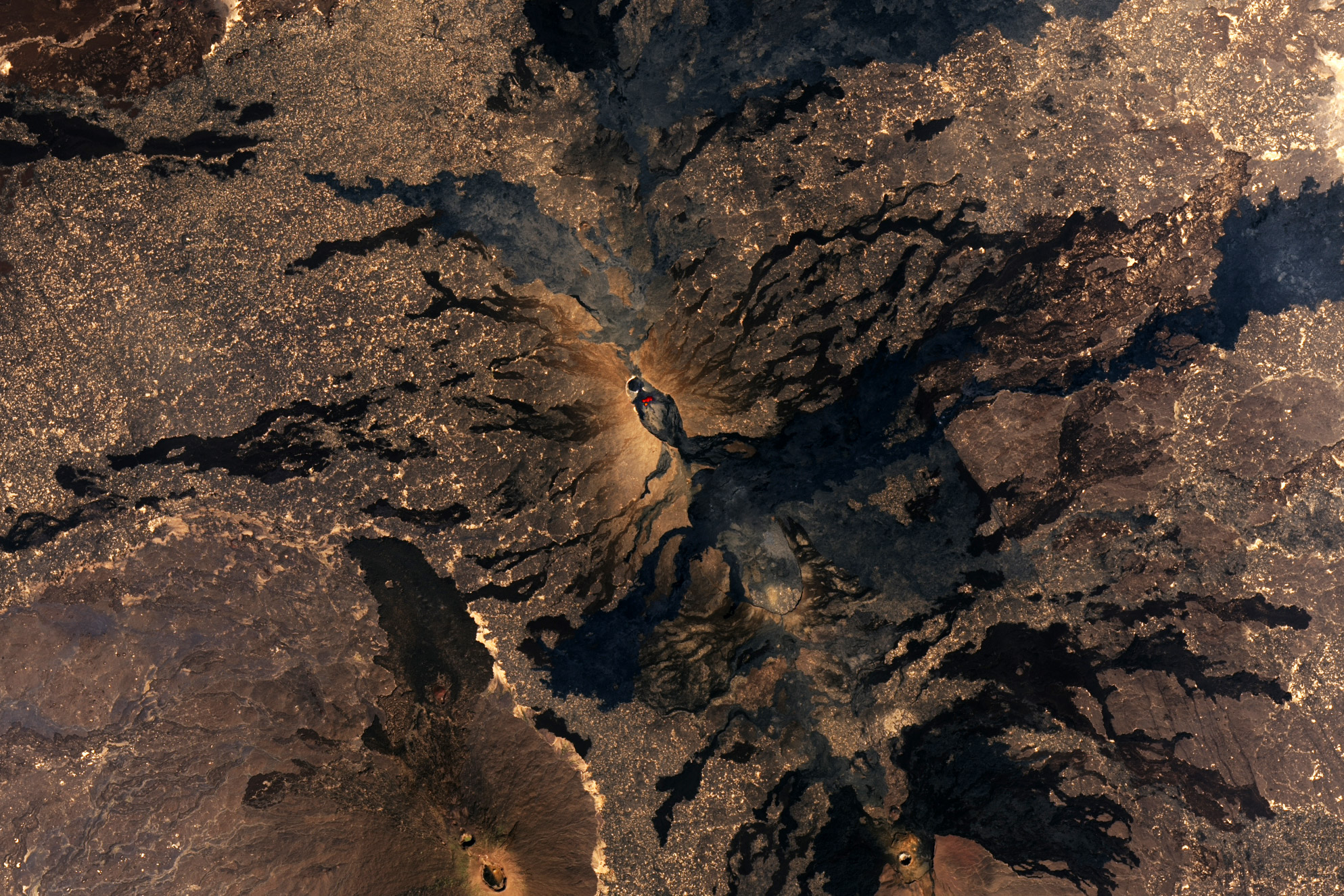
    Satellite image of Erta Ale volcano in Ethiopia acquired on November 27, 2023, by the OLI (Operational Land Imager) on Landsat 8

    Erta Ale, in the East African Rift, is Ethiopia’s most active volcano.

    The heat is always on at Erta Ale volcano in Ethiopia. In East Africa’s Danakil (or Afar) Depression, three tectonic plates are pulling apart from each other, allowing magma to rise to the surface and feed several active volcanoes. Erta Ale is located in this rift zone and is Ethiopia’s most active volcano.

    Notable Features of Erta Ale

    The volcano is known as the “smoking mountain” and the “gateway to hell” in the Afar language. A lava lake in its summit crater, shown in the inset (above), has roiled since at least 1967 and possibly since 1906. The image was acquired by Landsat 8’s OLI (Operational Land Imager) on November 27, 2023, and includes an infrared signal (red) produced by the heat of molten rock.

    Recent Volcanic Activity

    In a recent spate of activity, satellites detected thermal anomalies in the summit crater starting in mid-September 2023. According to reports from the Global Volcanism Program, anomalies observed over the ensuing weeks likely corresponded to eruptions from spatter cones and small lava flows within the crater. Much of scientists’ understanding of Erta Ale’s volcanism comes from satellite observations since the area is remote and largely inaccessible for field study.

    Lava Flows and Impact

    While activity is common at the summit, lava flows also occur on other parts of the mountain. Notably, from January 2017 to March 2020, fissure eruptions in the southeast caldera produced a large volume of basaltic lava that poured down the volcano’s flanks. The flows covered approximately 30 square kilometers (12 square miles), some of which is visible in this image extending to the northeast and southwest.

    NASA Earth Observatory image by Lauren Dauphin, using Landsat data from the U.S. Geological Survey.

    Never miss a breakthrough: Join the SciTechDaily newsletter.
    Follow us on Google and Google News.

    NASA NASA Earth Observatory Volcano
    Share. Facebook Twitter Pinterest LinkedIn Email Reddit

    Related Articles

    NASA Satellite Captures a Nighttime Volcanic Eruption on Iceland’s Reykjanes Peninsula

    Volcanic Eruption Lights Up Iceland Following Swarms of Small Earthquakes

    A Nighttime Glow Over Mount Etna – Highly Active Italian Volcano

    Socked in Stratovolcano: Astronaut on ISS Captures Incredible View of Uninhabited Atlasov Island

    Kilauea’s Lava Lake Returns – Hawaii’s Most Active Volcano Is Erupting Again

    “Smoking Mountain” – An Outburst From Popocatépetl Volcano in Mexico

    Newberry Volcano Photographed by Astronaut Onboard the International Space Station

    Young Volcanic Island Nishinoshima Belches Ash and Lava As It Grows in the Pacific

    Unusual “Volcano Track” Clouds Investigated

    Leave A Reply Cancel Reply

    • Facebook
    • Twitter
    • Pinterest
    • YouTube

    Don't Miss a Discovery

    Subscribe for the Latest in Science & Tech!

    Trending News

    Scientists Say Love Follows Mathematical Patterns

    “Zombie Cells” Reveal a Hidden Weakness That Could Help Fight Aging

    Alien Signals May Be Hiding in a Radio Band SETI Has Barely Explored

    Earth’s Hidden Thermostat Has Regulated Climate for 60 Million Years

    This 518-Million-Year-Old Creature Reveals How Spiders Got Their Bite

    Scientists Built a Programmable Chip That Can Slow Light on Command

    The Backyard “Silly Sprinkler” That Cracked One of Physics’ Biggest Puzzles

    This Common Sleep Habit Could Be Making You Gain Weight

    Follow SciTechDaily
    • Facebook
    • Twitter
    • YouTube
    • Pinterest
    • Newsletter
    • RSS
    SciTech News
    • Biology News
    • Chemistry News
    • Earth News
    • Health News
    • Physics News
    • Science News
    • Space News
    • Technology News
    Recent Posts
    • Earth’s First Complex Organisms May Hold Clues to Life Beyond Our Planet
    • Dark Matter’s Secret Force Could Reshape Our Understanding of the Universe
    • This Star Is Racing Around the Milky Way’s Black Hole at 8% the Speed of Light
    • Where on Earth Was This Fossil 200 Million Years Ago?
    • A 25,000-Year-Old Ritual Tradition Was Hidden Beneath This Cave Floor
    Copyright © 1998 - 2026 SciTechDaily. All Rights Reserved.
    • Science News
    • About
    • Contact
    • Editorial Board
    • Privacy Policy
    • Terms of Use

    Type above and press Enter to search. Press Esc to cancel.