
Close Menu
    Facebook X (Twitter) Instagram
    SciTechDaily
    • Biology
    • Chemistry
    • Earth
    • Health
    • Physics
    • Science
    • Space
    • Technology
    Facebook X (Twitter) Pinterest YouTube RSS
    SciTechDaily
    Home»Physics»Autonomous Particle Accelerators: Accelerate Smarter With Artificial Intelligence
    Physics

    Autonomous Particle Accelerators: Accelerate Smarter With Artificial Intelligence

    By Deutsches Elektronen-Synchrotron DESYNovember 9, 2020No Comments3 Mins Read
    Facebook Twitter Pinterest Telegram LinkedIn WhatsApp Email Reddit
    Share
    Facebook Twitter LinkedIn Pinterest Telegram Email Reddit
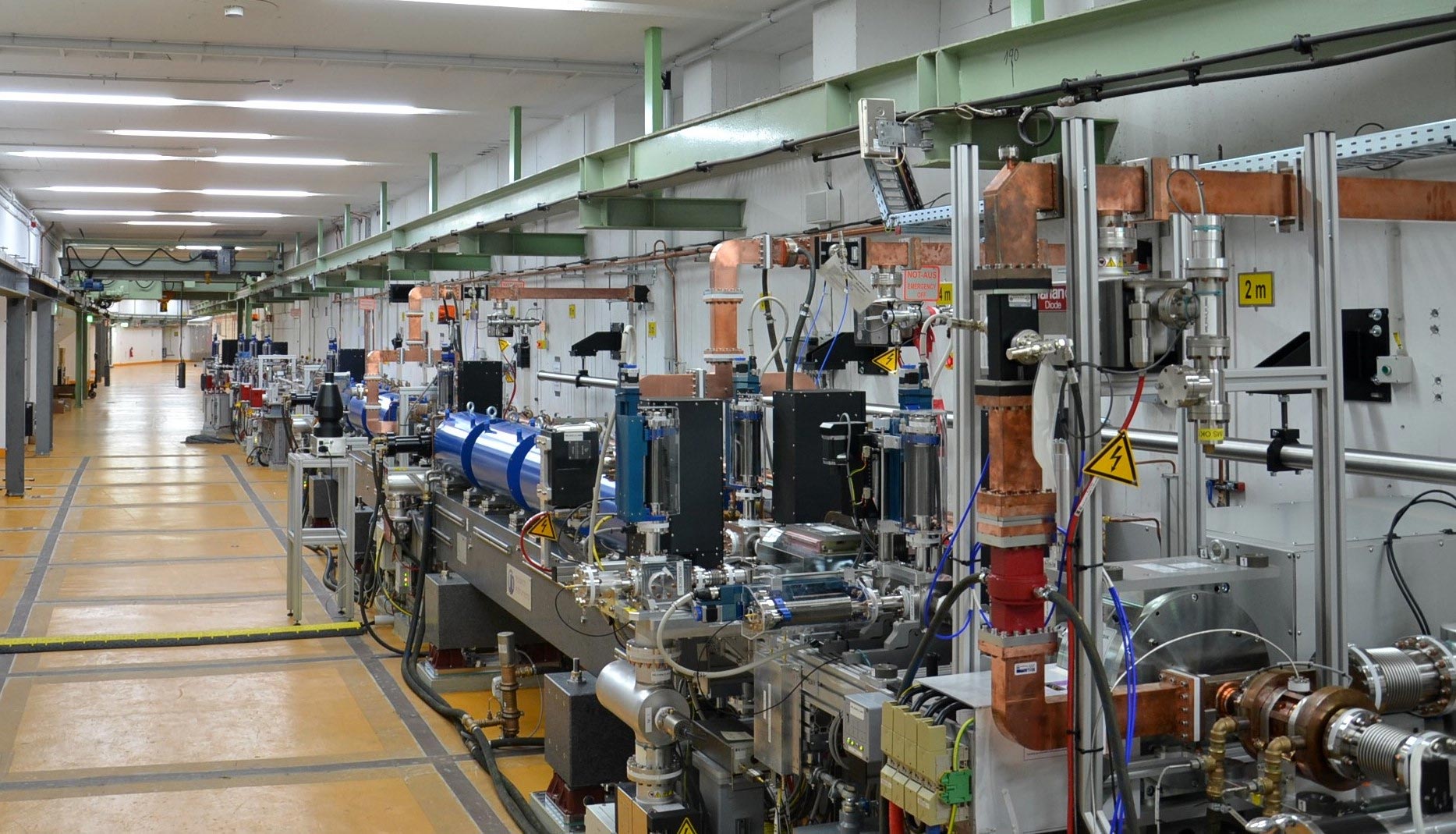
    DESY ARES Accelerator
    At DESY´s ARES accelerator, the research team wants to gain experience with autonomous operation. Credit: DESY/F. Burkart

    Particle accelerators are universal tools: They help in production processes in industry, in tumor therapy in hospitals and enable unique discoveries and insights in research. Growing demands on the stability and properties of particle beams make a manual operation of these complex devices increasingly challenging – and require the highest possible level of automation to support operators.

    A new project of DESY and KIT (Karlsruhe Institute of Technology) is now taking the first steps towards a fully autonomously operated accelerator. The cooperation “Autonomous Accelerator,” which is supported by the Helmholtz Association and the two participating Helmholtz research centers within the framework of the Helmholtz Artificial Intelligence Cooperation Unit, brings “reinforcement learning” to the operation of two linear accelerators at DESY and KIT. Reinforcement learning involves measuring state values and adjusting control variables to determine their influence on each other, thus learning a control strategy that also takes into account its effects in the future. In the long run, this will completely replace manual intervention.
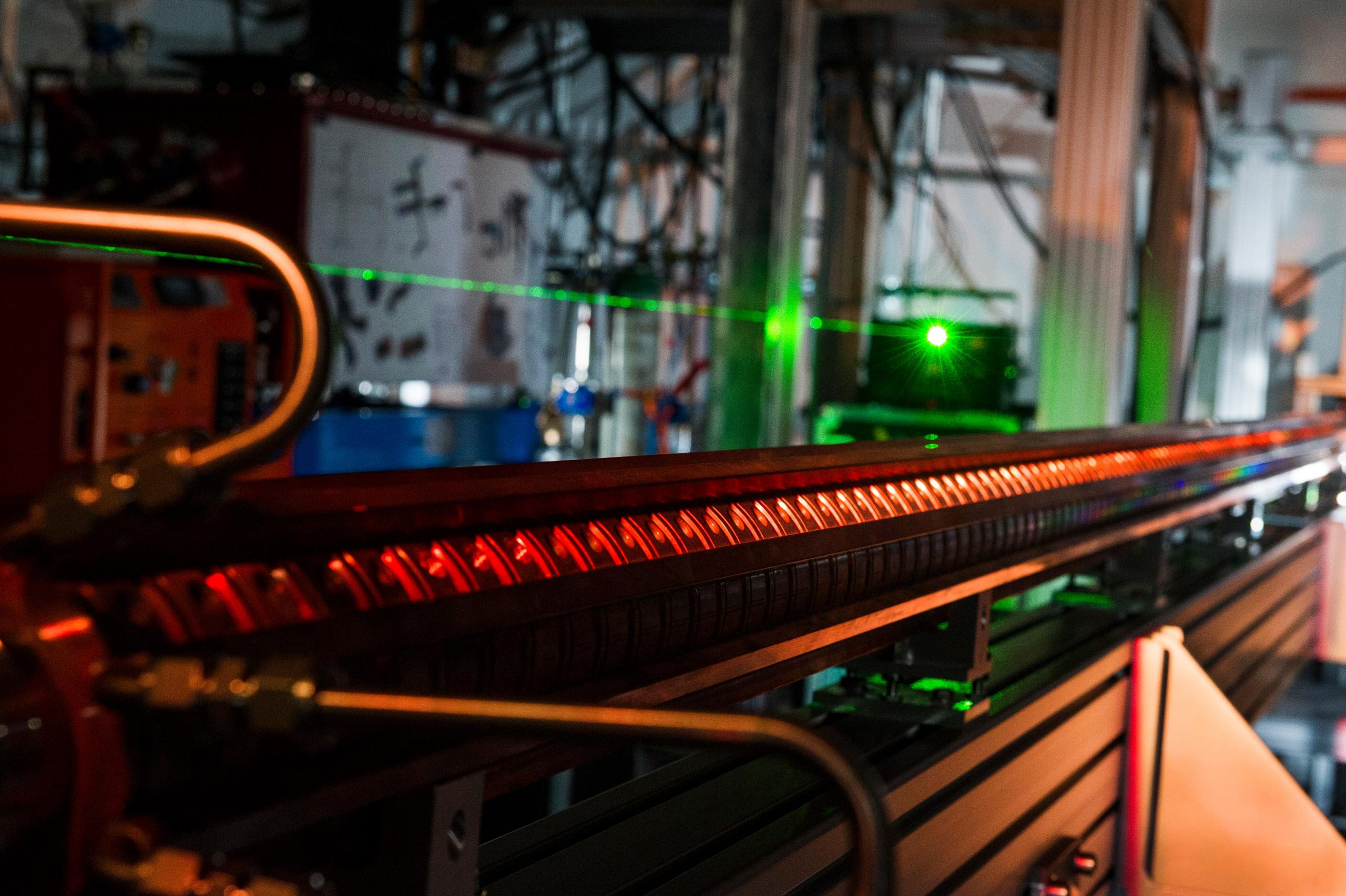
    FLUTE Accelerator
    The FLUTE accelerator is located at KIT. Credit: KIT

    “The important characteristic of reinforcement learning is that the control system not only reacts but also plans into the future how to achieve a goal,” explains Annika Eichler from DESY, who coordinates the overall project. “For this purpose, the control system can decide on the basis of the information collected so far, but it must also have enough range to literally ‘conquer’ new control regions in previously unknown terrain. The long-term goal of the research team is to operate an accelerator fully autonomously. But first of all, the team is concentrating on controlling the density at which the electrons are distributed along the accelerated bunches. In addition to the length of these electron bunches — some of which pass the measuring device in less than a femtosecond – it is particularly the build-up effects in the particle bunches that make controlling this size very challenging; autonomous control is, therefore, essential for efficient and rapid optimization.

    For their experiments, the research team uses the test accelerators ARES (Accelerator Research Experiment at SINBAD) at DESY and FLUTE (Far-Infrared Linac and Test Experiment) at KIT. Both facilities are available for accelerator research within the framework of the “Matter and Technologies” program and offer sufficient test times for developing such algorithms.

    “By using two similar, compact but not identical accelerators for the development of our artificial intelligence, we gain valuable experience on the transferability of our algorithms to other and larger accelerators,” says Erik Bründermann, project manager at KIT.

    This is important in order to be able to use such algorithms later also for complex user machines such as FLASH and European XFEL.

    Never miss a breakthrough: Join the SciTechDaily newsletter.
    Follow us on Google and Google News.

    Artificial Intelligence Deutsches Elektronen-Synchrotron Particle Physics
    Share. Facebook Twitter Pinterest LinkedIn Email Reddit

    Related Articles

    Electrons Tamed: The Breakthrough That Could Shrink Particle Accelerators

    A Camera Trap for the Invisible: Scientists Unveil New Tool in the Hunt for Dark Matter

    AI Breakthrough in Detecting New Particles at the Large Hadron Collider

    Unveiling New Physics With AI-Powered Particle Tracking

    Uncovering the Secrets of the Big Bang With Artificial Intelligence

    MicroBooNE Experiment: Investigating a Long-Standing Neutrino Mystery

    Control of Powerful Plasma Accelerators Improved With Artificial Intelligence

    Dark-Matter “Light Through the Wall” Experiment Makes Progress

    World Record: Innovative Laser Plasma Accelerator Operates Right Around the Clock

    Leave A Reply Cancel Reply

    • Facebook
    • Twitter
    • Pinterest
    • YouTube

    Don't Miss a Discovery

    Subscribe for the Latest in Science & Tech!

    Trending News

    Popular Sugar-Free Sweetener Linked to Liver Disease, Study Warns

    What Is Hantavirus? The Deadly Disease Raising Alarm Worldwide

    Scientists Just Discovered How the Universe Builds Monster Black Holes

    Scientists Unveil New Treatment Strategy That Could Outsmart Cancer

    A Simple Vitamin May Hold the Key to Treating Rare Genetic Diseases

    Scientists Think the Real Fountain of Youth May Be Hiding in Your Gut

    Ravens Don’t Follow Wolves, They Predict Them

    This Common Knee Surgery May Be Doing More Harm Than Good

    Follow SciTechDaily
    • Facebook
    • Twitter
    • YouTube
    • Pinterest
    • Newsletter
    • RSS
    SciTech News
    • Biology News
    • Chemistry News
    • Earth News
    • Health News
    • Physics News
    • Science News
    • Space News
    • Technology News
    Recent Posts
    • James Webb Telescope Reveals the Universe’s Hidden Cosmic Web in Stunning Detail
    • Scientists Build a Living AI Device Using Real Brain Cells
    • Why Are So Many New Fathers Dying? Scientists Say the U.S. Has a Dangerous Blind Spot
    • Scientists Identify Simple Supplement That Greatly Reduces Alzheimer’s Damage
    • You May Have a Dangerous Type of Cholesterol Even if Your Tests Look Normal
    Copyright © 1998 - 2026 SciTechDaily. All Rights Reserved.
    • Science News
    • About
    • Contact
    • Editorial Board
    • Privacy Policy
    • Terms of Use

    Type above and press Enter to search. Press Esc to cancel.