
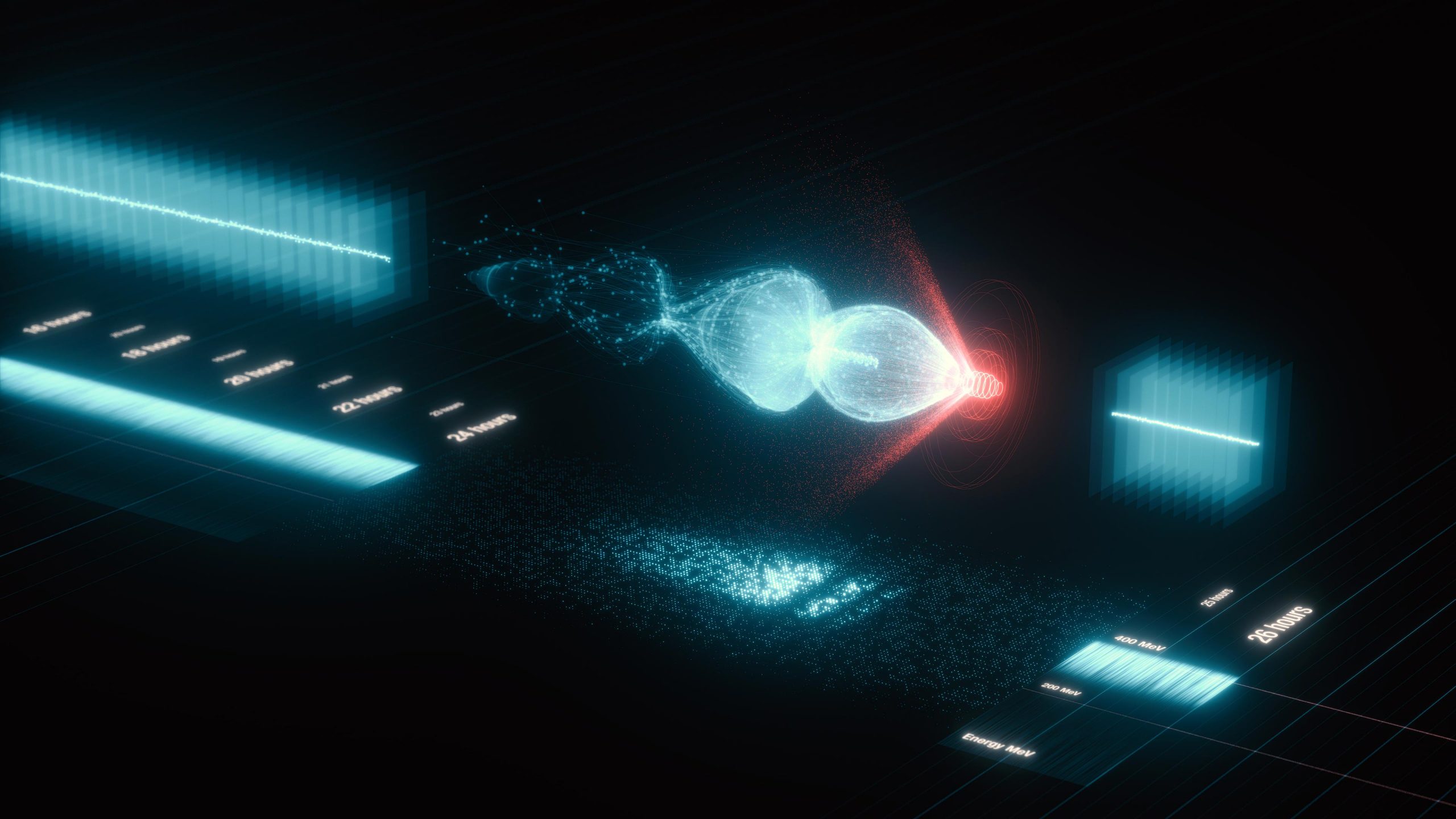
Milestone towards first practical applications of this innovative accelerator technology.
A team of researchers at DESY has reached an important milestone on the road to the particle accelerator of the future. For the first time, a so-called laser plasma accelerator has run for more than a day while continuously producing electron beams. The LUX beamline, jointly developed and operated by DESY and the University of Hamburg, achieved a run time of 30 hours. “This brings us a big step closer to the steady operation of this innovative particle accelerator technology,” says DESY’s Andreas R. Maier, the leader of the group. The scientists are reporting on their record in the journal Physical Review X. “The time is ripe to move laser plasma acceleration from the laboratory to practical applications,” adds the director of DESY’s Accelerator Division, Wim Leemans.
Physicists hope that the technique of laser plasma acceleration will lead to a new generation of powerful and compact particle accelerators offering unique properties for a wide range of applications. In this technique, a laser or energetic particle beam creates a plasma wave inside a fine capillary. A plasma is a gas in which the gas molecules have been stripped of their electrons. LUX uses hydrogen as the gas.
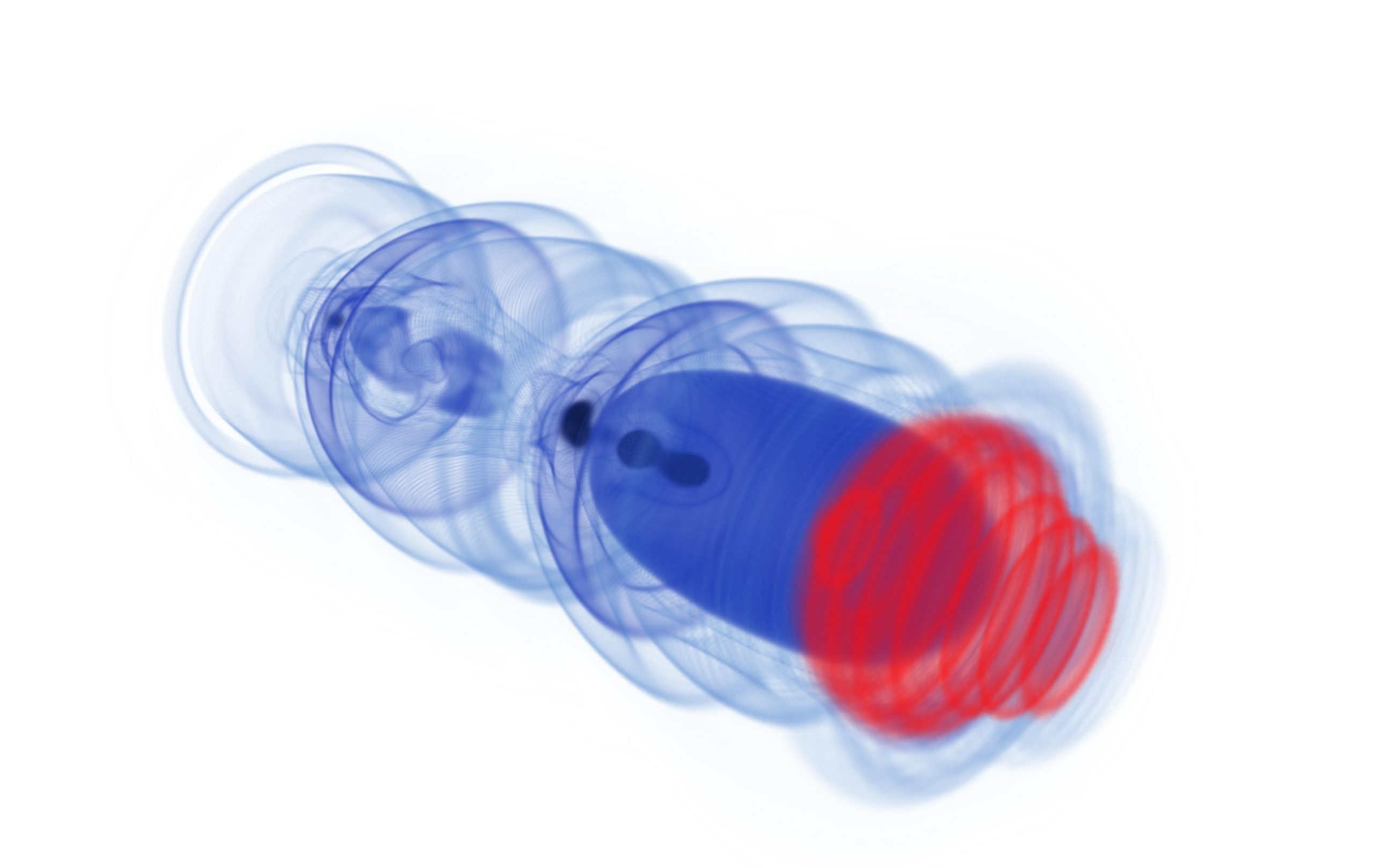
“The laser pulses plow their way through the gas in the form of narrow discs, stripping the electrons from the hydrogen molecules and sweeping them aside like a snow plow,” explains Maier, who is group leader at DESY’s accelerator division and works at the Centre for Free-Electron Laser Science (CFEL), a joint enterprise between DESY, the University of Hamburg and the Max Planck Society. “Electrons in the wake of the pulse are accelerated by the positively charged plasma wave in front of them – much like a wakeboarder rides the wave behind the stern of a boat.”
This phenomenon allows laser plasma accelerators to achieve acceleration strengths that are up to a thousand times greater than what could be provided by today’s most powerful machines. Plasma accelerators will enable more compact and powerful systems for a wide range of applications, from fundamental research to medicine. A number of technical challenges still need to be overcome before these devices can be put to practical use. “Now that we are able to operate our beamline for extended periods of time, we will be in a better position to tackle these challenges,” explains Maier.

During the record-breaking nonstop operation, the physicists accelerated more than 100,000 electron bunches, one every second. Thanks to this large dataset, the properties of the accelerator, the laser, and the bunches can be correlated and analyzed much more precisely. “Unwanted variations in the electron beam can be traced back to specific points in the laser, for example, so that we now know exactly where we need to start in order to produce an even better particle beam,” says Maier. “This approach lays the foundations for an active stabilization of the beams, such as is deployed on every high-performance accelerator in the world,” explains Leemans.
According to Maier, the key to success was combining expertise from two different fields: plasma acceleration and know-how in stable accelerator operation.“ Both are available at DESY, which is unparalleled in the world in this respect,” Maier emphasizes. According to him, numerous factors contributed to the accelerator’s stable long-term operation, from vacuum technology and laser expertise to a comprehensive and sophisticated control system. “In principle, the system could have kept running for even longer, but we stopped it after 30 hours,” reports Maier. “Since then, we have repeated such runs three more times.”
“This work demonstrates that laser plasma accelerators can generate a reproducible and controllable output. This provides a concrete basis for developing this technology further, in order to build future accelerator-based light sources at DESY and elsewhere,” Leemans summarizes.
Reference: “Decoding Sources of Energy Variability in a Laser-Plasma Accelerator” by Andreas R. Maier, Niels M. Delbos, Timo Eichner, Lars Hübner, Sören Jalas, Laurids Jeppe, Spencer W. Jolly, Manuel Kirchen, Vincent Leroux, Philipp Messner, Matthias Schnepp, Maximilian Trunk, Paul A. Walker, Christian Werle and Paul Winkler, 18 August 2020, Physical Review X.
DOI: 10.1103/PhysRevX.10.031039
Scientists from the University of Hamburg, the European ELI-Beamlines Project, the Max Planck Research School for Ultrafast Imaging & Structural Dynamics (IMPRS-UFAST) and DESY were all involved in the research.
Never miss a breakthrough: Join the SciTechDaily newsletter.
Follow us on Google and Google News.
2 Comments
This concept seems like that of the black hole. Thank you for your research.
But I can’t earn a dime as everything I want to invent can be done better by u