
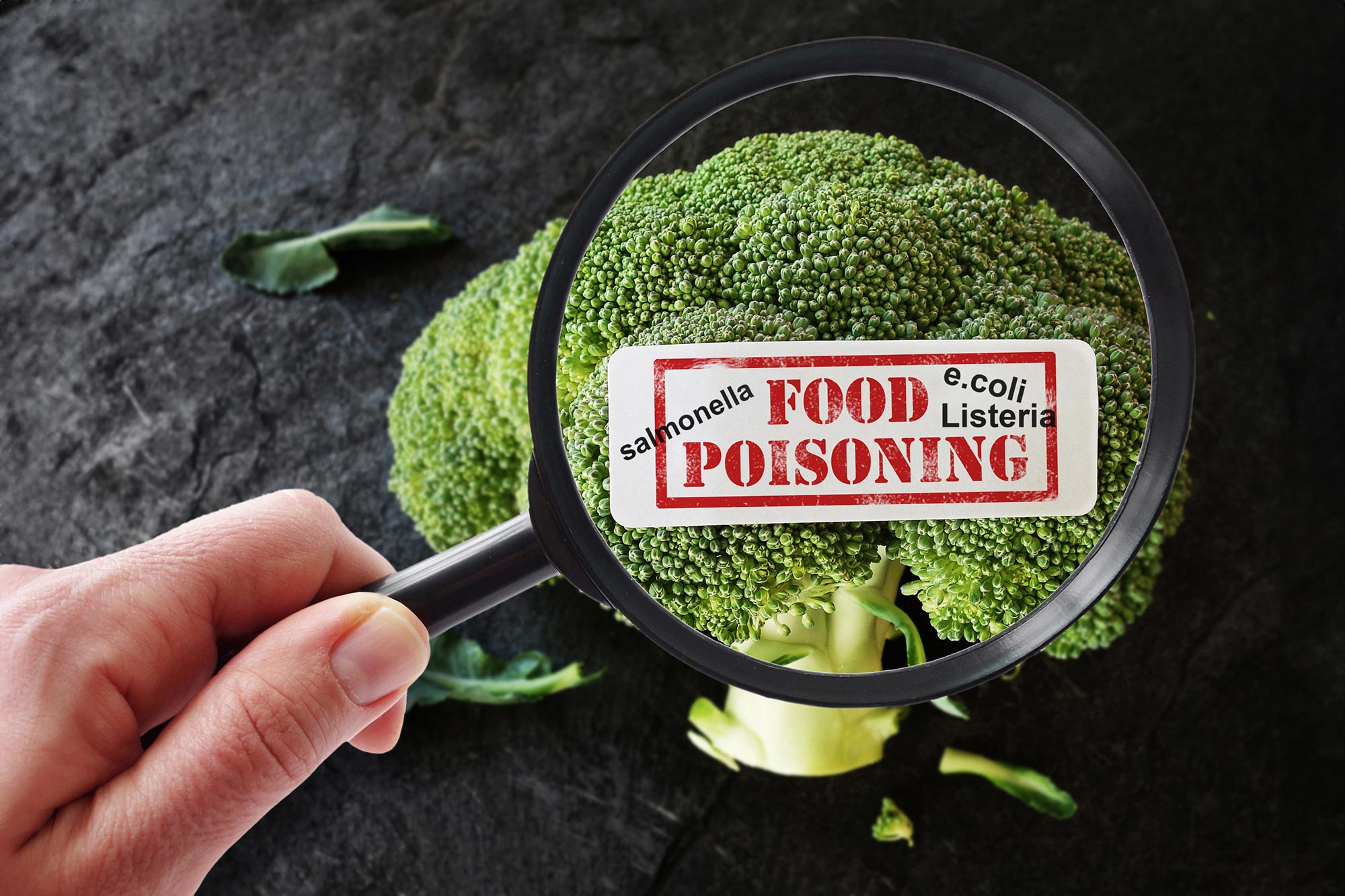
A new microfluidic chip developed by researchers enables quick, effective detection of multiple foodborne pathogens simultaneously, improving food safety and preventing contaminated products from entering the market.
Every so often, a food product is recalled because of some sort of contamination. For consumers of such products, a recall can trigger doubt in the safety and reliability of what they eat and drink. In many cases, a recall will come too late to keep some people from getting ill.
In spite of the food industry’s efforts to fight pathogens, products are still contaminated and people still get sick. Much of the problem stems from the tools available to screen for harmful pathogens, which are often not effective enough at protecting the public.
Advancements in Pathogen Detection
Reporting today (June 25) in the scientific journal AIP Advances, by AIP Publishing, researchers from Guangdong University of Technology and Pudong New District People’s Hospital describe a new method they developed for detecting foodborne pathogens. It is faster, cheaper, and more effective than existing methods. The researchers hope their technique can improve screening processes and keep contaminated food out of the hands of consumers.
Even with the best detection method, finding contaminating pathogens is not an easy task.
Challenges in Current Detection Methods
“Detecting these pathogens is challenging, due to their diverse nature and the various environments in which they can thrive,” said author Silu Feng. “Additionally, low concentrations of pathogens in large food samples, the presence of similar non-pathogenic organisms, and the complex nature of different food types make accurate and rapid detection difficult.”
Existing detection methods do exist, such as cell culture and DNA sequencing, but are challenging to employ at large scales. Not every batch of food can be thoroughly tested, so some contaminants inevitably slip through.
“Overall, these methods face limitations such as lengthy result times, the need for specialized equipment and trained personnel, and challenges in detecting multiple pathogens simultaneously, highlighting the need for improved detection techniques,” said Feng.
Innovative Detection Technology Development
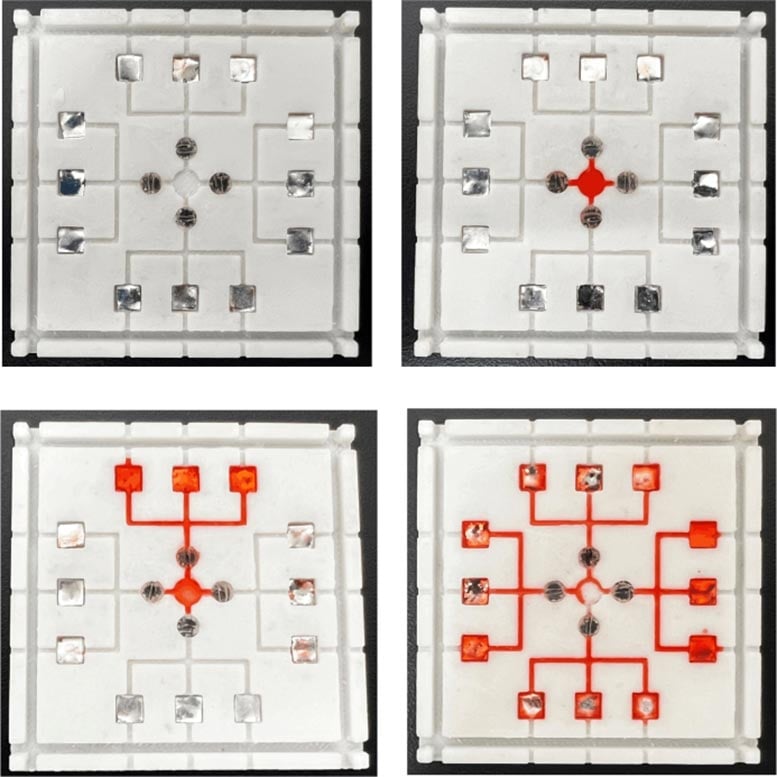
In this study, the scientists decided to take a different approach, designing a microfluidic chip that uses light to detect multiple types of pathogens simultaneously. Their chip is created using 3D printing, making it easy to fabricate in large amounts and modify to target specific pathogens.
The chip is split into four sections, each of which is tailored to detect a specific pathogen. If that pathogen is present in the sample, it will bind to a detection surface and change its optical properties. This arrangement lets the researchers detect several common bacteria, such as E. coli, salmonella, listeria, and S. aureus, quickly and at very low concentrations.
“This method can quickly and effectively detect multiple different pathogens, and the detection results are easy to interpret, significantly improving detection efficiency,” said Feng.
The research team plans to continue developing their device to make it even more applicable for food screening.
Reference: “3D-printed microfluidic chip integrated with nanointerferometer for multiplex detection of foodborne pathogens” Silu Feng, Kongjin Mo and Xin Song, 25 June 2024, AIP Advances.
DOI: 10.1063/5.0208274
Never miss a breakthrough: Join the SciTechDaily newsletter.
Follow us on Google and Google News.
4 Comments
Ah yes, more tech, more control!
Piles of food in the landfill as “toxic”, while people starve.
WEF dreamscape.
I grew up on a farm. The answer is simple – just wash your food.
Simple answer: Buy local produce.
No mystery chemicals, no chips, harvested when ripe/ready not before, supports your community.
In the end the chips will be all there’s left to eat. Time to dial the technology clock back a few decades.
I love you 💓 😘 💓 😘 for not manipulating / cross-fading nature with science