
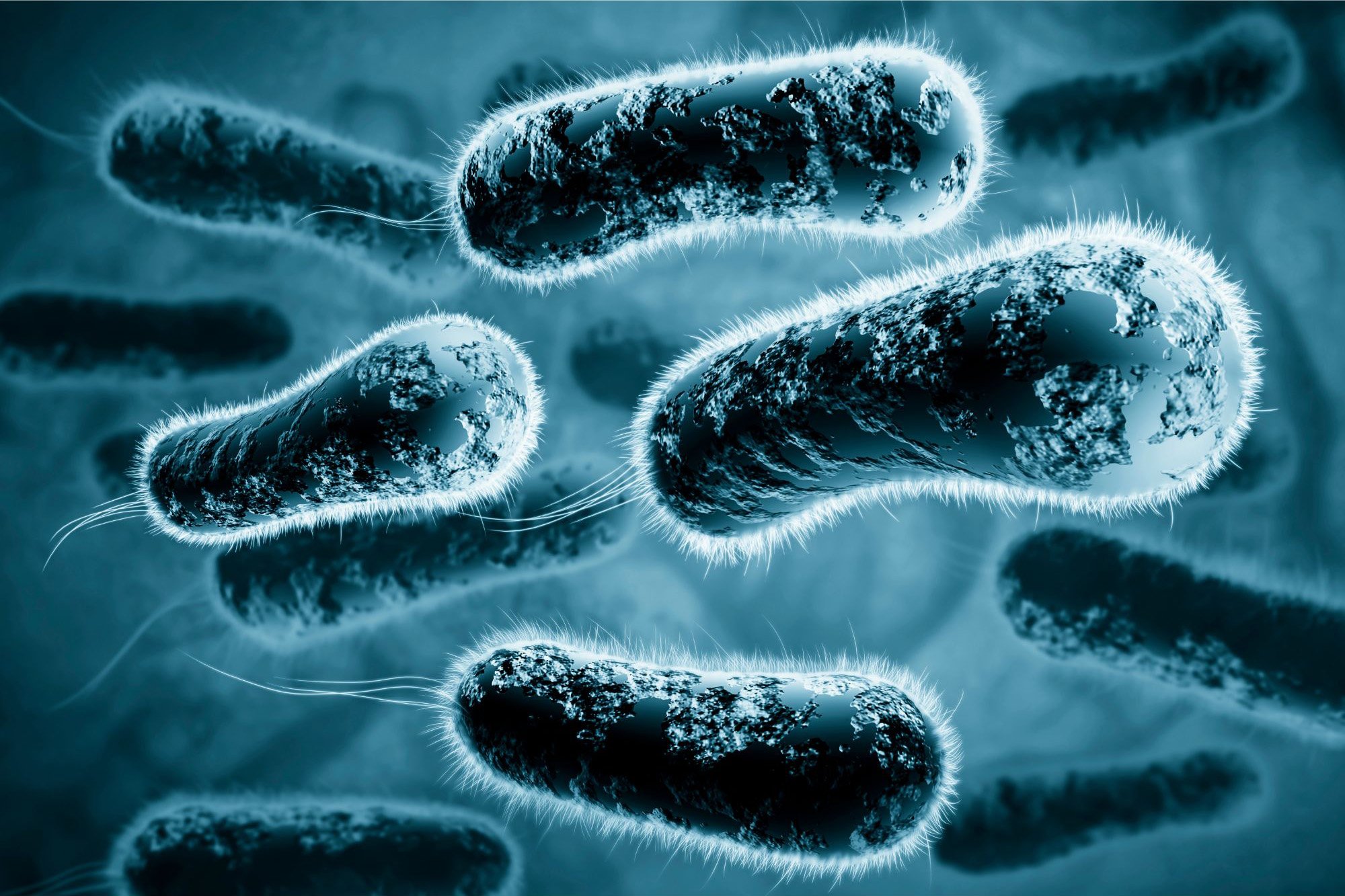
The microbiome inside microwaves, which is resistant to radiation, is similar to that found on solar panels.
Since the Industrial Revolution, microbes have steadily adapted to and colonized a range of new environments, such as marine oil spills, plastic debris in the oceans, industrial brownfields, and even the interior of the International Space Station.
However, it turns out that one extreme environment harboring a specialized community of highly adapted microbes is much closer to home: inside microwaves. This finding has now been reported for the first time in a study in Frontiers in Microbiology by researchers from Spain. It’s not only important from the perspective of hygiene, but could also inspire biotechnological applications – if the strains found inside microwaves can be put to good use in industrial processes that require especially hardy bacteria.
“Our results reveal that domestic microwaves have a more ‘anthropized’ microbiome, similar to kitchen surfaces, while laboratory microwaves harbor bacteria that are more resistant to radiation,” said Daniel Torrent, one of the authors, and a researcher at the start-up Darwin Bioprospecting Excellence SL in Paterna, Spain.
Torrent and colleagues sampled microbes from inside 30 microwaves: 10 each from single-household kitchens, another 10 from shared domestic spaces, for example, corporate centers, scientific institutes, and cafeteria, and 10 from molecular biology and microbiology laboratories. The aim behind this sampling scheme was to see if these microbial communities are influenced by food interactions and user habits.
They used two complementary methods to inventorize the microbial diversity: next-generation sequencing and cultivation of 101 strains on five different media.
A biodiverse microbiome right at home
In total, the researchers found 747 different genera within 25 bacterial phyla. The most frequently encountered phyla were Firmicutes, Actinobacteria, and especially Proteobacteria.
They found that the composition of the typical microbial community partly overlapped between shared domestic and single-household domestic microwaves, while laboratory microwaves were quite different. The diversity was lowest in single-household microwaves, and highest in laboratory ones.
Members of genera Acinetobacter, Bhargavaea, Brevibacterium, Brevundimonas, Dermacoccus, Klebsiella, Pantoea, Pseudoxanthomonas, and Rhizobium were found only in domestic microwaves, whereas Arthrobacter, Enterobacter, Janibacter, Methylobacterium, Neobacillus, Nocardioides, Novosphingobium, Paenibacillus, Peribacillus, Planococcus, Rothia, Sporosarcina, and Terribacillus were found only in shared-domestic ones.
Nonomuraea bacteria were isolated exclusively from laboratory microwaves. There, Delftia, Micrococcus, Deinocococcus, and one unidentified genus of the phylum Cyanobacteria were also common, found in significantly greater frequencies than in domestic ones.
The authors also compared the observed diversity with that in specialized habitats reported in the literature. As expected, the microbiome in microwaves resembled that found on typical kitchen surfaces.
“Some species of genera found in domestic microwaves, such as Klebsiella, Enterococcus, and Aeromonas, may pose a risk to human health. However, it is important to note that the microbial population found in microwaves does not present a unique or increased risk compared to other common kitchen surfaces,” said Torrent.
Parallel evolution
However, it was also similar to the microbiome in an industrial habitat: namely, on solar panels. The authors proposed that the constant thermal shock, electromagnetic radiation, and desiccation in such highly irradiated environments have repeatedly selected for highly resistant microbes, in the same manner as in microwaves.
“For both the general public and laboratory personnel, we recommend regularly disinfecting microwaves with a diluted bleach solution or a commercially available disinfectant spray. In addition, it is important to wipe down the interior surfaces with a damp cloth after each use to remove any residue and to clean up spills immediately to prevent the growth of bacteria,” recommended Torrent.
Reference: “The microwave bacteriome: biodiversity of domestic and laboratory microwave ovens” by Alba Iglesias, Lorena Martínez, Daniel Torrent and Manuel Porcar, 19 June 2024, Frontiers in Microbiology.
DOI: 10.3389/fmicb.2024.1395751
The study was funded by the European Commission and the Agencia Estatal de Investigación.
Never miss a breakthrough: Join the SciTechDaily newsletter.
Follow us on Google and Google News.
1 Comment
Even small, brown Argentine ants are immune to the microwave radiation of conventional microwave ovens!