
SUP05 bacteria are often found in places where there is really no basis for life for them. Researchers in Bremen have now discovered that they are even quite active there – possibly with consequences for the global nitrogen cycle. The bacteria travel with a “reserve pack.” In addition, the researchers have deciphered the bacteria’s genome.
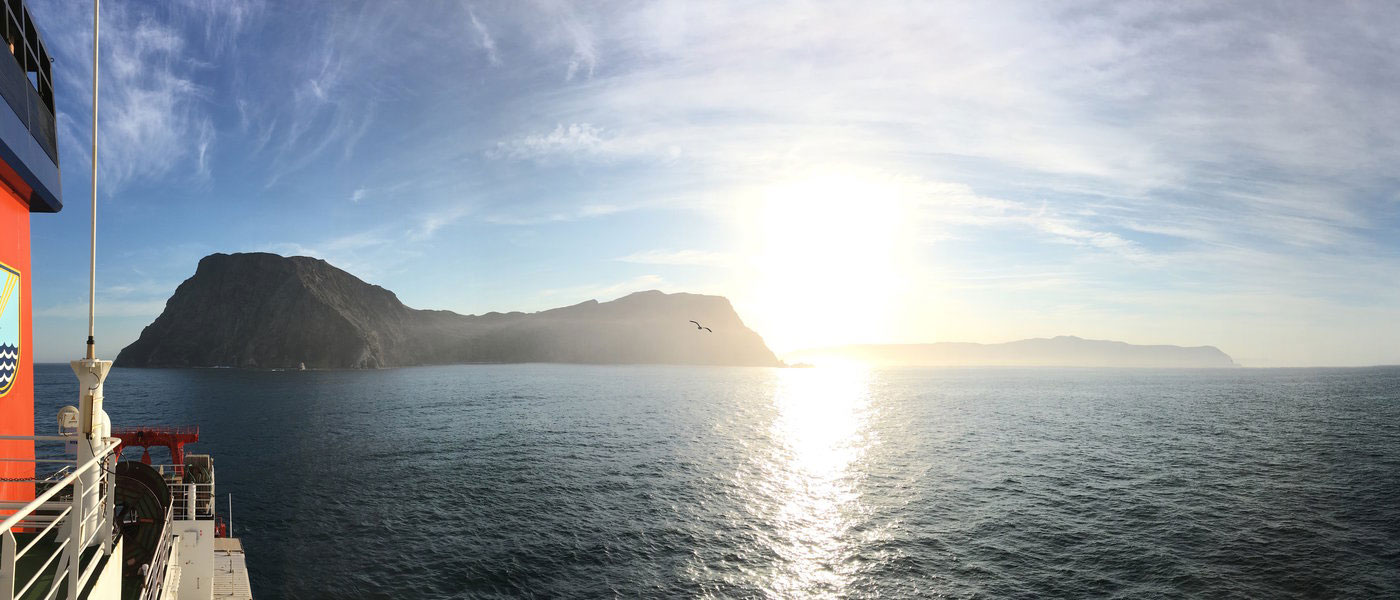
The SUP05 bacterial population puzzles researchers. Why, for example, are these microbes found in the open ocean, even though there is no basis for life for them there? SUP05 bacteria use the sulfur compound hydrogen sulfide as a source of energy, and this is mostly only found near the coasts. Together with the Collaborative Research Center 754 of GEOMAR and the University of Kiel, a group of researchers around Marcel Kuypers from the Max Planck Institute for Marine Microbiology in Bremen has now found some answers: In the sea off Peru during a trip with the research ship Meteor the researchers discovered a representative of the bacterial population that carries its own reserve of sulfur.
In addition the researchers succeeded in deciphering the entire genome of the bacterium. The microbe has quasi received an identification card. Name: Thioglobus perditus, analogous to the “lost sulfur ball.“ “Following the decoding of the genome we then developed a gene test, with the help of which we are now able to identify this microbe precisely,” says Cameron Callbeck, first author of the study, who has meanwhile moved from the Max Planck Institute to the Swiss Eawag.
Energy from sulfide
Thioglobus perditus transforms sulfide to sulfate using nitrate to breathe, and obtains the energy for life from this chemical transformation. The bacteria are distributed worldwide in coastal upwelling regions where hydrogen sulfide diffuses upward from the seafloor. There the Thioglobus perditus metabolism performs ecologically important services: the reaction converts not only sulfide, which is poisonous for other organisms, to its less toxic elemental sulfur form, but also removes carbon dioxide and transforms nitrate to non-reactive dinitrogen gas.
Now the researchers in Bremen have discovered that the bacterium is not only active in coastal regions. Repeatedly, SUP05 bacteria have also been found further out at sea in waters containing no dissolved sulfide. But how can the organism exist under such sub-optimal conditions? “Nobody really knew what they are doing there. Are they active at all?,” asks Gaute Lavik from the Max Planck Institute in Bremen, cruise leader of the Meteor journey.
Transformation of sulfur
With nanoscale secondary ion mass spectrometry, in short NanoSIMS, researchers have for the first time undertaken measurements of individual Thioglobus perditus bacteria cells in the environment. The researchers were thus able to directly gain insights into the biochemical processes operating in the individual SUP05 cells in the environment. These bacteria seem to carry a reserve pack of elemental sulfur. They furthermore possess the necessary cellular machinery to transform elemental sulfur. If the currents carry Thioglobus perditus off the coast to the open sea, the microbe presumably lives off these reserves. As sulfur disappears from the water, the bacteria also vanish.
“The ability to store and grow on elemental sulfur enables the Thioglobus perditus cells also to remain active far from sulfide-rich coastal waters, at least for a limited time,” says co-author Tim Ferdelman from the Bremer Max Planck Institute. “As part of the current study we have for the first time determined how quickly individual cells of SUP05 bacteria take up carbon dioxide in the environment, and thus grow in these waters. This makes them potentially interesting actors in the global cycles of carbon and nitrogen,” says Ferdelman.
Reference: “Oxygen minimum zone cryptic sulfur cycling’ sustained by offshore transport of key sulfur oxidizing bacteria” by Cameron M. Callbeck, Gaute Lavik, Timothy G. Ferdelman, Bernhard Fuchs, Harald R. Gruber-Vodicka, Philipp F. Hach, Sten Littmann, Niels J. Schoffelen, Tim Kalvelage, Sören Thomsen, Harald Schunck, Carolin R. Löscher, Ruth A. Schmitz & Marcel M. M. Kuypers, 30 April 2018, Nature Communications.
DOI: 10.1038/s41467-018-04041-x
Never miss a breakthrough: Join the SciTechDaily newsletter.
Follow us on Google and Google News.