
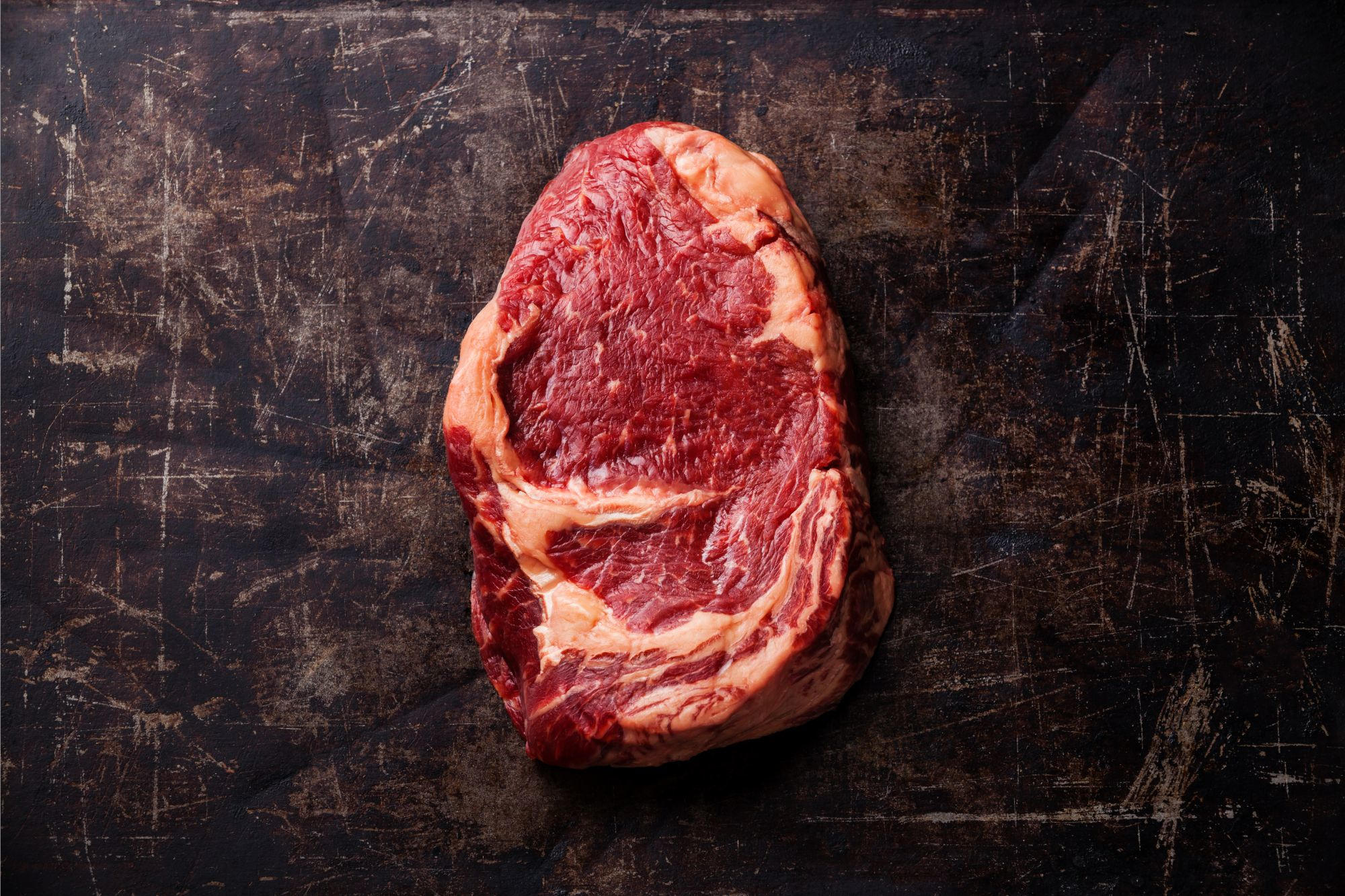
Researchers from the Federal University of São Paulo emphasize the importance of implementing emission reduction practices throughout the production chain.
Beef production is a cornerstone of Brazil’s economy, but it also ranks among the country’s top sources of greenhouse gas emissions. According to a new study published in the journal Environmental Science and Pollution Research, current practices in the industry are producing more than twice the emissions allowed if Brazil is to meet its international climate goals.
The research dives into future emissions scenarios and includes a detailed economic analysis. Scientists estimate that by 2030, Brazil’s beef sector could emit between 0.42 and 0.63 gigatons of carbon dioxide equivalent (GtCO2e). To stay on track with the country’s Nationally Determined Contribution (NDC) under the Paris Agreement, emissions from this sector must be capped at just 0.26 GtCO2e.
But there’s a silver lining. The study shows that adopting low-emission practices throughout the beef supply chain could help Brazil avoid economic losses of up to 42.6 billion US dollars, while also boosting the industry’s long-term competitiveness.
The NDCs are climate targets that countries pledged to under the 2015 Paris Agreement. These commitments are set to be reviewed and updated this year in the lead-up to COP30, the United Nations Climate Change Conference, which will be held in Belém, in the heart of the Brazilian Amazon.
The commitment includes emission reduction targets for countries, with guidelines for transforming the development model, covering all sectors of the economy. The global objective is to limit the increase in the planet’s average temperature to 1.5 °C compared to the pre-industrial period (between 1850 and 1900). This limit, however, is being put at risk – 2024 was the hottest year in history, with an average global temperature increase of 1.55 °C, according to the World Meteorological Organization (WMO).
The study was based on the NDC in force until 2024 – a 43% reduction in emissions by 2030 compared to 2005 levels. In November, Brazil submitted its new contribution to the United Nations Framework Convention on Climate Change (UNFCCC), committing to reduce net greenhouse gas emissions by between 850 million and 1.05 billion tons of CO2 equivalent by 2035 – a 59% to 67% reduction from 2005 levels.
Shifting the Narrative Around Meat
“We know how important the beef sector is not only for the economy but also for the Brazilian menu. Our goal is not to say: produce or eat less meat, but to start a discussion about the current form of production, which is linked to deforestation, high emissions, and without adopting sustainable techniques. That’s not the way to achieve our climate targets. Our findings show that it’s necessary to adopt practices in the production chain that reduce emissions. This also contributes to reducing the costs associated with climate change,” says the article’s first author, biologist Mariana Vieira da Costa, from the Laboratory of Economics, Health and Environmental Pollution (LESPA) at the Federal University of São Paulo (UNIFESP) in Brazil.
In their work, the authors used the so-called social cost of carbon (SCC), a way of quantifying the financial impact of emissions on society and a reference for climate policy and decision-making.
The SCC represents the economic cost of emitting one ton of CO2, including non-commercial impacts on the environment and human health, and incorporating consequences such as agricultural losses and damage from extreme weather events. These costs can be reduced or redirected to investments in more sustainable livestock production practices through public policies and accessible credit lines.
According to the study, the potential cost savings range from USD 18.8 billion to USD 42.6 billion by 2030, depending on whether the targets are met.
In 2023, Brazil set a record for beef exports, selling 2.29 million tons to 157 countries and generating USD 10.55 billion in sales. The scientists considered the importance of beef exports to Brazil by calculating how much would be available for domestic consumption in 2030 if production were reduced to stay within the 0.26 GtCO2e emission limit needed to meet the NDC. The result was between 2 and 10 kg of beef per capita (per year).
“I’ve always wanted to study the relationship between cattle farming and climate change. At first, we had trouble finding more refined data. That’s why we created our indicator,” adds Costa, who was supervised by Professor Simone Miraglia, head of LESPA-UNIFESP and co-author of the article with biologist Daniela Debone.
For Miraglia, the results are important because, without significant reductions in greenhouse gas emissions, the increase in the global average temperature will lead to additional economic impacts, such as a reduction in agricultural production, an increase in forest fires and an increase in health impacts, including mortality.
Scenario
In a period of almost four decades (1985 to 2022), the agricultural area in Brazil has grown by 50% to 282.5 million hectares – a third of the national territory. Of this total, 58% is pasture (currently at 164.3 million hectares), according to a study by MapBiomas, a collaborative network made up of NGOs, universities and technology startups that maps land cover and land use in Brazil.
About 64% of the expansion of agriculture was due to deforestation for pasture (64.5 million hectares). This growth occurred mainly in the Amazon, causing the biome to overtake the Cerrado (Brazil’s savannah-like biome) in terms of pasture area.
The scientists point to the need for synergy between research and rural producers to promote more efficient, low-emission production practices and to seek environmentally sustainable techniques and technologies. They also highlight the role that the federal government can play in brokering and integrating research and technology adoption by producers.
They point out that although the ABC+ Plan currently facilitates investments in intensive practices by livestock farmers, their adoption is still low. The Plan for Adaptation and Low Carbon Emissions in Agriculture (ABC+) is an agenda of the Brazilian government to be implemented between 2020 and 2030, which provides continuity to the sectoral policy to combat climate change in the agricultural sector. In addition to creating and strengthening mechanisms for the adoption of sustainable production systems and practices, it seeks to diversify financial and fiscal sources and instruments.
Costa points out that the diversification of incentives, such as tax exemptions and the introduction of carbon credits, is essential to stimulate and promote significant changes on a large scale in the sector.
Reference: “Brazilian beef production and GHG emission – social cost of carbon and perspectives for climate change mitigation” by Mariana Vieira da Costa, Daniela Debone and Simone Georges El Khouri Miraglia, 5 February 2025, Environmental Science and Pollution Research.
DOI: 10.1007/s11356-025-36022-1
The work was supported by FAPESP through a scholarship for Costa and another project with an approach to analyzing greenhouse gas emissions, climate change and health indicators.
Never miss a breakthrough: Join the SciTechDaily newsletter.
Follow us on Google and Google News.
5 Comments
Finally an article that does not blame the cattle for the emissions problem. Although the article title is misleading. Perhaps the insertion of the word “farming” would clear that up nicely. Eg “Beef farming emissions blow past climate limits…”
As usual the problem is us humans and the way we do things. To many of us humans on this planet. If only we could send a boat load of say 4 billion humans to Mars.
Totally agree — it’s refreshing to see the focus shift from blaming animals to addressing how we manage the system. And yes, that title tweak would definitely help! As for sending 4 billion to Mars… might need more than just a rocket or two 😅 But seriously, better farming practices seem like a more doable start.
“But seriously, better farming practices seem like a more doable start.”
Are you speaking as an experienced rancher?
This study really puts numbers behind what’s long been a known issue — beef’s big carbon footprint. It’s not about eating less meat, it’s about producing it smarter. If Brazil can align its beef industry with climate goals and save billions in the process, that’s a no-brainer. Let’s hope policy catches up with the science.
See, people get an idea in their head and stop thinking immediately. This is the always human trait. You didn’t know anything, then you get a new idea, you accept it and stop thinking further but fall into tunnel vision on supporting details – blind the whole time as to whether that first idea, you stopped criticizing, is true.
Atmospheric carbon was 0.2% for four billion years. Carbon loving plants thrived, giving jungles and forests and breathing out Oxygen for all the animals before during and after the dinosaurs. Everything alive, thrived. Then, along about the time humans came around, carbon levels started falling and forest and jungles retreated but held on – giving us the oxygen we so dearly love.
The level has fallen to 0.04% at present and the floor where all plant-life dies away is 0.02% – roughly half of present levels.
As soon as you add this up in your own mind, you’ll realize the climate concerns are unfounded. In fact, we need to boost carbon levels. Life depends on it.