
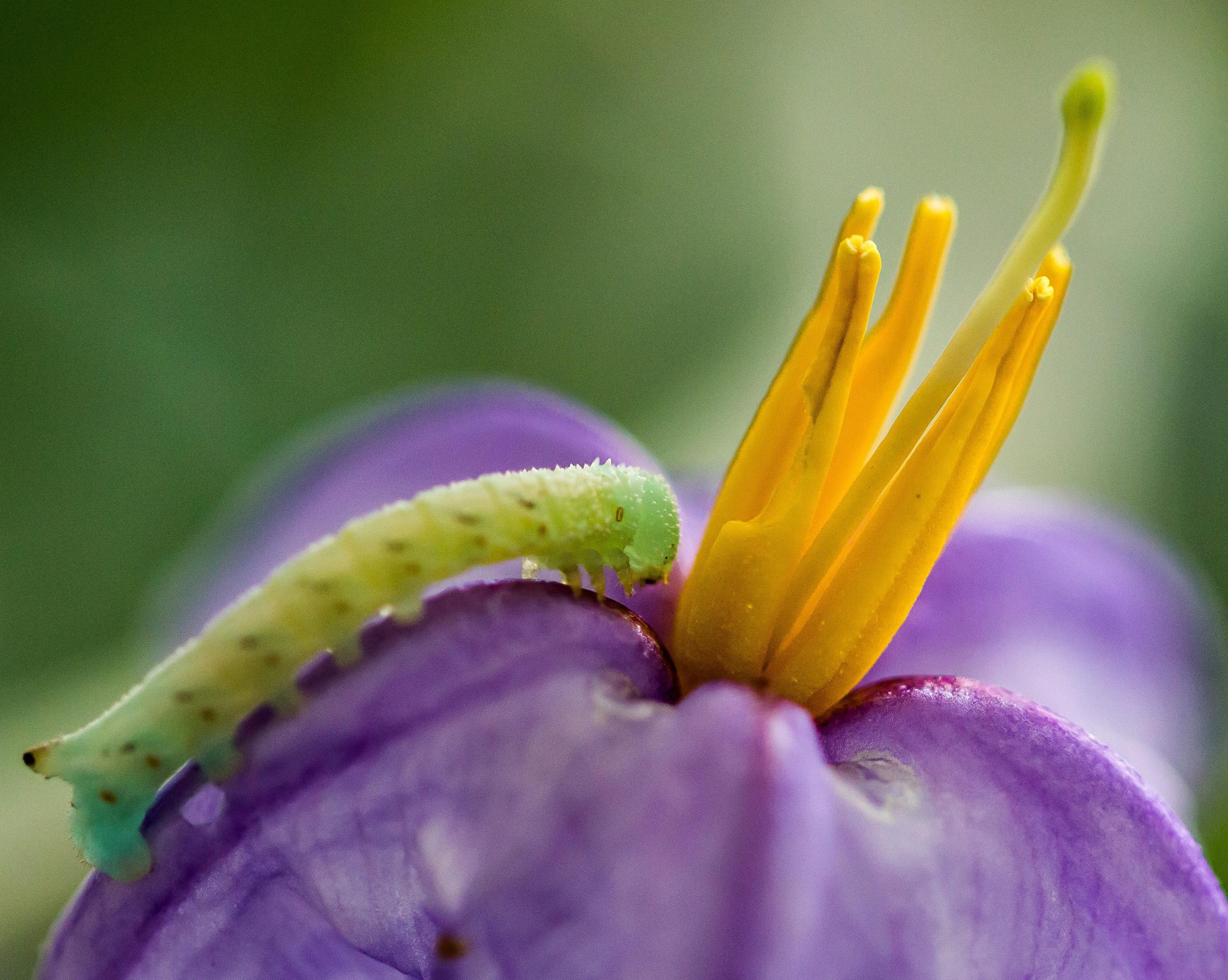
Research indicates that frequent mowing of Solanum elaeagnifolium enhances its defensive traits, making it more resilient and potentially a superweed. The study highlights the necessity for updated weed management practices that consider the adaptive responses of invasive plants to disturbances.
Research on the effects of mowing on a common weed has found that what doesn’t kill you can make you stronger.
Published in Nature’s Scientific Reports, the study found that frequent mowing of Solanum elaeagnifolium may help create a “superweed.”
Solanum elaeagnifolium — also known as silverleaf nightshade — can be found from south Texas to South Africa and Greece, infesting fields and soaking up valuable nutrients intended for cash crops. The weed with purple flowers – sometimes white and light purple – has prickly spines and poisonous berries.

Relatives of the plant, including Solanum ptychanthum or black nightshade, and Solanum carolinense, or Carolina horsenettle, also produce toxic berries and are native to Arkansas. It’s a family that also includes some friendly crops such as tomatoes, potatoes, peppers, and eggplants.
Rupesh Kariyat, an associate professor of entomology and plant pathology with the Arkansas Agricultural Experiment Station, has been studying silverleaf nightshade for more than a decade. Kariyat began the study while at the University of Texas Rio Grande Valley, when he and his graduate student Alejandro Vasquez took on what turned into a five-year, two-part study to observe the effects of frequently mowed silverleaf nightshade. Kariyat joined the experiment station, the research arm of the University of Arkansas System Division of Agriculture, in 2022.

Although studies have often highlighted weed fitness and defense traits resulting from disturbances like mowing, most were limited to foliar, or leaf, defenses, Kariyat said. That changed when Vasquez and fellow master’s biology students at the University of Texas Rio Grande Valley monitored fields of mowed, unmowed, and frequently mowed silverleaf nightshade in and around Edinburg, Texas.
“Alejandro’s question was, ‘how do these flowers differ between mowed and unmowed plants?’” Kariyat said. “‘And does that have consequences for the insects that actually feed on them?’”

Self-Defense Strategies
Findings in both studies showed that the more silverleaf nightshade was mowed, the more it developed ways to avoid destruction, Kariyat said. The taproot went down further, nearly 5 feet deep, in the first generation of mowed plants. More spikes popped out on the stem as a defense against caterpillars feeding on the flowers. The flowers became more toxic to caterpillars, leading to less pressure from natural predators.
Like time bombs, the plant produced some groups of seeds that germinated faster and others that were delayed. This “staggered” germination was the plant’s way to ensure survival over the long haul.
“You are trying to mow these plants so that the plants are getting eliminated,” Kariyat said. “But what you are actually doing here, you are making them much worse, much stronger.”
Tilling areas with silverleaf nightshade also spreads the plant because the rhizomic roots, like many weeds, can propagate asexually over multiple years and growing seasons.
Implications for Future Weed Management
The observations of mowed, unmowed, and frequently mowed areas with silverleaf nightshade provide evidence that could prompt further studies by weed scientists on best management practices, Kariyat said.
Since the studies focus solely on silverleaf nightshade, Kariyat said other weeds — even the plant’s family relatives — may or may not react the same way to frequent mowing. However, the study does provide more insight into the defensive capabilities of plants pitted against human disturbance.

“This should be something that we consider when we make management plans,” Kariyat said of the plant’s defenses. “Management practices need to be better understood using the ecology and biology of the species and the other species which interact with them.”
Kariyat and Vasquez published their results in April with an article titled “Continuous mowing differentially affects floral defenses in the noxious and invasive weed Solanum elaeagnifolium in its native range.” Vasquez, now an entomology and plant pathology Ph.D. student at the University of Arkansas, was the lead author. Co-authors included Kariyat, Alexa Alaniz, and Robert Dearth, founding director of the School of Integrative Biological and Chemical Sciences at the University of Texas Rio Grande Valley.
“As scientists, we want our research to be accessible and applicable to anyone, and mowing is a concept the world at large can understand,” Vasquez said.
The initial study was published in 2021 with an article titled “Local adaptation to continuous mowing makes the noxious weed Solanum elaeagnifolium a superweed candidate by improving fitness and defense traits.” The lead author for that study was Jesus Chavana, with co-authors Sukhman Singh, Bradley Christopherson, Alexis Racelis, Vasquez and Kariyat, all with the University of Texas Rio Grande Valley at the time.
Reference: “Continuous mowing differentially affects floral defenses in the noxious and invasive weed Solanum elaeagnifolium in its native range” by Alejandro Vasquez, Alexa Alaniz, Robert Dearth and Rupesh Kariyat, 7 April 2024, Scientific Reports.
DOI: 10.1038/s41598-024-58672-w
Never miss a breakthrough: Join the SciTechDaily newsletter.
Follow us on Google and Google News.