
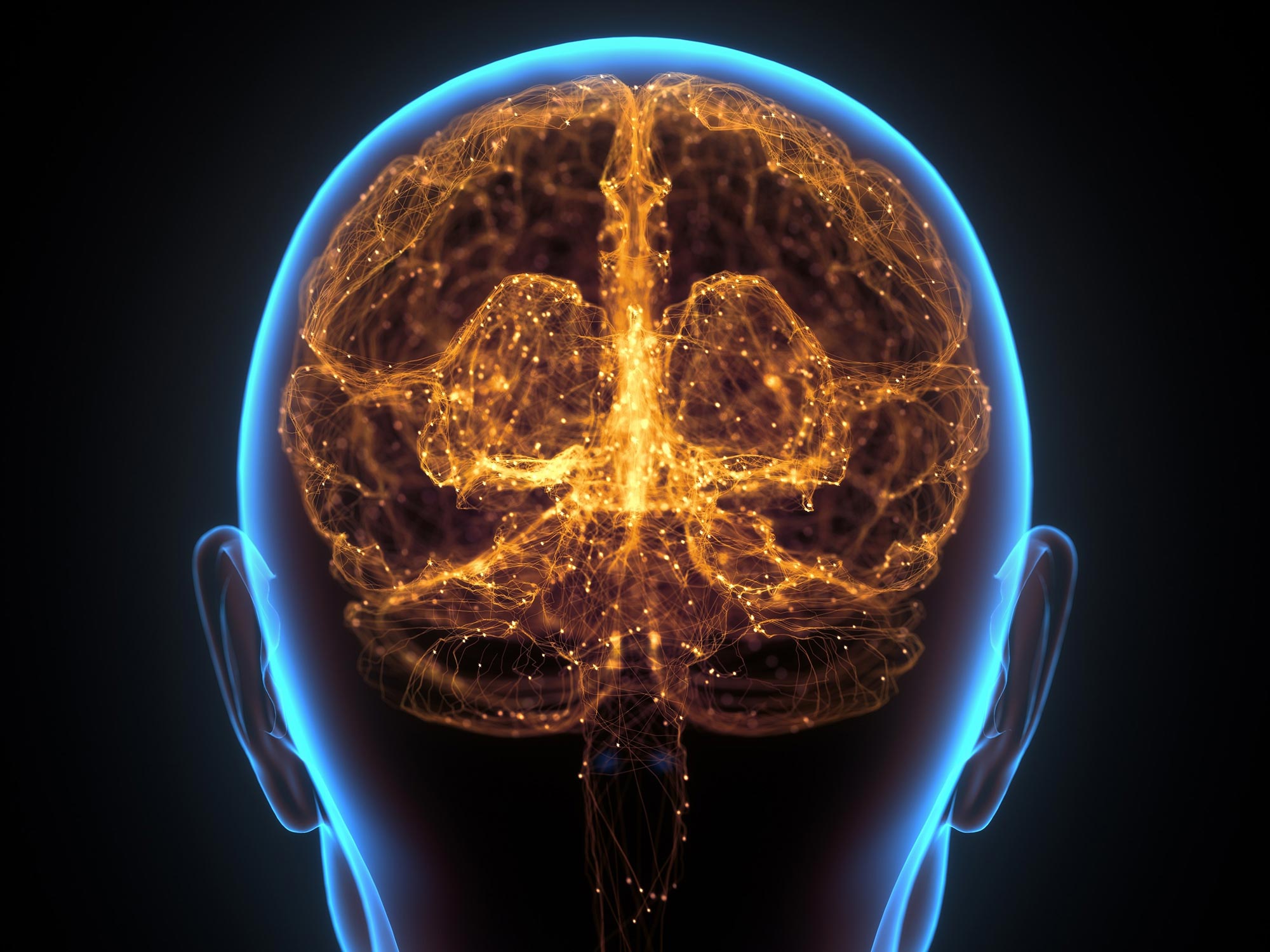
Humans and relatives evolved larger brains through gradual changes within species, not sudden leaps. This study challenges old ideas and reveals the complexity of brain evolution over millions of years.
A new study on human brain evolution reveals that modern humans, Neanderthals, and other recent relatives in our evolutionary lineage developed larger brains at a significantly faster rate compared to earlier species.
The study, published in the journal PNAS, overturns long-standing ideas about human brain evolution. Scientists from the University of Reading, the University of Oxford, and Durham University found that brain size increased gradually within each ancient human species rather than through sudden leaps between species.
The team assembled the largest-ever dataset of ancient human fossils spanning 7 million years and used advanced computational and statistical methods to account for gaps in the fossil record. These innovative approaches provided the most comprehensive view yet of how brain size evolved over time.
Incremental Growth in Brain Size
Professor Chris Venditti, co-author of the study from the University of Reading, said: “This study completely changes our understanding of how human brains evolved. It was previously thought that brain size jumps dramatically between species, like new upgrades between the latest computer models. Our study instead shows a steady, incremental ‘software update’ happening within each species over millions of years.”
The research challenges old ideas that some species, like Neanderthals, were unchanging and unable to adapt and instead highlights gradual and continuous change as the driving force behind brain size evolution.
Dr Thomas Puschel, lead author now at Oxford University, said: “Big evolutionary changes don’t always need dramatic events. They can happen through small, gradual improvements over time, much like how we learn and adapt today.”
Brains, bodies, and evolutionary scale
The researchers also uncovered a striking pattern: while larger-bodied species generally had bigger brains, the variation observed within an individual species did not consistently correlate with body size. Brain size evolution across long evolutionary timescales extending millions of years is therefore shaped by different factors to those observed within individual species – highlighting the complexity of evolutionary pressures on brain size.
Dr Joanna Baker, co-author from the University of Reading, said: “Why and how humans evolved large brains is a central question in human evolution. By studying brain and body size in various species over millions of years, we reveal that our hallmark large brains arose primarily from gradual changes within individual species.”
Reference: “Hominin brain size increase has emerged from within-species encephalization” by Thomas A. Püschel, Samuel L. Nicholson, Joanna Baker, Robert A. Barton and Chris Venditti, 26 November 2024, Proceedings of the National Academy of Sciences.
DOI: 10.1073/pnas.2409542121
The study was produced as part of a £1 million Research Leadership Awards grant from the Leverhulme Trust. The project was to better understand the evolution of human ancestors.
Never miss a breakthrough: Join the SciTechDaily newsletter.
Follow us on Google and Google News.
16 Comments
It’s been a long time since i subscribed u, n i appreciate ur trials, howewer, publishing an article about a research without providing the research, just abstract claims makes it definitely annoying. It’d be better if u provided research, ir at least link or doc to research, it’s not easy to find afterall
Fr? it’d be easier, if u used punctuation, like this, irl, yk, but ik it’s eho and ymmv, but it makes it so, much easier to read, iykwim, fr ppl who dun know, how to use punctuation, mightn’t understand d research afterall
A university press release should contain enough information that you can find the research, at the very least the university name and lead author. As it happens SciTechDaily has provided a link.
Now here I thought it went from a single cell and suddenly pop full size thinking machine
I know, reading comprehension is not easy.
I think you mean skull size. There are no brain fossils so you are assuming a correlation
Air cavities inside the cranium is a feature unique to you. For every other creature with a skull, the size of the cranial cavity corresponds 1:1 with brain size.
They use cranial capacity – the brain case volume – as a proxy to brain volume. In most animals the brain case encloses the brain tightly due to how the skull develops.
I’m not really sure why anyone would be surprised by this result.
While large evolutionary changes do occur, the probability that the would happen repeatedly in a species is very unlikely. Sure there are plants or animals that have made one large transition when put under stress – most likely when a subset of the species had just enough differentiation to suceed where their counterparts did not, for this to happen over and over and over again is far less likely than extinction.
Gradual adaptation makes far more sense logically.
The brain couldn’t easily evolve in big jumps simply because there are so many other consequences of an expanded cranial capacity. For example, if one doubled the brain size it would have impacted parturition…requiring an increase in the birth canal width, which impacts female survival -birth problems. Or like comotion. So other genetic systems would have to change. Or a longer growth period and consequently immaturity of the child would mean longer breast feeding and much heavier care period for a growing child.
So one way that g a dual neural evolution could occur would be to have mitotic division of only certain portions of the brain. So selection might favour increasing syntactic comprehension and only those areas of the brain 🤝 Ng with those functions would need some ⏫ Ng. Or vocabulary related regions might expand as more “storage ” might expand.
Some changes might not even be noticed by cranial expansion. For example, one could effectively double some focal regions by shifting redundant functional areas to deal with a single use. There is a risk for n doing this…no “back up” copy of there was a stroke or other neural damage. But one could have n new novel functions.
The specialists have had a bigger problem, see the paper.
” Encephalization (i.e., relative brain size increase) during human evolution has long been debated, and several studies have compared hominin cranial capacities across species to propose possible adaptive mechanisms acting upon brain size variation among hominins (5–10). Some have argued for gradual growth over time (6, 11, 12), while others propose punctuated equilibrium with rapid increases followed by stasis (13–16). Other studies support a combination of both models (7, 17, 18), while others claim they cannot be distinguished (19). These contradictory views arise in part from conflating distinct phenomena (8, 20, 21); namely, the role of speciation events on trait diversification (anagenesis vs. cladogenesis), and the relative importance of gradual vs. pulsed evolution (i.e., different aspects of punctuated equilibrium) (20). One previous study also emphasized a need to partition hominin brain size evolution in order to assess change within lineages (i.e., phyletic change) and between lineages (i.e., cladogenesis or lineage extinction), as such an approach could provide a more detailed evaluation for the evolution of this trait (8).”
The accumulation of richer language, technology, lore, knowledge and culture in general led to the increase in brain size and complexity of human brains, not the other way round.
Humans evolved long before language did, and other apes share e.g. stone tool technology.
“”Our results suggest that the fundamental aspects of human sequential behaviors may have evolved prior to the last common ancestor of humans and chimpanzees, and then may have been further elaborated on during subsequent hominin evolution.”
Co-senior researcher Professor Thibaud Gruber (University of Geneva) said, “There has been a renewed interest in the co-evolution of language and stone tool use in human evolution, and our study contributes to this debate. While the connection between our results and early hominin stone tool use can be made more readily, how this connects with the evolution of other complex behaviors, like language, remains an exciting avenue of future research.””
– PhysOrg.
A very interesting hypothesis is the influence of changes in the sphenoid bone of the skull on brain development (and on bipedal posture).
Changes in the sphenoid bone of the skull have had a significant impact on human evolution, especially in the context of biomechanical and anatomical adaptations.
The sphenoid bone is a central element of the base of the skull, which is crucial for the structure of the skull and brain function. In human evolution, changes in this bone have influenced the shape and function of the skull, which in turn has consequences for brain development and cognitive abilities.
For example, asymmetries in the position of the sphenoid and occipital bones can lead to differences in the flexion and extension of the cranial vault, which affects the entire structure of the skull and its functions. These changes may have been important in the context of adaptation to bipedalism and increased brain volume.
Changes in the sphenoid bone of the skull have been a significant element of human evolution, influencing the structure of the skull, biomechanics, and brain development. These adaptations were crucial for the development of the cognitive and anatomical abilities that characterize modern humans.
The current research tend to disagree, the result is (as so much in evolution) multifactorial (and see the chimp reference I provided in another response). Sorry, no human specialness for you:
“While some previous studies have reported an accelerating pattern in the rates of evolution of brain size across hominins at the species level (12, 16, 52), our study is the first to have identified an accelerated increase in the allometric relationship between brain and body size within species through time, providing an intraspecific mechanistic explanation for previously reported results across species. Overall, our results show the multilevel aspects of human brain expansion, as well as the need for future studies to incorporate this hierarchical complexity.”
Now as technology takes over, we don’t have to remember stuff like we used to. Can save numbers on our phones instead of memorizing them, use Google maps…watch YT videos for fixing our cars instead of figuring it out ourselves. The evolution of humans becoming more intelligent each generation is going to start reversing.
As a university’s Director of Neurology described it, using a GPS makes us need a GPS.